
Thiruvananthapuram: Shared infrastructure and a coordinated support system are essential to nurturing a strong deep tech ecosystem in Kerala, particularly as the state combines abundant talent with a flourishing startup ecosystem, panelists observed at Huddle Global 2026 on Friday (November 13).
During a panel discussion titled “Building a Deep Tech Economy in Keralam: Talent, Technology, Capital and Markets”, industry experts highlighted the need for Kerala to move beyond established areas such as software products and expand into emerging technologies to tap growing global market opportunities.
The panelists emphasised that shared infrastructure, specialised talent development and stronger collaboration between research institutions, industry and startups would be critical to accelerating the state’s transition towards a deep tech-driven economy.
Specialised Talent and Institutional Collaboration Key to Deep Tech Growth
Setting the context for the discussion, Dr Rajasree M S, CEO of TrEST Research Park and former Vice Chancellor of APJ Abdul Kalam Technological University, said specialised talent development and coordinated interventions are essential to give momentum to Kerala’s transformation into a deep tech-driven economy.
She also stressed the importance of strengthening collaboration among research and development institutions, industry and the innovation ecosystem through continuous and comprehensive engagement.
Dr Rajasree anchored the session, which examined the opportunities and challenges involved in building a competitive deep tech economy in Kerala.
IIT Madras Calls for Stronger Translational Research
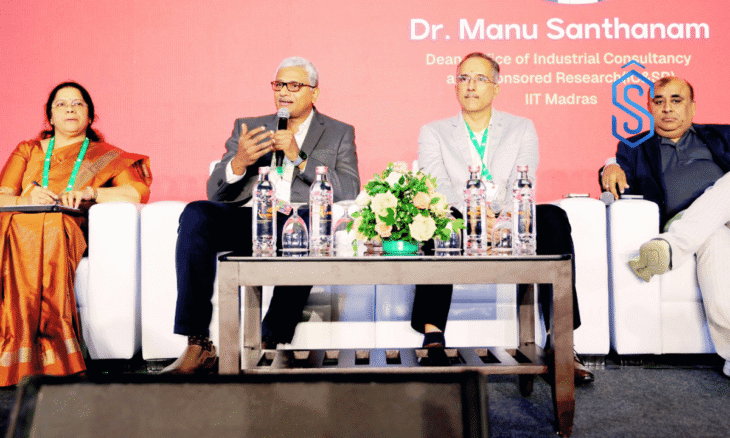
Dr Manu Santhanam, Dean of the Office of Industrial Consultancy and Sponsored Research (IC&R) at IIT Madras, said academic institutions need to move away from a department-oriented approach and focus on establishing centres of excellence.
Such centres can help talented youngsters tap the significant opportunities available to translate innovative ideas into marketable products.
Referring to the strategic shift undertaken by IIT Madras in this direction, Dr Santhanam said the prevailing global environment requires academic institutions to push the boundaries of translational research beyond traditional areas to address the demands of rapid technological transformation.
He also highlighted the importance of enabling young innovators to interact with industrialists during the early stages of their entrepreneurial journeys.
Strengthening the Intellectual Property (IP) regime to protect knowledge and innovations created by young talent is another important requirement, he added.
He described the entire world as a marketplace and stressed the need to take ideas to global markets.
Deep Tech Startups Must Focus on Economic Returns
Shri Jyothis Indirabhai, CEO and Co-founder of Netrasemi, said the deep tech ecosystem must also account for the economic benefits emerging from investments in research, innovation and technology development.
According to him, returns from deep tech development are essential to sustain and scale the ecosystem. Translational research programmes must also evaluate in advance the economic benefits they are expected to generate in the future.
“Startups need to be extremely prudent in early stage. Frugality is the essence of startup building,” he added.
His remarks highlighted the importance of balancing technological innovation with commercial viability to ensure the long-term sustainability of deep tech ventures.
Shared Infrastructure Can Reduce Financial Burden on Startups
Highlighting the financial challenges faced by early-stage innovators, Shri Manoj Agarwal, Managing Partner at SeaFund, said shared infrastructure in the form of high-tech laboratories and tools can significantly reduce the financial burden on deep tech startups.
Access to advanced laboratories and specialised equipment often involves substantial investment, making it difficult for early-stage innovators to secure the necessary resources while raising capital.
A shared deep tech infrastructure model can help address this challenge by allowing startups to access critical facilities without having to independently invest in expensive equipment and laboratories.
Shri Agarwal also said that the public sector ecosystem in India can play a supportive role in helping early-stage startups.
Huddle Global 2026 Brings Together Deep Tech Stakeholders
Organised annually by Kerala Startup Mission (KSUM), Huddle Global 2026 has brought together investors, mentors, policymakers and entrepreneurs.
The flagship event aims to strengthen connections across the startup ecosystem as Kerala looks to scale its growing innovation and entrepreneurial landscape.
The discussions at the session highlighted how shared infrastructure, institutional collaboration, specialised talent, access to capital and stronger industry-academia partnerships can contribute to building a globally competitive deep tech ecosystem in Kerala.