90% of B by Lenskart Buyers Choose Prescription Lenses! Peyush Bansal Reveals Why
B by Lenskart sees 90% of buyers opt for prescription lenses as demand exceeds expectations, prompting Lenskart to ramp up smart glasses production.

B by Lenskart sees 90% of buyers opt for prescription lenses as demand exceeds expectations, prompting Lenskart to ramp up smart glasses production.
Anthropic IPO: Indians miss the announced retail offering, but can buy shares after Nasdaq listing. Check platforms, prices and RBI rules.
The Rise Funds agrees to invest ₹525 crore in Kirloskar-backed Arka Fincap, with another ₹275 crore possible to accelerate secured retail lending growth.
redalpine closes its oversubscribed $250 million RAC VIII fund, taking AUM beyond $1.4 billion and targeting 20 European AI and deeptech startups.
Exide Industries monitors potential China export curbs as it stocks 3 months of inventory and targets 50-60% lithium-ion cell localisation in India.
Manus AI has replaced coding tests with a four-hour AI-based assessment, prioritising engineers who can work alongside AI as job roles evolve.
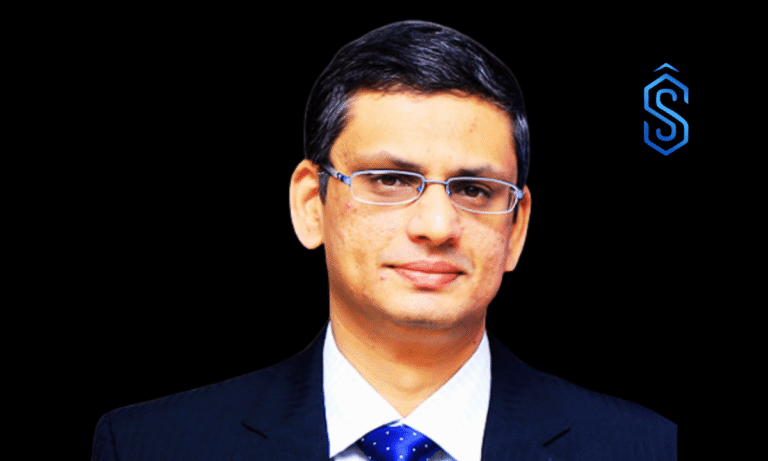
Harisankar Radhakrishnan takes charge as Technopark CEO, bringing over 20 years of experience at Amazon, Tata, ITC and Accenture.
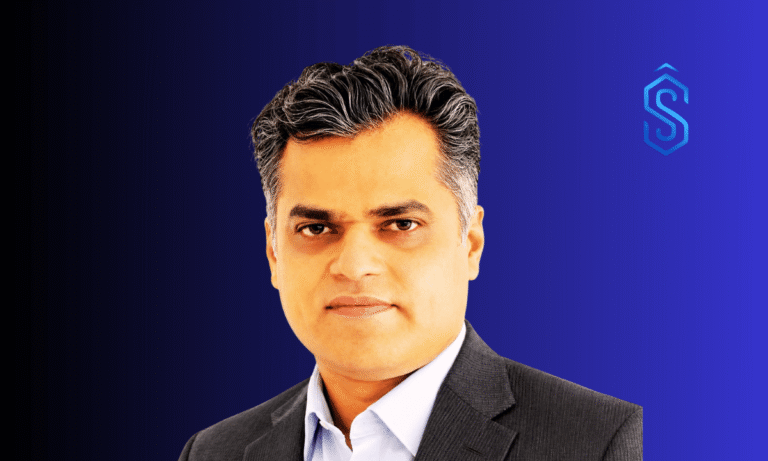
BETSOL appoints Shyam Sundar Pattabiraman as CFO, bringing over 24 years of finance leadership experience at IBM, Wipro, Lenovo and HP.
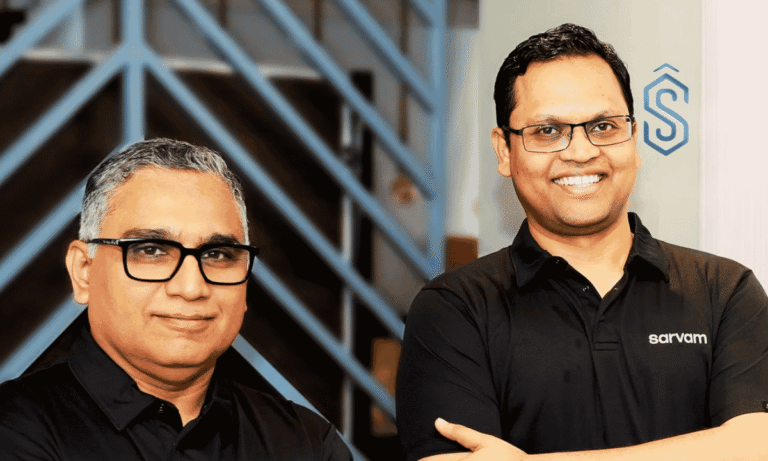
Sashikumar Sreedharan joins Sarvam as President and CBO after leadership roles at Google Cloud and Microsoft India, strengthening its enterprise AI business.
 Pushmeet Kohli@pushmeet
Announcing a major milestone achieved by my team @GoogleDeepMind: we have proven key security properties of the machine code underlying the Signal messaging protocol. This is the first time the actual production code of a widely deployed protocol has been formally verified – by any method, with or without AI – and at this depth.
More than a research breakthrough, it’s a prime example of how frontier AI can be a force multiplier to counter the speed and scale of modern cyber threats.
Formal verification offers a higher standard of security; however, it’s extremely complex and time consuming, which is why in many cases it’s considered to be impractical. Similar efforts could take teams decades of combined effort. We did it in a month’s time.
Using AlphaProof Code, Google DeepMind’s new agentic framework for formal verification that runs on LLMs including Gemini Carbon, we verified the Signal protocol down to the actual code running on devices. This milestone lays the groundwork for a future in which vital systems, from medical device firmware to power grid software, ship with mathematical proof that their protections work.
Reaching that future will take continued research from our community. In that spirit, we’re open-sourcing our formal specifications and verification artifacts so others can build on this work.
On a personal note, this moment is of deep significance to me. I started my own research journey more than two decades ago as an intern working on checking the consistency of complex software systems. Seeing this grand challenge made practical with modern AI is extraordinary.
I’m extremely proud of my team members: Swarat Chaudhuri, Andrew Ferraiuolo, Anton Kovsharov, Tej Chajed, Sam Schlesinger, Karn Seth, Jonathan Katz, and Charles Sutton for taking on this grand challenge and delivering, and grateful to the Signal team for their partnership.
https://deepmind.google/blog/formal-verification-signal-protocol
 Soham Sankaran@sohamsankaran
AI-designed viruses are coming, and our team @PopVaxIndia is building the Immune Engine to produce medicines against these threats within 4 weeks from sequencing. We’re basing this work, led by @hcherzig, in London because of the UK’s prescient vision in AI safety & biosecurity.
Just as @ukgov were the first government to establish an AI safety & security lab @AISecurityInst, they are now the first government to set up a dedicated organisation to combat the biosecurity risks created by generative AI, which require a different approach than natural threats.
We’ve been talking with the team building the AI Biosecurity Lab over the past few weeks, and we’re confident that they’re building an institution that is capable of meeting the enormous challenges that lie ahead. We look forward to working with them to help secure the world against the threat of AI-enabled bioweapons.
 Anand Mahindra@anandmahindra
I recently posted about the irony of India coming back into favour with global investors, partly because we were seen as being outside the supposedly overheated AI trade.
But perhaps there’s another way to look at it.
Stanford now ranks India #3 in global AI vibrancy.
No, we don’t make the most advanced chips or lead the race in foundational LLMs.
But I’m reminded of an analogy I used in Tech Mahindra’s Annual Report.
Smartphones created the platform. Apps unlocked their potential. James Carville famously said, “It’s the economy, stupid!” Perhaps the AI version should be, “It’s the ecosystem, stupid!”
The real explosion of applications, domain expertise & enterprise-wide deployment may still lie ahead.
And with our software talent, systems integration expertise & enormous domestic market for AI use cases, surely India has a promising hand to play?
Perhaps India isn’t just a refuge from the AI hype. It may have a compelling AI opportunity of its own.
And if that’s true, the renewed interest in Indian equities may have more staying power than we think…
 Sridhar Vembu@svembu
“For decades, young Chinese were promised a simple deal: Study hard. Get a good job. Become richer than your parents. That deal is breaking”
China is the factory of the world, has impressive technology capabilities across a vast array of sectors and runs a $1.2 trillion merchandise trade surplus and yet is not able to create jobs for a big cohort of her college-educated youth.
Approximately 70% of all unemployed individuals in the 20-to-24 age group hold university degrees in China.
Our modern educational and economic system around the world trains young people for “steady paycheck” jobs and those jobs are not just not growing, they are under serious challenge due to automation and AI.
This problem is about to get worse, not better.
What is the solution? Dramatic gains in entrepreneurship and self-employment. That has been the foundation of prosperity even in America all the way until the mid 20th century. The rise of the big industrial and corporate “steady paycheck” job is a relatively recent phenomenon. We have to move away from that model.
Policymakers in India must pay heed.
 Dinesh Pai@dineshpaii
Every advanced economy has a few quiet monopolies that the rest of the world simply cannot function without.
For instance:
– Without ASML in the Netherlands and Carl Zeiss in Germany, not a single leading-edge AI chip can be printed.
– Without Ajinomoto’s ABF substrate film and Harmonic Drive’s precision gears in Japan, modern CPUs and industrial robots stop working.
– Without TSMC in Taiwan, the world’s most advanced silicon does not get fabricated.
Meanwhile, in India, whenever a consumer or software trend gets hot, we see dozens of nearly identical startups building the same delivery app, D2C brand, or AI wrapper.
Yet if you walk into an Indian hospital ICU, factory floor, biolab, or chip design centre, 90%+ of the core hardware and sub-systems inside are still imported.
Part of this is because hard physics and engineering take 10–15 years to commercialise, a timeline that doesn’t fit traditional VC fund cycles.
And yeah, today we have more and more Indians thinking about this problem, and they’re exceptionally skilled and talented at solving it, too.
At @Rainmatterin, over the past few months, we’ve started asking ourselves one question whenever we meet a company – If this company ceased to exist tomorrow, would customers have 20 local alternatives, or zero?
We want to back early-stage Indian founders, scientists, and engineers building the critical hardware, materials, and deep-tech systems where India currently has zero or near-zero domestic alternatives.
Think precision actuators and robotics, semiconductor tooling, medical imaging and devices, bioprocess hardware, propulsion systems, advanced battery chemistries, and rare-earth-free magnets, and so much more.
If you are one of the only teams in India building what you are building, we’d love to hear from you. Or if you know someone building a one-of-a-kind company, please do also point us to them.
(Please excuse the typos (by AI) in the doodle😄)
 DSTIndia@IndiaDST
On Sir C. V. Raman’s birth anniversary, we celebrate his groundbreaking discovery of the Raman Effect. By showing how scattered light shifts energy when interacting with molecules, he gave science a brand-new lens to identify and study materials.
Decades later, his legacy continues to illuminate labs worldwide.
@DrJitendraSingh @waghmare16 @Dhana_Arumugam1 @RRI_Bangalore @DBTIndia @CSIR_IND @moesgoi @PIB_India @mygovindia
 Nikesh Arora@nikesharora
What people don’t know is that – frontier LLMs are not “defending customers”, they are exposing vulnerabilities – defense means – no false positives, comprehensive coverage, and a cost efficient solution. Any defense involves, sensors, inline inspection and enforcment, this can only come with a collaborative approach.
It’s time for frontier LLMs to take a responsible approach to Cyber. I have been watching them consistently tout their abilities on finding vulnerabilities and daisy chaining them to be able to attack enterprises. I have also recently learnt about their efforts to create synthetic data to enhance their capabilities. I am all for it. But don’t use this as a tactic to require each enterprise to scan for vulnerabilities again.
The narrative needs to change – we already know that we are in a cycle where all enterprises need to remediate their vulnerabilities. It is important to understand:
1. Vulnerability discovery is existential, because bad actors will – patching it is even more so. Expending efforts at more vulnerability discovery needs to be balanced with a solve.
2. LLMs are capable of recommending patches, but before a patch is developed, and deployed, it needs to be tested in its environment to ensure continued functioning of the application, and even now the solve has high false positives. No enterprise can do it all at speed.
3. Despite their enhanced capability, there is still significant difference in what vulnerabiities are found across all their Frontier LLM’s, so customers will need to test across a multi-model harness. One LLM isn’t the solution.
4. Most organizations do not have capacity to patch at the speed needed, especially the smaller ones.
5. We don’t talk about operational technology enough, most critical infrastructure relies on OT and we need a solve for them in addition to Open Source.
The most obvious solution is virtual patching. This is a time tested technology that is currently available with cyber vendors for endpoints, WAF, cloud, network use cases. It also is not comprehensive enough currently, we need to scale this fast. We need a vulnerability clearing house and fast signature development for all these vulnerabilites to respond at speed across our industry.
 Naval@naval
Actual progress comes from hard-to-build technology.
Which comes from competitive, creative, free-market capitalism.
Which comes from one small, precarious area and then diffuses to the rest of the world.
Snuff that out, and it’s global stagnation for an extremely long time.
 Prasanna K@prasanna_says
99.9% of founders never had a shot at venture capital..
Now 99% of software founders won’t have a shot at venture capital..
A better path is to build a valuable business – deliver value to customers, get cashflow, grow…
This is THE WAY!
Don’t chase the venture mirage forever!
 Sam Altman@sama
People should always be in control of the future.
OpenAI is against the notion that it would be acceptable for people to be relegated to a role of doing things that “AI systems think makes sense to reward in humans”.
People should not cede control of the future to superintelligence, and that requirement should ultimately constrain AI progress.
Can India become a global hub for commodity risk management? Explore how GIFT City, regulation and infrastructure could strengthen its global position.
AI-ready creative professionals will shape the future of animation, VFX, gaming and filmmaking through AI, creativity, technical skills and judgement.
Agentic AI enterprise networks are evolving as enterprises demand secure, low-latency infrastructure for AI agents, cloud and distributed workloads.
Hyeglo Beauty raises ₹7 crore in a seed round led by Sauce to scale its skinified makeup category and expand across colour and care.
Clinics On Cloud raises ₹120 crore in Series A funding at a ₹600 crore valuation from Dubai-based Model42 to expand its global microclinic network.
Colare launches with $2.5M to help aerospace, manufacturing and hardtech companies screen engineering talent through real-world simulations.