Thiruvananthapuram: For Indian startups that have already established themselves in the domestic market, the next big challenge is no longer just growing their customer base.
It is building products that can compete internationally, accessing global capital and creating business relationships across markets.
Scale-up stage startups need to think beyond India if they want to accelerate growth and become globally competitive, industry experts said during discussions at Huddle Global 2026.
The ability to build a successful business in India does not automatically translate into success in international markets.
Startups entering the scale-up stage need to make their products and solutions commercially valuable across geographies while developing the networks and investor relationships necessary to support expansion.
This also means that founders need to look beyond domestic funding opportunities and explore international capital markets as they prepare for their next phase of growth.
Indian startups need to move beyond domestic market success
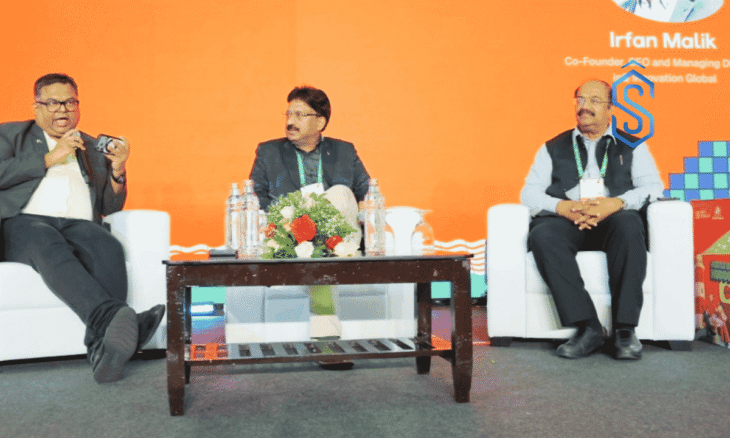
Irfan Malik, Co-founder, CEO and Managing Director of InQ Innovation Global, highlighted the importance of Indian startups developing a global outlook once they have established a successful business.
Anchoring a discussion on Cross Border Capital and Global Growth: Investing in the Next Generation High-Growth Ventures, Malik said it is critically important for successful Indian startups to scale up to the global level, make their products and solutions commercially valuable across geographies and go for global markets for capital.
For scale-up stage startups, this requires looking at international markets not merely as opportunities for future expansion but as potential destinations for their products, services and business models.
The ability to establish commercial relevance across different geographies and attract capital from international markets can become important factors in determining how quickly these ventures can expand.
Why scale-up stage startups need industry support, not just government backing
Access to capital and international markets is only one part of the scaling challenge. Startups also need a broader support system that can help them navigate the transition from domestic success to international expansion.
Ramanan Ramanathan, Mission Governing Board Member of the India AI Mission, said the Indian startup ecosystem has demonstrated its ingenuity and has the potential to grow exponentially by leveraging global linkages and attracting the capital required for scaling up.
However, he emphasised that scale-up stage startups should be supported not merely by state agencies but also by the industry.
This puts greater emphasis on industry participation in the startup growth journey. While government initiatives can provide institutional support, industry connections and collaborations can help startups strengthen their business networks and access opportunities beyond their existing markets.
Ramanathan also highlighted the importance of building on India’s existing startup networking ecosystem while making greater use of international collaboration programmes.
“Over the years, enormous networking has happened in India for the advantage of startups. Leveraging the international collaboration programs is also important at this stage,” he said.
For founders, this points to the importance of developing relationships that extend beyond domestic startup communities. International partnerships and collaboration programmes can help businesses establish connections that are relevant to their global expansion ambitions.
Global exposure and mentorship can help founders navigate the next growth phase
Another challenge for scale-up stage startups is gaining the guidance and exposure needed to operate in international markets.
Dr Suresh Venkatachari, Founder and Promoter of Quantum Nexis Inc and Founder and Promoter of Healthcare Triangle, said successful Indian startups have already demonstrated their passion and determination.
However, they need guidance and support from state agencies and mentors to gain global exposure and access the capital required to scale up and accelerate.
His observations highlight the importance of mentorship in the startup growth journey. Founders who have demonstrated the ability to build successful businesses also need access to experienced mentors and institutional networks as they prepare to expand into new markets.
For startups moving into the scale-up stage, this support can be particularly important in navigating the requirements of global expansion and identifying opportunities to attract international capital.
India’s next startup growth phase will depend on global connectivity
India’s startup ecosystem has built considerable domestic networking opportunities, but the next phase of growth will require stronger international connections between founders, investors, industry participants and institutions.
The discussions at Huddle Global 2026 brought attention to a key challenge facing India’s high-growth ventures: converting domestic entrepreneurial success into global commercial opportunities.
The message for scale-up stage startups is that expansion cannot depend solely on increasing operations within India. Building globally competitive products, accessing cross-border capital, strengthening industry relationships and securing international exposure will also matter.
Organised by Kerala Startup Mission (KSUM), Huddle Global 2026 brought together policymakers, venture capitalists, mentors and startup founders over three days in Thiruvananthapuram, with discussions focusing on the next phase of growth for the startup ecosystem.