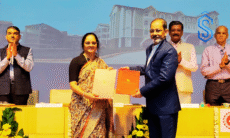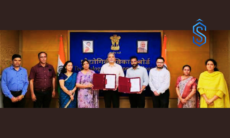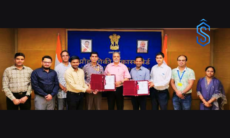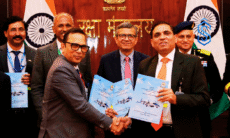

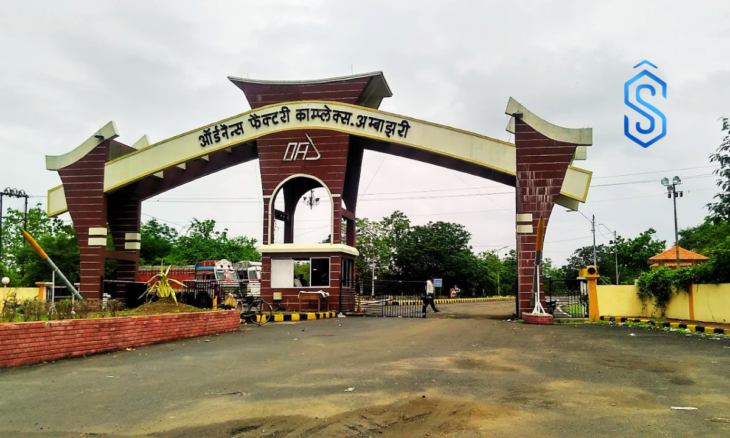
Nagpur: Emphasising the need for India to achieve greater self-reliance in critical strategic sectors, Defence Minister Rajnath Singh performed the Bhoomi Pujan (ground breaking ceremony) for a state-of-the-art aluminium extrusion press with a capacity of 10,000 tons at Ordnance Factory Ambajhari, Nagpur, a unit of Yantra India Limited (YIL), on June 19, 2026.
Maharashtra Chief Minister Devendra Fadnavis was also present on the occasion.
Calling the aluminium extrusion press a significant milestone in India’s journey towards self-reliance, Rajnath Singh stated that a nation capable of meeting its own requirements moves forward with confidence in safeguarding its interests.
He stressed that in the current geopolitical environment, India must take control of security-related necessities and reduce dependence on imports to remain future-ready.
The upcoming aluminium extrusion press facility will be among the most advanced of its kind in the country.
The aluminium extrusion press is designed to manufacture large and complex aluminium alloy profiles required for defence systems and platforms, aerospace and aviation structures, missile programmes, railways, transportation sectors, and other strategic industrial applications.
According to the government, the aluminium extrusion press project will help reduce dependence on imported critical aluminium extrusions while strengthening India’s domestic supply chain.
It is also expected to support future requirements across strategic sectors through indigenous manufacturing capabilities.
“This extrusion press addresses a crucial need. Modern fighter jets, missiles, and advanced space programmes require metals that are lightweight and strong, capable of withstanding even the most extreme conditions. Such metals are produced through specialised processes. If the quality of the metal is superior, it will serve well in every situation,” said Rajnath Singh.
Highlighting the role of indigenous defence manufacturing, the Defence Minister pointed to the contribution of Made-in-India equipment during Operation Sindoor.
He stressed the importance of expanding domestic production of critical defence hardware and noted that thousands of specialised components form the backbone of major defence systems. The new aluminium extrusion press facility, he said, would strengthen India’s capabilities in this crucial area.
Rajnath Singh further observed that while the nature of warfare is changing and adversaries are becoming harder to detect, conventional warfare and its associated capabilities remain highly relevant.
He said the importance of a strong military-industrial ecosystem would continue for decades, making the aluminium extrusion press project a strategic investment aligned with future national requirements.
Also Read: Coal-to-Ammonium Nitrate Project: PM Modi to Kickstart Major Coal Gasification Venture in Odisha
Defence Production and Export Targets
The Defence Minister highlighted the government’s efforts to realise Prime Minister Narendra Modi’s vision of Aatmanirbhar Bharat through a focus on technology, workforce development, knowledge creation, and faith in the nation’s capabilities.
He stated that India’s defence production has witnessed remarkable growth over the past decade. Domestic defence production, which stood at ₹46,000 crore in 2014, has increased to a record ₹1.78 lakh crore in FY 2025-26.
Defence exports have also expanded significantly, rising from less than ₹1,000 crore in 2014 to an all-time high of ₹38,424 crore.
“We are poised to achieve the targets we have set for the next 2-3 years – ₹3 lakh crore defence production and ₹50,000 crore defence exports ahead of schedule,” Rajnath Singh said.
He noted that initiatives such as the aluminium extrusion press project demonstrate India’s commitment to building indigenous industrial capabilities and strengthening strategic manufacturing infrastructure.
YIL and OFB Transformation
Acknowledging the role played by Yantra India Limited in advancing defence self-reliance, Rajnath Singh said the corporatisation of the Ordnance Factory Board was undertaken to make the system more agile and responsive to emerging technologies and changing industry requirements.
He stated that corporatisation was intended to provide operational autonomy to newly created defence public sector entities, enabling them to pursue innovation, undertake research, expand exports, and embrace calculated risk-taking.
“Post-corporatisation, we envisioned that the new entities enjoy sufficient operational autonomy and gain opportunities to excel in innovation, risk-taking, research, and exports.
All the new DPSUs have successfully moved in that direction. OFB’s production, which stood at ₹12,755 crore in the pre-corporatisation year of FY 2019-20, has risen to ₹26,282 crore in FY 2025-26. In defence exports, the figure stood at a mere ₹81 crore prior to corporatisation. It has now surged to ₹4,561 crore, with YIL contributing ₹397 crore,” he added.
Importance of R&D and Capital Infusion
The Defence Minister described Research and Development (R&D) and capital infusion as two key drivers of industrial growth in the modern competitive environment.
He emphasised that innovation and R&D are essential for long-term competitiveness and sustainability. According to him, organisations that invest in innovation are better positioned to lead future industries.
Speaking about capital investments, Rajnath Singh said that modern machinery and advanced equipment create a critical technological linkage within manufacturing systems.
Investments such as the aluminium extrusion press help improve efficiency, enhance product quality, modernise operations, and strengthen manufacturing competitiveness.
He urged public sector enterprises to prioritise technology upgrades, machinery modernisation, and adoption of global best practices to remain competitive and meet national expectations.
Maharashtra CM Highlights Strategic Importance
Addressing the gathering, Maharashtra Chief Minister Devendra Fadnavis described the aluminium extrusion press project as a major step towards achieving the vision of Aatmanirbhar Bharat and Viksit Bharat under the leadership of Prime Minister Narendra Modi and the guidance of Rajnath Singh.
He stated that India’s defence sector is gaining global recognition and emerging as a significant exporter in international markets due to sustained policy support from the Central Government.
Referring to Operation Sindoor, Fadnavis called it a shining example of New India’s technological capabilities. He also highlighted the growing collaboration between Defence Public Sector Undertakings (DPSUs) and private industry, saying such partnerships are helping the country reach new heights in defence manufacturing.
Expressing confidence in the project’s regional impact, he said the aluminium extrusion press would strengthen Nagpur’s position as an important hub for defence manufacturing and contribute significantly to India’s self-reliance objectives.
The event was attended by Secretary (Defence Production) Sanjeev Kumar, Joint Secretary in the Department of Defence Production Dr Garima Bhagat, Director (Operations) and CMD (Additional Charge) of Yantra India Limited Vijaykumar Iyer, senior officials from the Department of Defence Production and YIL, officers from the armed forces, and industry representatives.