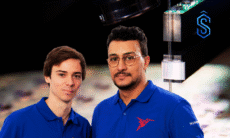
Highness Microelectronics is looking to reduce its manufacturing costs and strengthen its position in the specialised display market with the addition of an in-house glass cutting facility at its Rabale plant in Navi Mumbai.
The company has inaugurated the new line, which can process up to 300 glass units daily, and expects the investment to deliver cost savings of up to 30–40% as operations scale up.
The facility processes TFT-LCD open-cell glass into customised dimensions for applications across industrial displays, medical equipment, railway passenger information systems and other specialised display segments.
The new line is initially expected to reduce costs by approximately 10%. Highness Microelectronics expects the savings to improve in subsequent stages as production volumes increase and manufacturing processes are optimised. The company has not specified the cost components against which these reductions have been calculated.
In-house processing to support display manufacturing
The addition of glass cutting capabilities gives Highness Microelectronics an in-house facility for a specialised stage of display manufacturing. The company expects the move to improve operational efficiency and reduce its reliance on external processing.
The semi-automatic system uses camera-based measurement and positioning technology, with operator-assisted material handling. The company has specified a dimensional tolerance of plus or minus 0.5 mm.
The capability is intended to serve multiple end-use markets, including industrial, medical, railway, defence and transportation applications.
Bar-type displays and railway passenger information systems are among the products identified as potential applications.
The facility was commissioned on October 19, when the company announced the commencement of commercial production.
At the time, it also disclosed that multiple tenders and medical display applications were under consideration, alongside discussions involving metro projects and potential overseas orders.
Manufacturing expansion comes amid revenue and profit growth
The investment comes as Highness Microelectronics reports higher revenue and profitability.
For the half year ended September 30, 2026, the company recorded revenue from operations of ₹1,200.98 lakh, up 63.42% from ₹734.89 lakh in the corresponding period last year.
EBITDA increased 117.64% to ₹385.11 lakh, while net profit climbed 167.90% to ₹246.92 lakh. The company reported an EBITDA margin of 32.07% for the period.
The glass cutting line is not separately reflected in the reported financial performance, as commercial production commenced only in October. Its contribution to revenue, margins and overall cost efficiency will therefore become clearer in subsequent reporting periods.
Highness Microelectronics plans TFT-LCD facility in Goa
Beyond the Rabale expansion, the company is also pursuing a larger manufacturing project in Goa.
Highness Microelectronics has disclosed plans for a TFT-LCD manufacturing facility on an allotted 5,000-square-metre land parcel.
The proposed infrastructure is expected to include display module manufacturing, Chip-on-Glass (COG) and Film-on-Glass (FOG) production lines, along with research and development and testing facilities.
The company has not yet disclosed the proposed investment or a timeline for commissioning the Goa facility.
Its existing product portfolio includes TFT and LCD modules, display controllers, touch screens, and medical-grade and industrial monitors. These products cater to defence and aerospace, railways, healthcare and industrial automation markets.
From SME listing to manufacturing expansion
Highness Microelectronics entered the BSE SME platform on April 2, 2026, becoming the 714th company to list on the platform. Its IPO was priced at ₹120 per share and raised ₹21.67 crore.
The IPO proceeds were earmarked for expanding its assembly line at Rabale, meeting working capital requirements and reducing borrowings.