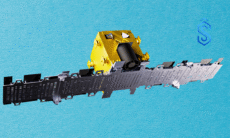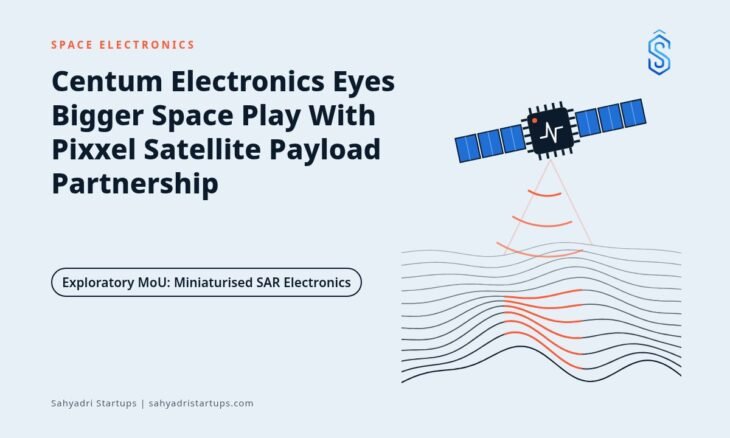
Bengaluru: Centum Electronics is exploring a deeper role in India’s commercial space technology ecosystem through a proposed collaboration with satellite manufacturer Pixxel to develop advanced payload electronics, including miniaturised Synthetic Aperture Radar (SAR) systems.
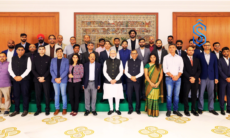
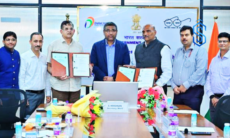
The two Bengaluru-based companies signed a Memorandum of Understanding (MoU), announced on 24 November 2026 at the India International Space Conclave (IISC) in New Delhi.
The partnership will focus on exploring joint development opportunities in satellite payloads and related subsystems, bringing together Centum’s electronics engineering capabilities and Pixxel’s experience in satellite systems and Earth observation.
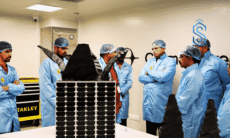
The company has previously supplied electronics and subsystems for national space missions and is now planning to establish an assembly, integration and testing facility for complete satellites.
Miniaturised SAR electronics among proposed development areas
Under the MoU, Centum Electronics and Pixxel will examine opportunities to jointly develop advanced satellite payloads, particularly miniaturised SAR electronics and other satellite subsystems identified by both parties.
The proposed engagement also includes technical knowledge exchange, data analysis and exploring new satellite applications.
The focus is on developing compact, high-performance technologies that can be integrated into smaller satellite platforms.
SAR technology uses radar signals to produce images of the Earth’s surface and can operate independently of daylight and, to a significant extent, weather conditions.
Its applications include environmental monitoring, agriculture, infrastructure assessment and disaster management.
For Centum Electronics, the collaboration offers an opportunity to work with a private satellite manufacturer on advanced payload requirements.
Pixxel, which operates a commercial hyperspectral satellite constellation, could gain access to Centum’s experience in developing high-reliability electronics for space applications.
Awais Ahmed, Founder and CEO of Pixxel, said: “The next generation of space missions will demand more sophisticated hardware, better integration of different technologies, and new ways of using the data we collect. No single company can build all of that in isolation.
What excites us about this collaboration is the opportunity to work with a company that has deep expertise in these fields, explore new technical possibilities, and develop capabilities to support a much wider range of missions and applications. That’s the kind of progress we want to contribute to as Pixxel continues to grow.”
Dr. Vinod Chippalkatti, Chief Technology Officer of Centum Electronics, said: “India’s space ecosystem is entering an important phase in which advanced payload technologies, faster development cycles and increased indigenous content will be central to the growth of the sector.
Through this collaboration with Pixxel, we intend to combine Centum Electronics’s capabilities in high-reliability payload with Pixxel’s expertise in satellite systems and Earth observation to explore the development of compact, high-performance SAR solutions for future missions.”
Centum Electronics’ space business gains strategic importance
The Pixxel agreement comes against the backdrop of Centum Electronics‘ growing focus on its Build to Specification (BTS) business, which includes the design and development of products such as satellite payloads, subsystems, radar and electronic warfare systems.
In Q2 FY27, Centum Electronics reported a 52% year-on-year increase in revenue to ₹312 crore. EBITDA grew 63%, while profit after tax increased 77%.
Its order book reached approximately ₹2,000 crore as of September 2026, up around 38% year-on-year. The BTS segment recorded 84% revenue growth during the quarter, with an order book of ₹959 crore.
The company’s space ambitions extend beyond supplying individual electronic components. Joint Managing Director Nikhil Mallavarapu had told investors that more than 200 Centum subsystems and modules had flown on the GISAT-1A (EOS-05) mission.
Management also disclosed plans to establish a new facility for satellite assembly, integration and testing. The company expects its order intake over the next two to three years to be distributed approximately 60:40 between defence and space.
Centum had reported operational revenue of ₹973.1 crore in FY26, compared with ₹776.1 crore in FY25. Its September 2026 investor presentation showed an order book of ₹1,800 crore as of 30 June 2026, before the subsequent increase reported by management.
Pixxel expands partnerships across the space ecosystem
Founded in Bengaluru, Pixxel develops hyperspectral Earth observation satellites, satellite systems and Earth intelligence software. Its portfolio includes the Firefly satellite constellation and Aurora, an Earth intelligence platform.
Pixxel has six Firefly satellites in orbit. The company has also been expanding its manufacturing and technology capabilities.
In September 2026, Pixxel announced a $100 million Series C funding round co-led by Temasek and Seraphim, taking its total funding to $195 million. The capital is intended to support advanced sensing satellites, Earth intelligence software and satellite manufacturing.
The Centum agreement is part of a wider set of collaborations Pixxel announced around IISC 2026. The company also signed an MoU with CS TECH Ai (Ceinsys Tech Limited) covering geospatial data applications, space technology and orbital sustainability.
Earlier, Pixxel announced a partnership with IIT Kanpur focused on hyperspectral research, AI-driven remote sensing and geospatial applications.