
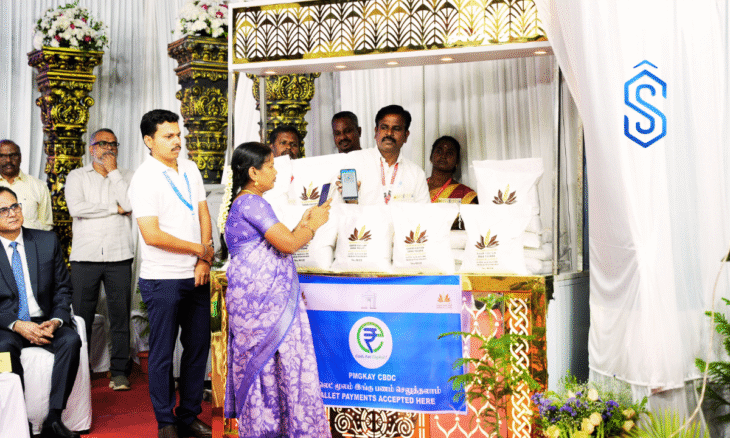
The Government of India has launched a Central Bank Digital Currency (CBDC)-based digital food currency pilot for Direct Benefit Transfer (DBT) under the Pradhan Mantri Garib Kalyan Anna Yojana (PMGKAY) in Puducherry.
As part of broader reforms accompanying the digital food currency rollout, 20 lakh calls are made every month to beneficiaries using artificial intelligence to gather feedback regarding the quantity and quality of foodgrains received.
The digital food currency pilot will soon be expanded to 3-4 States and Union Territories. A decision on nationwide rollout will be taken after detailed outcome analysis.
This initiative enables direct transfer of food subsidy into beneficiaries’ CBDC wallets in place of conventional bank accounts, marking a significant reform in the Public Distribution System (PDS).
Also Read: Bank of Baroda Underwrites USD 500 Million Foreign Currency Loan for ONGC Videsh Subsidiary
Digital Food Currency System: How It Works
Under the digital food currency framework, digital coupons generated through the Reserve Bank of India will be credited directly to beneficiaries as programmable digital currency (e₹).
Beneficiaries can redeem their entitled quantity of foodgrains at Fair Price Shops (FPS) or merchant outlets using CBDC coupon or voucher codes.
The digital food currency model is designed to address challenges related to biometric authentication and e-POS operational issues, while ensuring secure, traceable, and real-time transactions.
CBDC Integration in PDS: A Milestone in Food Security Reform
PMGKAY, described as the largest food security program in the world, provides wheat, rice, and millets to beneficiaries, strengthening nutritional security.
Speaking at the launch of the Digital Food Currency pilot, Union Minister for Consumer Affairs, Food and Public Distribution, Pralhad Joshi described the integration of CBDC into the Public Distribution System as a transformative milestone in India’s food security architecture.
He emphasized that the introduction of digital food currency will enhance transparency, efficiency, and beneficiary empowerment, ensuring that over 80 crore beneficiaries receive their entitlements with greater clarity and accountability.
Highlighting the vision of “Every grain, Every rupee, Every entitlement,” Joshi said the digital food currency reform will strengthen awareness about entitlements, enable secure and real-time transactions, and deepen the Digital India initiative within welfare delivery systems.
Joshi noted that international organizations have recorded that 25 crore people have been brought out of multidimensional poverty over the past 11 years.
He stated that recent surveys indicate the share of household expenditure on food has declined by 50% due to free foodgrain distribution by the Central Government and additional foodgrains provided by the UT of Puducherry. Savings are being used to purchase nutritious commodities such as milk and vegetables, contributing to improved nutrition and health outcomes.