
Pune: Venture Center, in partnership with Indian Oil Corporation Limited (IOCL) and CSIR-National Chemical Laboratory (CSIR-NCL), is bringing together key stakeholders from across the energy innovation ecosystem in Pune to strengthen pathways for technologies in clean energy, hydrogen and mobility to move from research and innovation towards real-world deployment.
The engagement, centred on “Advancing Energy Innovations,” brings together researchers, startups, industry leaders and other ecosystem stakeholders around a shared objective of connecting scientific capabilities and emerging technologies with industry needs, infrastructure and opportunities for deployment.
At the centre of this energy innovation collaboration is Venture Center, which serves as a node connecting different parts of the ecosystem.
As a deep-tech and science-based incubator, Venture Center brings together innovators, research institutions, industry partners, specialised infrastructure, mentors and funding pathways.
This role enables the collaboration to extend beyond individual programmes or engagements and build stronger routes for technologies to progress from early development towards validation, pilots and adoption.
The partnership combines complementary strengths across the energy innovation ecosystem.
CSIR-NCL contributes scientific and research capabilities along with deep expertise in emerging energy technologies, while IOCL brings the perspective of a major energy enterprise, including an understanding of industrial requirements and potential applications.
Venture Center connects these capabilities with startups and innovators, creating greater opportunities for technology development, industry engagement and eventual deployment.
“What we need now is to connect these capabilities to create a stronger pipeline from research to technology, and from technology to startups and industry, and from startups to scale. That is the opportunity that the MC² initiative represents,” said Dr. Premnath Venugopalan, Director, Venture Center.
He added, “I hope today’s program will be more than simply a showcase. I hope it becomes the beginning of new conversations, new collaborations, and new possibilities, and ultimately new solutions for India’s energy future.”
The need for stronger connections is particularly important for energy innovation, where promising technologies often have to navigate a complex journey between laboratory research, prototyping, testing, demonstration and commercial deployment.
Access to scientific expertise alone is not sufficient. Innovators also need opportunities to understand industry requirements, validate technologies, build relevant partnerships and identify pathways to adoption.
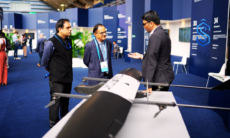
The engagement provides a platform for these connections through expert discussions on hydrogen and mobility, an innovation showcase featuring organisations working across the energy transition, and interactions between innovators, industry and ecosystem stakeholders.
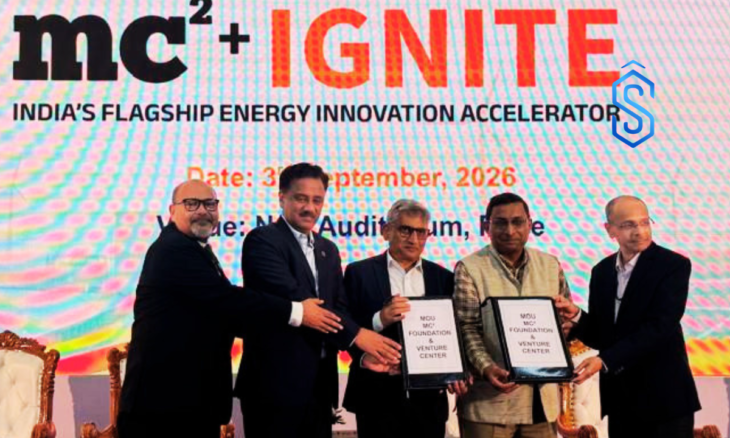
The programme also brings MC²+ IGNITE, India’s flagship energy innovation accelerator backed by the Ministry of Petroleum & Natural Gas and India’s leading Oil & Gas majors, into the wider ecosystem conversation.
Also Read: 70-mm Rocket Systems: Thales and KSSL Sign Strategic Alliance for Local Production
“We don’t lack brilliant ideas. What we have lacked today is the bridge between the innovators, the finances, the academics, the industry. These things have been working in silos. We have been trying to do our bit, but that was only a bit,” said A. S. Sahney, Chairman, Indian Oil Corporation Limited.
He emphasised the importance of collaboration in addressing India’s growing energy needs and added that the initiative seeks to “multiply our efforts, collaborate among ourselves, and to create something which has not been done until now that multiplies the impact of any single good idea by giving it a national scale.”
Through MC²+ IGNITE, early-stage energy ventures can access funding, mentorship, infrastructure and a pathway from pilot to procurement.
Venture Center’s role as the node within the energy innovation ecosystem provides a platform for innovators to engage with these opportunities and navigate the wider ecosystem.
The initiative also seeks to address one of the persistent challenges faced by deep-tech innovators: access to real-world testing and industrial environments.
As Sahney noted, “To a startup, those assets are the most valuable things that we can offer: a place to test, to fail—fail safely—to learn quickly, and to prove that a solution works not just on a bench scale, but on a pilot scale and on an industrial scale also.”
“Energy deep tech cannot be built by capital alone. A new catalyst, electrolyzer, drilling technology, a new bio-energy process, or a new hydrogen mobility system must be tested under real operating conditions. It must prove its safety, reliability, economics, and scalability—all four,” said Dr. R. A. Mashelkar, Padma Vibhushan, FRS.
He further highlighted the strength of MC²+ in bringing together capital, knowledge, infrastructure and national ambition, noting that “the real breakthrough is not in the amount of money being pooled; it’s the risk being pooled, knowledge being pooled, facilities being pooled, and a national ambition being pooled.”
The collaboration reflects a broader effort to build a more connected energy innovation ecosystem around India’s energy transition, where research institutions, deep-tech startups, industry and enabling organisations can work together across the technology development journey rather than in isolation.
For Venture Center, the energy innovation ecosystem initiative builds on its larger mission of helping science-based and deep-tech innovations move from the laboratory to the marketplace.
By connecting research capabilities with entrepreneurial talent, industry requirements, specialised infrastructure and ecosystem support, Venture Center is working to strengthen the conditions required for promising technologies to become deployable solutions.
Dr. Premnath highlighted the complementary roles of NCL and Venture Center in this journey: “NCL looks ahead to discover and invent the knowledge and technology needs of tomorrow, and Venture Center looks ahead to build and nurture enterprises and industries of tomorrow.”
The partnership between Venture Center, IOCL and CSIR-NCL creates a foundation for continued ecosystem engagement, technology development and stronger pathways towards pilots, scale and deployment, with Venture Center positioned at the centre of these connections.
Connected energy innovation pathways will be important in enabling technologies developed in laboratories and startups to move into environments where they can create meaningful impact.