
Pune: The three-day international conference on plastic circularity and sustainability, SPSI-CAPCS-2026, commenced on November 2, 2026, at CSIR-National Chemical Laboratory (CSIR-NCL), Pune, bringing together around 300 participants from academia and industry.
Jointly organised by CSIR-NCL and the Indian Institute of Science Education and Research (IISER), Pune, in association with the Society for Polymer Science, India (SPSI), Pune Chapter, the conference will continue until November 4, 2026.
The conference on Advancing Plastics Circularity and Sustainability (SPSI-CAPCS-2026) aims to facilitate discussions on emerging developments, challenges and innovative approaches towards plastic circularity, a key enabler of the circular economy.
The event brings together internationally distinguished scientists, researchers, academicians, industry representatives and young scholars to discuss various aspects of plastic circularity and sustainability, including plastic depolymerisation, recycling, upcycling, sustainable materials, waste management and circularity.
The three-day programme includes invited lectures, technical sessions, poster presentations and industry exhibitions showcasing polymer-related products and analytical equipment.
It also aims to enhance the visibility of India’s contributions to polymer science and research in the domain of plastics circularity.
Dr. Ashish Lele, Director of CSIR-NCL, highlighted the multidimensional challenges associated with plastic circularity and sustainability during his address at the inaugural session.
He outlined challenges spanning waste collection, sorting, segregation, recycling technologies, product applications, testing, certification, economics, environmental emissions, toxicity, safety and policy frameworks.
Dr. Lele emphasised that the underlying science of plastic recycling technologies remains poorly understood and stressed the need for scientific rigour and disruptive research to develop effective solutions.
He also appreciated the participation and sustained efforts of industry, start-ups, academia, R&D institutions and students in addressing the challenges associated with plastic circularity.
Prof. S. Sivaram Explains the Difference Between Sustainability and Circularity
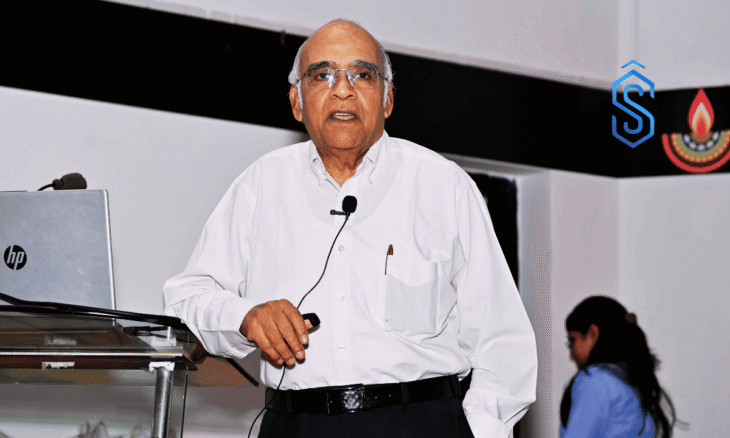
The inaugural session featured a keynote address by Prof. S. Sivaram, Former Director of CSIR-NCL, Pune, titled “Sustainability vs Circularity: Related not Synonymous.”
His lecture highlighted the relationship between sustainability and circularity and their significance in shaping responsible approaches towards resource utilisation and environmental protection.
He emphasised the importance of distinguishing between the two concepts in scientific discourse.
Explaining the distinction, Prof. Sivaram stated that circularity is a strategy or means, whereas sustainability is a broader goal encompassing economic, environmental, moral and social dimensions.
While circularity focuses on maximising the value of materials and resources through their continued use, sustainability represents a way of thinking aimed at the well-being and preservation of the planet.
He highlighted that all circular solutions may not be sustainable and all sustainable solutions need not be circular.
He also stressed that circularity is one of the approaches towards achieving sustainability and that the two terms should not be used interchangeably without supporting data.
Life-Cycle Assessment and Material Traceability Key to Plastic Circularity
Focusing on the challenges of achieving plastic circularity and sustainability in polymer science, Prof. Sivaram highlighted the need for comprehensive life-cycle assessment, material traceability and material flow analysis.
He emphasised that recycling rates alone are insufficient to establish circularity, as energy consumption, water usage, toxicity and other environmental trade-offs must also be considered.
He advocated designing materials for circularity at the molecular level, eliminating hazardous substances in processes and ensuring traceability throughout the material lifecycle.
Prof. Sivaram also highlighted the need to develop measurable metrics to assess circularity and understand its economic viability.
Concluding his address, he urged the scientific community to report circularity and sustainability as separate outcomes, supported by reliable data, to ensure scientific precision and maintain public trust in science.
SPSI-CAPCS-2026 Day 1 Technical Sessions Cover Plastic Recycling and Upcycling
The technical programme on Day 1 featured three sessions covering diverse aspects of plastics recycling, upcycling, sustainable materials and waste management.
The first session included lectures by:
- Prof. Suryasarathi Bose (IISc Bangalore): Spoke on dynamic thermosets and circular thermoplastics through vitrimer chemistry and upcycling of post-SaLSO PCR feedstocks.
- Prof. Bryan D. Vogt (The Pennsylvania State University, USA): Discussed scientific and engineering challenges in plastic waste management.
- Prof. Venkata Krishnan (IIT Mandi): Presented on non-noble metal-based sustainable heterogeneous catalysts for chemical recycling and upcycling of plastic waste.
- Industry perspectives on plastic circularity and sustainability were presented by Nilesh Modi of Reliance Industries Limited and Ayaz Kagzi of Pidilite Industries.
Their presentations focused on polymer product technologies, sustainable product and packaging development, responsible innovation and circularity.
CSIR-NCL Research Focuses on Plastic Depolymerisation and Upcycling
The second technical session featured Prof. Sreeram K. Kalpathy of IIT Madras, who spoke on the valorisation of non-metallic fractions from end-of-life printed circuit boards.
- Dr. Samir H. Chikkali of CSIR-NCL, Pune, presented insights into plastic depolymerisation and upcycling, highlighting research developments at the laboratory.
His lecture emphasised the conversion of waste polyethylene into value-added dodecane, highlighting research efforts towards developing approaches for plastic waste utilisation.
- Dr. G. Satyanarayana of Shilpa Medicare discussed the challenges involved in scaling up manufacturing polymer product technologies.
Sustainable Materials and Biopolymers Take Centre Stage
The third session of SPSI-CAPCS-2026 focused on sustainable materials and biopolymers, bringing together researchers and industry experts to discuss developments in material science.
- Dr. Debasis Samanta of CSIR-CLRI, Chennai, delivered a lecture on biopolymer-synthetic polymer hybridisation for sustainable materials development.
- Dr. Pramod Kumbhar of Praj Industries spoke about the potential of biopolymers, particularly polylactic acid (PLA) and polyhydroxyalkanoates (PHA), in shaping future materials.
- Dr. Nagaraju Barsu of CSIR-NCL, Pune, presented on the development of sustainable methods for converting plastics into fine chemicals.