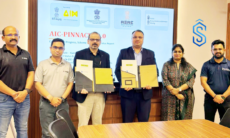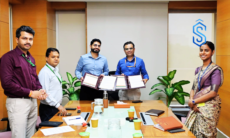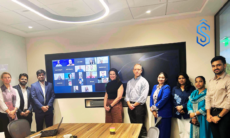

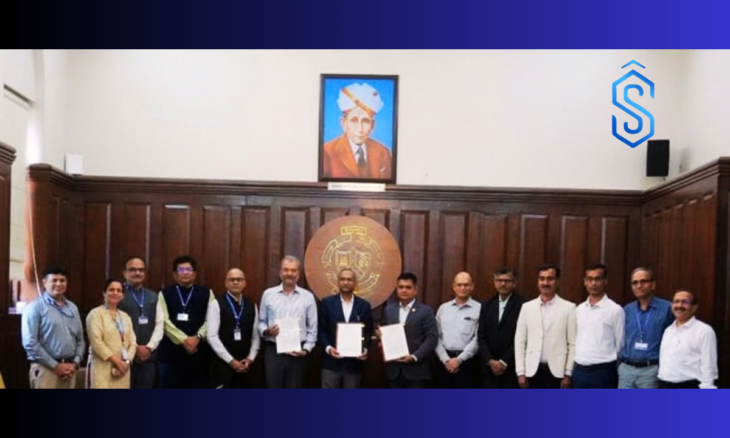
Pune: COEP Technological University (COEP Tech), Pune, and JSW Projects, a JSW Group company, have signed a Memorandum of Understanding (MoU) to establish an Advanced Battery Research and Development Centre at COEP Tech’s Chikhali Research Park.
The Advanced Battery Research and Development Centre will be India’s first indigenous battery prototyping and pilot-scale R&D platform, bringing lithium-ion cell technology development onto an academic campus in Pune for the first time.
The initiative will involve a combined investment of more than ₹800 crore across two phases.
The partnership aims to strengthen indigenous battery technology capabilities in India and position COEP and Maharashtra as a battery-technology hub. The initiative also has the potential to catalyse more than 1,000 battery ecosystem-related jobs.
The collaboration between COEP Tech and JSW Projects is aimed at addressing the gap between university research and industrial application.
Under the MoU, COEP Tech faculty and students will work alongside JSW engineers on commercially relevant battery technology through an industry-academia collaboration model.
Prof. Sunil Bhirud, Vice Chancellor, COEP Technological University said, “This collaboration has the potential to create a strong indigenous alternative to imported batteries and make a significant contribution to India’s journey towards self-reliance. For students, it will provide a unique opportunity to learn and work on cutting-edge battery technologies.
The scale and scope of the Phase I and Phase II collaboration between COEP Technological University and JSW make it a landmark industry-academia initiative. At a time when next-generation battery technologies are receiving significant research attention across the country, the partnership places research, innovation and technology development on a much larger platform.
The collaboration has the potential to develop technologies that can reduce dependence on imported batteries and contribute to the vision of a self-reliant and developed India. The scale of this initiative makes it a significant step forward in strengthening India’s battery technology ecosystem. We are grateful for the valuable support extended by the Government of Maharashtra and the Board of Governors of COEP Technological University in enabling this important initiative.”
Sajjan Jindal, Chairman, JSW Group, said, “Cell is the new oil. Just as oil powered the last century, battery cells will power this one, from electric vehicles to the grid. For decades, India has spent precious forex importing oil. This time, we must build the cutting-edge skills and capabilities to make these cells right here, for a new India.
Our partnership with COEP Tech, with its 170-year legacy of engineering excellence, will bring industry and academia together to design, test and validate cells built for Indian conditions, and help shape India’s clean energy future.”
Also Read: Foxscan Uses AI, Data From 40,000 Properties for Building Diagnostics in Pune
A Shared Ambition Across the JSW Group
The Advanced Battery Research and Development Centre forms part of the broader battery technology ambitions of the JSW Group, one of India’s diversified industrial conglomerates.
JSW Energy is building grid-scale battery energy storage systems (BESS) alongside its renewable power business, while JSW Motors is expanding into electric mobility across vehicle segments.
Batteries are central to both areas, with JSW Group having committed to developing an indigenous value chain in the domain. Talent development, R&D capabilities and a domestic battery ecosystem are key components of the initiative.
Advanced Battery Research and Development Centre to Be Developed in Two Phases
The project will be developed in two phases with a combined investment of more than ₹800 crore.
- Phase 1 will establish a Cell Research & Development Centre focused on designing, simulating and prototyping indigenous lithium-ion and other advanced chemistry cells, including sodium-ion batteries.
- Phase 2 will scale the initiative into a Cell Validation Centre capable of producing cells ranging from 100 Ah to 600 Ah.
The batteries developed at the Advanced Battery Research and Development Centre are targeted to perform at par with the best in the world while being designed for India-centric climatic conditions and applications.
The facility will also serve as a platform for joint research, publications, projects and intellectual property development. The initiative is intended to take battery technology development from the laboratory to industry while remaining on the academic campus.
Why the Battery R&D Centre Matters
The Advanced Battery Research and Development Centre is expected to support the development and validation of battery technologies before giga-scale manufacturing.
According to the partnership details, pilot lines play an important role in validating technologies before large-scale manufacturing commitments. The Centre will allow JSW to de-risk the technology foundation before moving towards giga-scale manufacturing.
The project also aligns with the Government of Maharashtra’s vision for COEP’s Chikhali Research Park as a hub for automotive and allied technology development.
The initiative is also aimed at addressing India’s dependence on imported battery technology. The release states that more than 90% of the global lithium-ion supply chain is controlled by China, highlighting the need to build indigenous capabilities.
The Advanced Battery Research and Development Centre is expected to contribute to positioning COEP and Maharashtra as a battery-technology hub, with the potential to catalyse more than 1,000 battery ecosystem-related jobs.
The initiative is also positioned as a step towards Aatmanirbhar Bharat and India’s Net Zero 2070 ambition, with applications across electric vehicles, grid storage and clean energy.
The partnership between JSW Group and COEP Technological University marks the beginning of an industry-academia initiative focused on battery research, technology development and energy applications in India.