
New Delhi: The Central Drugs Standard Control Organisation (CDSCO) is moving towards a smarter, risk-based regulatory approach aimed at reducing and prioritising regulatory intervention, simplifying processes and applying greater proportionality to compliance while continuing to safeguard the quality, safety and efficacy of medicines.
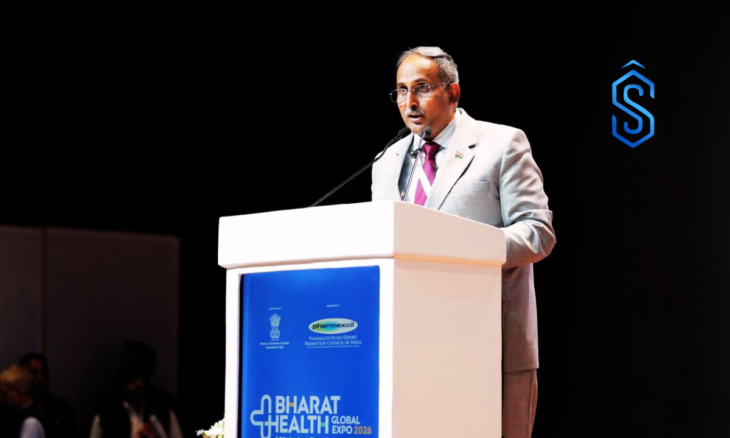
Dr. Ranga Chandrashekhar, Joint Drug Controller, CDSCO, Ministry of Health & Family Welfare, Government of India, said this during a panel discussion at iPHEX 2026, organised by the Pharmaceuticals Export Promotion Council of India (Pharmexcil).
The discussion at iPHEX 2026 focused on rationalising criminal provisions governing business and regulatory compliance, with regulators and industry representatives calling for proportionate enforcement, simpler compliance processes and a clearer distinction between procedural lapses and serious violations.
CDSCO pushes for risk-based regulatory approach
Speaking at iPHEX 2026, Dr. Chandrashekhar said CDSCO has examined the drug approval pathway to identify areas where regulatory intervention can be reduced without compromising quality.
He pointed to measures under which certain requirements have shifted from prior approval to prior intimation. These include manufacturing for test and analysis before approval, a move aimed at helping reduce processing time.
Dr. Chandrashekhar also said that for BA/BE studies, clinical study designs are standardised and adequate guidance is provided, enabling prior intimation for the generation of data for export purposes.
The CDSCO official further highlighted the organisation’s increasing use of digital systems, dashboards and supervisory mechanisms to reduce processing time and improve regulatory oversight.
Jan Vishwas framework highlighted at iPHEX 2026
At iPHEX 2026, Dr. Chandrashekhar also referred to the Jan Vishwas framework and said certain procedural and record-keeping offences have been reviewed to ensure that the regulatory response remains proportionate to the nature of the lapse.
He said compounding offences with monetary penalties is available in appropriate cases while retaining deterrence.
The broader discussion at iPHEX 2026 highlighted the need for a regulatory system that can distinguish between minor procedural shortcomings and serious violations, while maintaining safeguards for the quality, safety and efficacy of medicines.
Also Read: India Lithium Battery Manufacturing Sector to Create Up to 2 Million Jobs by 2030: Adecco India
Central Bureau of Narcotics calls for proportionality
Extending the principle of proportionality to controlled substances, Brijendra Chowdhary, IRS (Customs & Indirect Taxes), Deputy Narcotics Commissioner, Central Bureau of Narcotics, said regulation should facilitate legitimate pharmaceutical activity while maintaining strong safeguards against diversion.
Speaking at iPHEX 2026, Brijendra Chowdhary said, “The challenge is to enable legitimate economic expansion of the pharmaceutical industry while preventing illicit diversion.
Regulation must serve as a protective guardrail, not as an operational hurdle. There should be proportionality, a clear distinction between a legitimate error and malfeasance, risk-based enforcement, and zero tolerance against drug trafficking and diversion.”
He added that the Central Bureau of Narcotics is working towards an ecosystem of self-regulation and voluntary compliance, supported by greater engagement and awareness among industry.
He also noted that the NDPS Act is undergoing a process of amendment, with the principle of proportionality forming part of the deliberations.
NITI Aayog backs simpler compliance processes
The broader policy thinking discussed at iPHEX 2026 was reinforced by Dr. Sonali Rawal, Senior Health Specialist, NITI Aayog.
She said the government’s approach is not to do away with necessary regulation, but to simplify processes where delays can be avoided.
Dr. Sonali Rawal said, “The underlying basis of this process is trust, what we call Jan Vishwas. We work with the premise of trust in industry partners and regulators, and where processes can be undertaken in parallel or unnecessary requirements can be simplified to hasten approvals, we should look at doing so.”
Her remarks at iPHEX 2026 underscored the emphasis on trust between industry and regulators and on simplifying unnecessary procedural requirements without removing necessary regulatory safeguards.
Indian Pharmaceutical Alliance calls for proportional regulation
From the industry side, Dr. Amit Talwar, Associate Secretary General, Indian Pharmaceutical Alliance, said regulatory reform should not be interpreted as a demand for weaker standards.
At iPHEX 2026, Dr. Amit Talwar said, “When we say deregulation, we are not asking for abolition of regulation. Medicines are different from other industries because public health, safety and efficacy are involved.
What we are saying is that there has to be proportionality. An issue involving misconduct or intent should not be treated at par with a violation in a documentary process.”
The comments reflected the industry’s emphasis on maintaining regulatory standards while seeking a more proportionate approach to compliance and enforcement.
Cipla seeks clearer and objective regulations
Building on this discussion at iPHEX 2026, Meera Vanjari, Chief General Counsel, Cipla Ltd., stressed that greater proportionality also requires clearer and more consistently interpreted regulations.
Mrs. Meera Vanjari said, “We do not want to dilute regulations. What we would definitely like to see is that regulations are more specific, objective, easy to interpret and not open to subjectivity.
For minor offences such as documentation not being in order or missing certain deadlines, there should be other ways of dealing with them, including compounding, while ensuring that penalties remain a deterrent.”
Her comments at iPHEX 2026 highlighted the industry’s demand for greater regulatory clarity, objectivity and consistency, particularly in dealing with minor procedural offences.
Pharmexcil highlights importance of regulatory predictability
K. Raja Bhanu, Director General, Pharmexcil, said regulatory clarity and predictability are particularly important for Indian pharmaceutical companies, exporters and MSMEs.
At iPHEX 2026, K. Raja Bhanu said, “For Indian pharmaceutical companies, particularly exporters and MSMEs, regulatory clarity and predictability are critical to competitiveness.
A smarter, risk-based approach can reduce avoidable compliance burden while maintaining the standards expected in global markets.
This balance between strong regulation, ease & speed of doing business will be important as India strengthens its position as a trusted pharmaceutical partner worldwide.”
iPHEX 2026 focuses on ease of doing business in pharmaceuticals
The discussion at iPHEX 2026 reflected a broad convergence that ease of doing business in the pharmaceutical sector does not mean weaker regulation.
Instead, participants highlighted the need for a more risk-based and proportionate regulatory framework that simplifies compliance for legitimate businesses while retaining strong safeguards around quality, safety and serious violations.
The discussion formed part of iPHEX 2026, the 12th edition of India’s flagship pharmaceutical exhibition, organised by Pharmexcil with the support of the Department of Commerce, Ministry of Commerce and Industry, Government of India.
The exhibition is being held under the Bharat Health Global Expo 2026 at Bharat Mandapam, New Delhi.
iPHEX 2026 features more than 800 stalls, 600 hosted international buyers, around 30,000 business visitors and 10,000 business meetings. Pharmexcil is targeting approximately USD 1.4 billion in export business opportunities through iPHEX 2026.