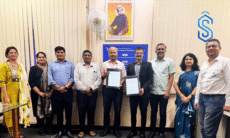

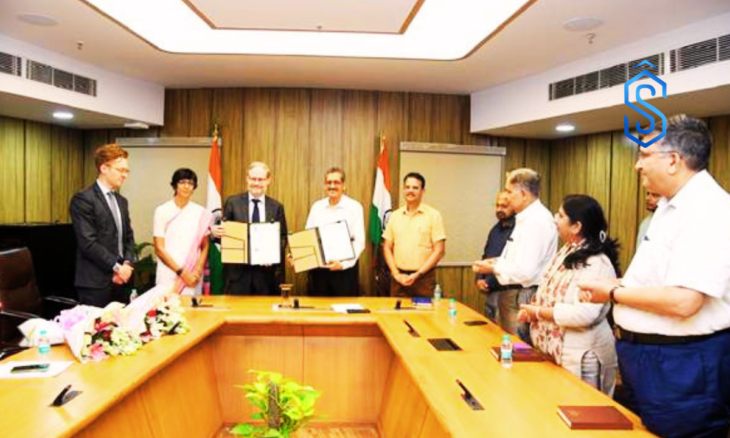
New Delhi: The Archaeological Survey of India (ASI) and the National Museum of Denmark have signed a Memorandum of Understanding (MoU) to undertake a collaborative underwater archaeological project aimed at locating and documenting the remains of the Danish Ship Oresund, which was wrecked off the coast near Karaikal, Puducherry, in 1619 CE.
The initiative marks a significant step in preserving maritime heritage while strengthening scientific cooperation between India and Denmark.
The agreement has been signed between the Archaeological Survey of India’s Underwater Archaeology Wing and the National Museum of Denmark’s Njord – Center for Maritime and Underwater Cultural Heritage, Copenhagen.
The collaboration seeks to investigate the historic Danish Ship Oresund, regarded as the first Danish vessel known to have reached India before it met with a shipwreck near Karaikal.
The Danish Ship Oresund occupies an important place in maritime history as the earliest recorded Danish ship to arrive in Indian waters.
Shortly after reaching India, the vessel was wrecked near Karaikal, making it a valuable archaeological resource for understanding the early maritime interactions between Denmark and India.
The shipwreck also offers insights into the broader history of seafaring and trade across the Indian Ocean during the early seventeenth century.
Under the terms of the MoU, the project will focus on conducting a non-invasive archaeological survey using advanced technologies and scientific methodologies to identify potential remains of the Danish Ship Oresund.
The investigations will be carried out by the Underwater Archaeology Wing of the Archaeological Survey of India in close collaboration with experts from the National Museum of Denmark.
Also Read: EyeROV Proposes India-Norway Marine Tech Innovation Corridor at Oslo Summit
The survey will rely on scientific techniques designed to document underwater cultural heritage without disturbing the site.
By employing non-invasive methods, researchers aim to locate and record evidence associated with the Danish Ship Oresund while ensuring the preservation of the archaeological remains.
The partnership represents a significant milestone for the Underwater Archaeology Wing of the Archaeological Survey of India, as it is the organisation’s first collaborative archaeological project with an international institution.
The initiative is expected to enhance academic and scientific cooperation between India and Denmark in the field of underwater cultural heritage research.
Beyond the search for the Danish Ship Oresund, the collaboration reflects the shared commitment of both institutions towards documenting, protecting, and studying underwater cultural heritage through international partnerships and the application of modern scientific methodologies.
The project is also expected to contribute to a deeper understanding of historical maritime networks, early trade routes, and cultural exchanges between Europe and the Indian subcontinent.
By combining expertise from both countries, the Archaeological Survey of India and the National Museum of Denmark aim to advance research into one of the most historically significant shipwrecks connected with early Danish voyages to India.
The investigation of the Danish Ship Oresund is expected to provide valuable archaeological evidence that will enrich the understanding of maritime history and underwater cultural heritage in the Indian Ocean region.