
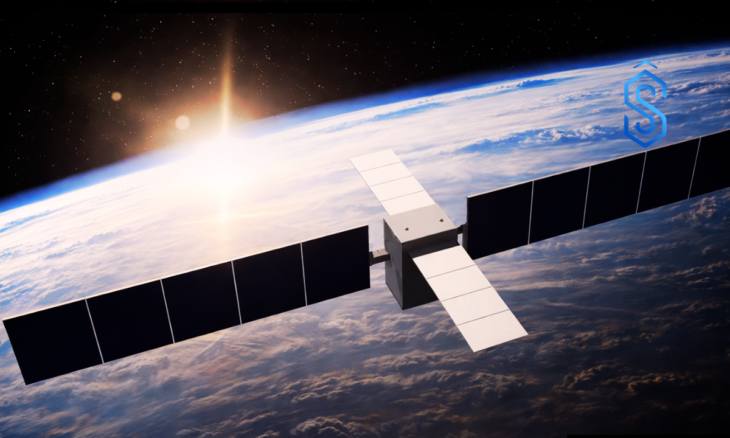
Los Angeles, California: Orbital has announced plans to launch its first test mission in 2027 as the company accelerates efforts to build and operate AI data centers in space.
With demand for artificial intelligence compute surging globally, the company is positioning itself to address power and cooling constraints by shifting infrastructure beyond Earth.
Orbital is developing space-based AI data centers powered by solar energy and cooled through radiative heat dissipation, eliminating traditional energy and cooling limitations faced by terrestrial data centers.
The company is also launching its R&D hub, Factory-1, in Los Angeles as part of its broader expansion strategy.
a16z Speedrun Backing for Orbital-1 Mission
The company has secured funding from a16z Speedrun to support Orbital-1, its first test mission aimed at deploying AI compute infrastructure in low Earth orbit. The investment underscores growing interest in unconventional approaches to scaling AI.
“Speedrun backs founders to explore ambitious ideas — the harder the problem, the better,” said Andrew Chen, General Partner at a16z Speedrun. “Orbital is taking on AI’s biggest constraint with a bold and radical idea.”
Also Read: OrbitAID Aerospace to Develop On-Orbit Satellite Refueling System with TDB-DST Funding
Orbital’s Vision: Space-Based Compute to Overcome Earth’s Energy Limits
The premise behind Orbital is rooted in a critical industry bottleneck: energy availability. As AI workloads expand, the limitation is increasingly shifting from semiconductor supply to the electricity required to power large-scale computing.
“AI progress is being constrained by the grid,” said Euwyn Poon, CEO and founder of Orbital. “Data center economics are dominated by electricity and cooling, and both are getting harder. In orbit, solar power is continuous and cooling is fundamentally different. We are building compute infrastructure that removes the energy ceiling and scales with AI’s potential.”
The company aims to harness uninterrupted solar power available in sun-synchronous orbit, where energy supply is constant and unaffected by weather or nighttime cycles. Each satellite in Orbital’s planned constellation will host NVIDIA-powered servers, enabling distributed AI workloads.
Orbital Focuses on AI Inference for Scalable Space Infrastructure
A key technical strategy for the company is focusing on AI inference rather than training large models. Training requires tightly coupled GPU clusters with ultra-low latency, which is not currently feasible in a satellite-based architecture.
Instead, the company is targeting inference workloads, where requests can be processed independently across distributed nodes. This allows the company to scale its infrastructure efficiently through a constellation of satellites operating in parallel.
Also Read: Space Tech Startup GalaxEye Signs Data Reseller Partnership with NewSpace India Limited
Orbital-1 Mission Scheduled for April 2027 Launch
The company’s first satellite, Orbital-1, is scheduled to launch aboard a SpaceX Falcon 9 rocket in April 2027. The mission will focus on validating sustained GPU performance in orbit, testing radiation resilience, and enabling commercial AI inference workloads after successful validation.
In parallel, the company is preparing regulatory filings with the FCC to deploy a full constellation dedicated to orbital AI compute infrastructure.
Founder Euwyn Poon Brings Proven Scaling Experience
Orbital was founded by Euwyn Poon, a Cornell-educated engineer and lawyer known for founding Spin, the micromobility company later acquired by Ford. During his tenure, Poon scaled Spin to operations across 100 cities with revenues exceeding $100 million.
Following his exit, Poon turned his attention to AI infrastructure, identifying energy constraints as a critical bottleneck.
“The energy ceiling on AI isn’t theoretical, it’s a real constraint that will impede the advancement of intelligence,” said Poon. “This is the solution.”