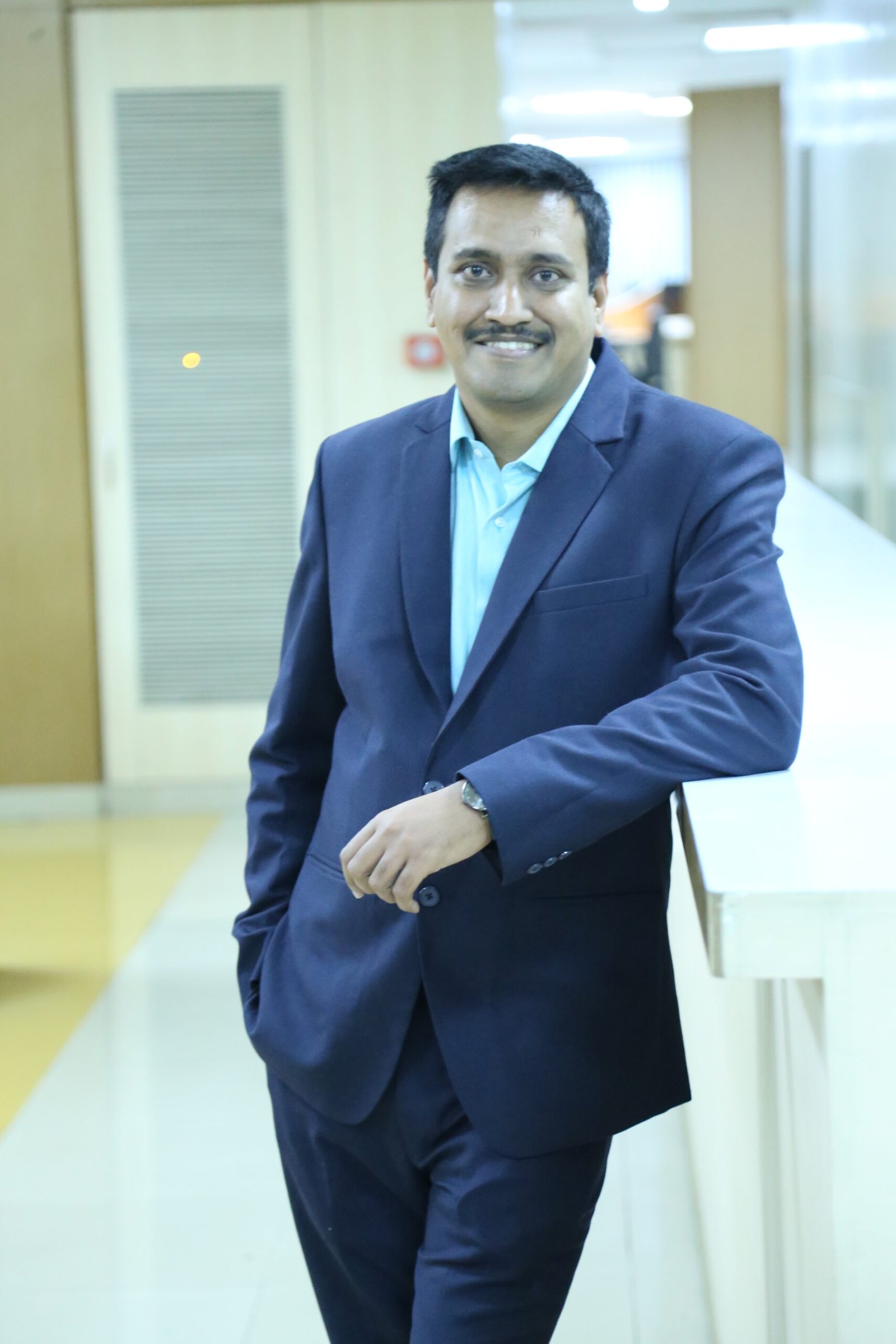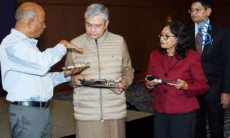


Pune: VLSI Society of India President Satya Gupta emphasised that Maharashtra can significantly narrow its semiconductor manufacturing gap with leading states by supporting 25–26% of project costs across product development and manufacturing, while simultaneously investing in engineering and technician-level talent.
Speaking on the side-lines of ’39th VLSI Design International Conference 2026′ (VLSID 2026) and the ’25th International Embedded Systems Conference’ organized in Pune by the VLSI Society, Gupta stressed that this targeted financial and workforce commitment – backed by clear, written policies – is critical for translating intent into execution as most semiconductor manufacturing projects remain concentrated in other states like Gujarat.
VLSID 2026 organisers including Shailesh Parab, Kedar Patankar, Ranjit Yewale, and Sanjay Ghorpade, were present during the media interaction.
Also Read: Cyient Semiconductors Acquires Majority Stake in Kinetic Technologies for Up to USD 93 Million
VLSID 2026: Expanding Maharashtra’s Semiconductor Talent Pipeline
This year’s VLSID 2026 conference is being held in Pune, marking the city’s return as host after 2018. Since then, the VLSI Society has significantly expanded its engagement and activity, focusing on measurable outcomes rather than symbolic gatherings.
Gupta shared plans to train 50,000 students from Maharashtra over the next five years, preparing them for roles in chip design and semiconductor manufacturing. He noted that semiconductor jobs are not constrained by geography and that the objective is to make these engineers globally employable.
India’s semiconductor workforce currently stands at approximately 150,000 professionals, with nearly 90% engaged in chip design and the remaining 10% in manufacturing and technology development. This workforce is expected to double by 2030.
Also Read: Quantum Diamond Microscopy: IIT Bombay Innovation Boosts Neuroscience and Semiconductor Research
VLSID 2026: Building People as the Foundation of the Semiconductor Industry
Gupta underlined that people form the foundation of the semiconductor ecosystem. Products are conceptualized, designed, and manufactured by skilled professionals, making talent development the most critical long-term investment.
While academic institutions provide fundamental knowledge, he said industry-relevant skills must be embedded within undergraduate education to ensure employability.
The VLSI Design Conference (VLSID 2026) , he explained, brings together academia, industry, and government. A significant proportion of participants are students, and industry support – both financial and strategic – is vital for the conference’s continued growth. As part of this effort, the VLSI Society provides fellowships to 550 students, covering travel, accommodation, and registration, enabling them to attend the conference at no cost.
Also Read: Honeywell 13MM Pressure Sensor to Boost Semiconductor Manufacturing Precision
VLSID 2026: Tape-Out Program Offers Real-World Chip Design Experience
A major highlight discussed at VLSID 2026 is the student tape-out initiative. Tape-out refers to the stage at which a completed chip design is sent for fabrication, a key milestone in semiconductor development. Under this program, student-only teams from academic institutions are invited to participate, without involvement from faculty or research scholars.
From approximately 550 teams, around 40 are selected through a rigorous evaluation process. Each selected team receives a subsidy of ₹5 lakh from the VLSI Society to support participation in the tape-out program. This initiative, supported by a voluntary professional society rather than a commercial entity, has grown into one of the largest academic semiconductor programs globally.
Through this effort, 40 fully functional chips – including processors and complete systems – will be developed by students, offering them exposure to industry-grade workflows in a scaled-down academic environment.
VLSID 2026: Importance of Written Policies and State-Level Commitment
At VLSID 2026, Gupta pointed out that the key difference between current progress and earlier attempts lies in the presence of clearly written policies. While past efforts relied on informal discussions, the current approach – led by the central government – provides structured frameworks that global companies require.
States such as Gujarat, Odisha, Madhya Pradesh, and Andhra Pradesh have already introduced semiconductor policies. Gupta emphasized that Maharashtra must adopt a similar approach, moving away from open-ended discussions toward defined commitments, incentives, and infrastructure.
He stated that the VLSI Society is actively engaging with the Maharashtra government to help shape a strong, well-documented semiconductor policy aligned with best practices from other leading states.
Also Read: UST Invests in Kaynes Semicon to Build INR 3330 Crore Semiconductor Manufacturing Facility in India
VLSID 2026: Balancing Products, Manufacturing, and Talent
Gupta explained that semiconductor development rests on three pillars: chip design, manufacturing, and talent. Policies must address all three in a balanced manner. While manufacturing capacity is important, product development and ownership of chip designs are equally critical from economic, strategic, and security perspectives.
Manufacturing, he noted, is highly capital-intensive and often requires large subsidies. In contrast, chip-level product development demands comparatively lower capital and can deliver significant long-term value if supported effectively.
Maharashtra, as the country’s highest GDP-contributing state, has the potential to lead across all three pillars if its existing strengths—connectivity, industrial base, and institutional support—are aligned through focused policy execution.
VLSID 2026: Addressing Talent Gaps in Manufacturing and Technology
At VLSID 2026, Gupta highlighted that talent gaps are most pronounced in manufacturing and process technology roles. Currently, only 10–15% of the required workforce exists for these functions. Operating a semiconductor fab requires around 20,000 people, of whom only about 10% are engineers. The remaining workforce comprises technicians and operators who can be trained within six months through targeted programs.
Initially, around 2,000 highly skilled professionals with prior fab experience are required, many of whom may come from outside India. Over time, local talent can be developed through structured education and training initiatives.
Also Read: India Approves INR 4600 Crore Semiconductor Manufacturing Projects in Odisha, Punjab, Andhra Pradesh
VLSID 2026: Strengthening India’s Product-Driven Ecosystem
Gupta emphasized that while Indian engineers have contributed extensively to global semiconductor companies, this success has not yet translated into large domestic product companies. India has strong design capabilities, but most engineers work for multinational service and design centers rather than Indian product firms.
Government initiatives such as the Design Linked Incentive (DLI) scheme aim to address this gap by covering up to 50% of chip design costs, with overall support reaching nearly 65%. With additional state participation, total assistance could reach up to 80% of project costs.
The long-term objective is to create multiple globally competitive fabless semiconductor companies from India, supported by strong institutional oversight and a product-centric approach.
VLSID 2026: Long-Term Vision for India’s Semiconductor Growth
Concluding his remarks at VLSID 2026, Gupta stated that electronics and semiconductors already influence approximately 37.5% of India’s GDP, a figure expected to exceed 50% by 2047. As digitization deepens across sectors such as healthcare, transportation, defense, and mobility, the role of semiconductors will continue to expand.
He reiterated that Maharashtra has the strongest foundation among Indian states to emerge as a leading electronics and semiconductor hub, provided there is policy stability, coordinated execution, and sustained investment in people, products, and manufacturing.