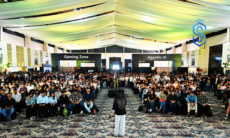

Pune: Tata Technologies is increasingly integrating artificial intelligence into its engineering business, with AI now embedded in the delivery of more than 80 per cent of its large fixed-bid projects.
The company expects AI-related cost savings to contribute more than 50 basis points to its operating margin at the FY27 exit run rate, according to disclosures made at its first Investor Day in Mumbai on Thursday.
The Pune-headquartered engineering and digital services company is positioning AI as a driver of both delivery efficiency and a shift in its commercial model.
Tata Technologies AI strategy focuses on using engineering-specific AI applications to improve programme execution while moving away from conventional billing models towards outcome-based contracts.
A presentation titled AI – A Force Multiplier, by Nithin Thomas, Vice President and Head – Enterprise AI, detailed its approach to industrialising AI across engineering programmes.
Amplaify.X to Anchor Tata Technologies’ AI Initiatives
Tata Technologies has introduced Amplaify.X as its overarching brand for AI initiatives spanning product, plant and performance transformation.
“Amplaify.X is our overarching brand for AI, spanning transformation in Product, Plant & Performance,” the presentation said.
The platform combines agentic AI solutions, which the company plans to offer through an enterprise marketplace, with internal AI programmes built around its engineering expertise.
“Our Engineering Context provides the competitive edge in the age of commoditized AI development,” the company said.
AI Adoption Could Change Engineering Services Economics
A central component of the Tata Technologies AI strategy is its attempt to capture the productivity benefits generated by AI rather than passing them entirely to customers through lower billing.
Engineering services companies have traditionally operated through engagements linked to the number of hours deployed. AI-driven automation can reduce the time required for engineering tasks, potentially affecting revenues under such arrangements.
Tata Technologies is addressing this through outcome-led programmes, where commercial arrangements are linked to delivery rather than engineering hours consumed.
“Hours released by AI are ours to keep and to redeploy, to save cost,” one presentation slide stated.
The company said all eight programmes currently in flight are outcome-led. Productivity gains can allow it to undertake additional programmes without proportionately increasing its cost base.
The transition also supports the company’s FY30 ambitions, outlined by CEO and Managing Director Warren Harris during the opening keynote.
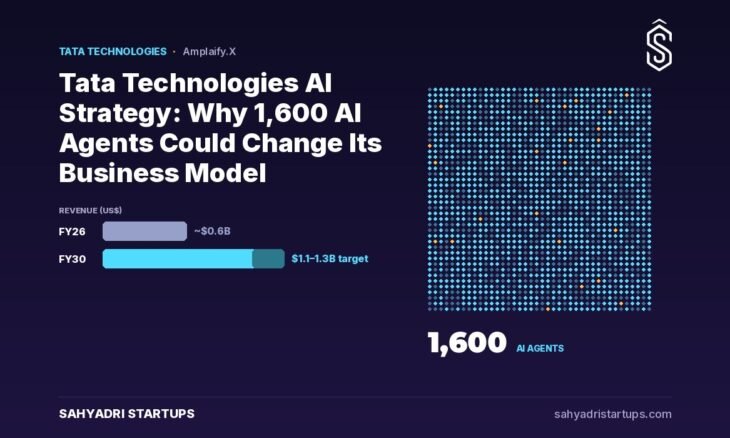
Tata Technologies is targeting revenue of US$1.1 billion to US$1.3 billion by FY30, compared with approximately US$0.6 billion in FY26. It also aims for EBITDA margins of at least 20 per cent and outcome-based revenue to account for more than 50 per cent of total revenue.
AI Could Shorten Automotive Development Cycles
Automotive engineering is among the key areas where Tata Technologies is applying AI across the product development lifecycle.
Its applications include improving product requirements using usage data, generating designs and software drafts, testing designs through digital twins, validating manufacturing equipment through plant twins and detecting production defects using AI vision systems.
The company estimates that AI could reduce automotive development timelines from 36–48 months to 18–24 months, measured from concept to start of production.
It also disclosed that its AI stack for new product introduction, covering simulation, standardisation, orchestration and integration, has been incorporated into the delivery of a US$138 million full vehicle programme for a leading European luxury carmaker. Tata Technologies secured the programme in the September quarter.
1,600 AI Agents in Pipeline
Tata Technologies also disclosed that its internal agent builder community has grown to approximately 1,000 employees, with more than 1,600 AI agents in the pipeline across over 30 archetypes.
Combined with AI adoption across more than 80 per cent of large fixed-bid projects, the company expects these initiatives to generate operating efficiencies.
Tata Technologies, part of the Tata group, is headquartered at Rajiv Gandhi Infotech Park in Hinjawadi, Pune. It had 12,895 employees at the end of September.