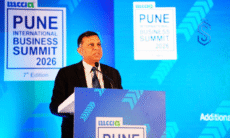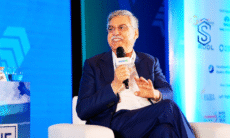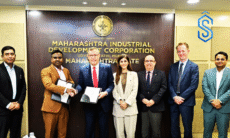

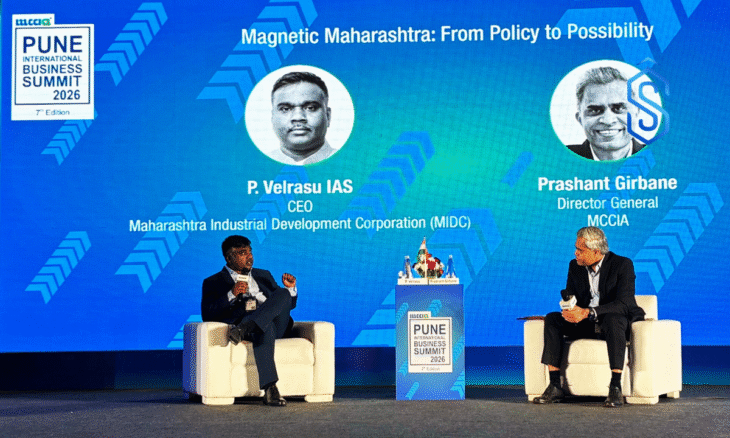
Pune: P Velrasu, CEO of Maharashtra Industrial Development Corporation (MIDC), said Maharashtra is preparing for the next wave of industrial expansion through large-scale land acquisition, infrastructure readiness, and policy support during a fireside chat with Prashant Girbane, Director General of Mahratta Chamber of Commerce Industries and Agriculture (MCCIA), at the recently concluded Pune International Business Summit 2026.
Speaking in the session “Magnetic Maharashtra: From Policy to Possibility”, P Velrasu emphasized that proactive land planning is essential to convert global investment commitments into operational industries.
Addressing industry concerns about land availability, P Velrasu clarified that MIDC has sufficient land, but demand remains concentrated in specific clusters.
“Land is available – but location matters. Everyone wants Chakan, which is already exhausted,” P Velrasu said.
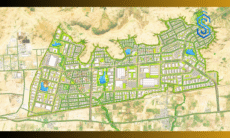
He cited Dighi as an example, where MIDC holds around 10,000 acres of land. Of this, 2,500 acres are allocated for a pharma park, while 7,500 acres remain available for industrial development.
To prepare for future investments, P Velrasu announced major land acquisition initiatives across Maharashtra:
- 2,000 acres near the Pune–Mumbai Expressway
- 1,500 acres near Talegaon
- 10,000 acres in the Nagpur–Gadchiroli region
- Industrial expansion in Nashik and Chhatrapati Sambhajinagar
“We aim to be ready when companies come knocking,” P Velrasu said, underlining MIDC’s long-term planning approach.
P Velrasu Explains Maharashtra’s Revised Industrial Policy 2025
Discussing policy reforms, P Velrasu said the revised industrial policy introduced in late 2025 was the first major update in nearly eight years.
“Industrial policies are not revised every year. The last one was about 7–8 years ago,” P Velrasu said.
He explained that consultations with industry helped identify sector-specific challenges. For example, energy pricing concerns affecting data centers were addressed, and GST classification challenges in the EV sector were offset through state incentives.
“We also introduce sector-specific policies – like the GCC policy – with clear objectives: 400 new GCCs and 8 lakh new jobs,” P Velrasu said.
According to him, the broader goal of the policy is to reinforce ease of doing business and signal that Maharashtra listens to industry needs.
Also Read: PIBS 2026: Sanjeev Krishan Outlines India’s Growth SCRIPT for the Next Decade
P Velrasu Identifies Steel, Defense, AI, Pharma and Electronics as Growth Engines
From a sectoral perspective, P Velrasu outlined key industries driving Maharashtra’s industrial growth.
“In the next 4–5 years, one-third of India’s steel production will emerge from the Nagpur–Gadchiroli–Chandrapur triangle, making it the steel capital of India,” he said.
In defense manufacturing, he noted that Maharashtra has declared defense corridors and MIDC has invested ₹300 crore in defense startups, generating returns exceeding 25–30% with zero NPAs.
Frontier technologies such as AI, robotics, and data centers remain priority areas. P Velrasu said Maharashtra currently hosts more than 55% of India’s data center capacity.
He also highlighted pharma and biotechnology clusters in Nashik–Dindori and a 2,500-acre pharma city being developed at Dighi under a PPP model. Electronics manufacturing and semiconductors were identified by P Velrasu as long-term strategic opportunities.
Referring to ecosystem-led development, P Velrasu cited Hinjawadi as an example of how industrial clusters can generate lakhs of jobs over decades.
Global Investments: ₹30 Lakh Crore MoUs at Davos
Turning to global investment engagement, P Velrasu spoke about Maharashtra’s participation at Davos.
“Yes, Davos may be a tiny village – smaller than Lonavala – but over the past 50 years, it has built a powerful ecosystem,” he said.
He noted that Maharashtra signed MoUs worth about ₹3 lakh crore in 2021, while this year the figure reached ₹30 lakh crore.
“Over 70–80% of these proposed investments are foreign direct investments,” Velrasu said.
More than 60 MoUs were signed across sectors including steel, AI, quantum computing, pharmaceuticals, and green fuels. According to him, these investments – estimated at over 40–50 billion USD – are expected to materialize over the next five to six years.
Also Read: PIBS 2026: Sunil Kant Munjal Calls for Values-Driven Leadership and Execution Excellence
Maharashtra Maintains Strong MoU Conversion Record
Addressing questions about implementation, Velrasu said Maharashtra maintains a strong MoU conversion track record.
“Our long-term MoU conversion rate is around 70%. In 2021–22, it was as high as 98%. The following years saw rates of 85% and 77%,” P Velrasu said.
He explained that large industrial projects typically follow a five- to seven-year cycle, with planning in the first year, construction beginning in the second year, and production starting around the fifth year.
According to Velrasu, MIDC tracks MoUs through structured systems covering land allocation, capital subsidies, GST reimbursements, stamp duty concessions, and utility incentives.
Support for Women Entrepreneurs
On inclusive industrial growth, P Velrasu said women entrepreneurs are increasingly visible in frontier technologies and pharmaceuticals.
To support greater participation, P Velrasu outlined several initiatives:
- 20% additional financial incentives under select schemes
- MSME allocations for women entrepreneurs
- Women’s hostels in industrial estates such as Chakan, Talegaon, TTC, and Sambhajinagar
- Safety and infrastructure improvements
“Beyond incentives, mindset change and supportive infrastructure are crucial,” Velrasu said.
Government–Industry Trust and Collaboration
In his concluding remarks, P Velrasu emphasized trust and collaboration between government and industry.
“The government’s intention is to promote industry. The political leadership has clearly stated that departments are service providers to industry,” P Velrasu said.
He noted that more than 20 services now allow self-certification, including building plan approvals up to 500 square meters. P Velrasu also said nearly 150 legacy circulars are being reviewed to simplify regulations.
“My phone is always accessible. If we work with mutual trust, industry will move forward faster,” Velrasu said.