
Lisbon: Manus AI is changing its hiring approach, prioritising candidates who can work alongside artificial intelligence (AI) rather than those who are only good at executing tasks.
Tao Zhang, Co-founder and Chief Product Officer of Manus AI, said the company has moved away from traditional coding examinations and now evaluates engineering candidates on their ability to use AI to solve problems.
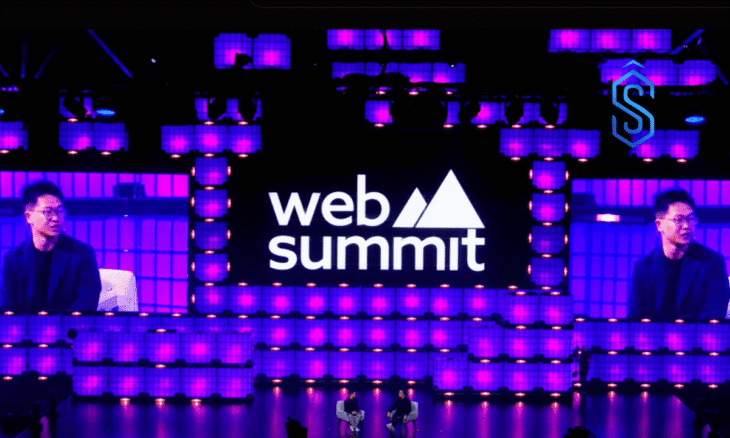
Speaking during a session titled The Age of Agents at Web Summit Lisbon 2026, in conversation with Casey Lau, Co-Host of Web Summit, Zhang explained that the company’s hiring requirements have changed over the past eight months as AI capabilities have evolved.
“The people we are looking for is not just good at doing things. Because, you know, AI is already good at doing things. So we don’t need more people only good at doing things. But the people we are looking for is that they can co-working with AI,” Zhang said.
Manus AI Replaces Traditional Coding Tests With AI-Based Assessments
Explaining its approach to engineering recruitment, Zhang said Manus AI no longer relies on traditional coding examinations. Instead, candidates are asked to use Manus to solve a problem within four hours.
The hiring team then reviews the candidate’s task session to understand how they worked with AI and approached the problem.
“When we hire engineers, we will not do some like traditional coding exams, you know, like unlike coding exams. We will ask the candidates to use Manus to solve a problem in four hours. And then he will bring that task session, you know, to us. We will review the session together to see if this candidate is used to work with AI. That is super important, yeah,” Zhang said.
The company continues to advertise conventional positions externally, including front-end and back-end engineering roles. However, its internal approach to job responsibilities has changed.
Zhang said that within his product and marketing teams, product managers are coding for the company’s codebase and working on designs, while designers are also writing code.
He added that Manus AI has effectively removed these traditional role distinctions internally, although conventional job descriptions remain on its careers page.
“So I think the job description is still for the public, because you know, like the world is not catching up, yeah,” Zhang said.
Manus AI Expands AI Agents With Phone Numbers, Emails and Digital Wallets
Zhang also discussed how Manus AI has evolved since its launch in March 2025. The company initially introduced what it described as the world’s first general AI agent, giving AI access to a computer to perform a wide range of tasks through a single agent rather than specialised agents.
However, he said providing AI agents with computer access has now become common practice across the industry.
At the end of September 2026, approximately one month after becoming independent again, Manus AI introduced Manus 2.0, expanding the capabilities of its agents beyond computers.
The new version gives each agent a phone number to make calls, send messages and read incoming messages. Agents also receive their own email addresses, which they can use to register for services and manage emails. Additionally, they have digital wallets that allow them to make purchases with the user’s permission.
Zhang described this as a new stage in the development of AI agents.
Manus AI Co-Founder Explains How He Uses Agents to Manage Work
Sharing his own experience, Zhang said his biggest daily challenge was often getting started rather than solving problems. He said his to-do list sometimes contains more than 20 or 30 tasks every morning.
With Manus 2.0, he can convert these to-dos into tasks for the AI agent. The agent follows up when it needs additional information, asking questions such as, “Can you provide me with more context so I can proceed?” or “Can you tell me which PM or which person should follow up on this task?”
This allows the agent to seek clarification and move tasks forward instead of waiting for detailed instructions at every stage.
Manus AI’s $2 Billion Meta Deal and Subsequent Funding
Manus AI launched in China in early 2025, focusing on practical AI agents that could perform tasks for users.
In December 2025, Meta attempted to acquire the company for $2 billion as part of its efforts to strengthen its position in the agentic AI race. However, the deal faced political hurdles amid concerns among US politicians about Chinese technology companies, while China also sought to retain its homegrown AI talent and technology.
Chinese regulators ordered the acquisition unwound in April 2026. In August, Manus announced that it would soon resume operating independently.
Despite the setback, Manus AI continued its operations and raised more than $500 million in October 2026 in its first funding round following the unwinding of the Meta deal.
Asked by Casey Lau about the experience, Zhang said, “I think, you know, that’s – when you run a startup, there’s like many problems you have to solve. We can’t imagine, you know, like what kind of problems we may solve, but this is a journey, I think. Yeah, we learned so much along the journey. Right now, we are focusing on the future, yeah.”