New Delhi: India is moving to deepen its scientific engagement with the International Centre for Theoretical Physics (ICTP), a leading global research institution based in Trieste, Italy, through a new cooperation fund aimed at expanding opportunities for Indian scientists, researchers and students.
The initiative seeks to give a more structured framework to India’s longstanding association with the International Physics Centre, particularly in research collaboration, academic exchange and international researcher mobility.
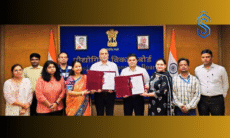
The Department of Science and Technology (DST) and ICTP have signed a Letter of Intent (LoI) to initiate the ‘India-ICTP Co-operation Fund’, marking a step towards institutionalising scientific collaboration between India and the international research centre.
The LoI was signed during Union Minister of State (Independent Charge) for Science and Technology and Earth Sciences Dr Jitendra Singh’s visit to ICTP in Trieste, Italy.
Dr Praveenkumar Somasundaram, Head of International Cooperation at DST, exchanged the document on behalf of the Indian government.
India-ICTP Cooperation Fund to Expand Research Opportunities
The proposed India-ICTP Co-operation Fund is intended to strengthen existing research connections and create more opportunities for Indian researchers to participate in international scientific programmes.
Welcoming the initiative, Dr Jitendra Singh expressed hope that the fund would enhance the impact of the existing engagement between India and the International Centre for Theoretical Physics and deliver greater benefits to Indian researchers.
He highlighted the importance of institutionalising the ongoing association, noting that a more structured partnership could provide further impetus to scientific collaboration and researcher mobility.
The initiative builds on years of engagement between Indian scientific institutions and ICTP.
Indian scientists, researchers and students have participated in several of the centre’s programmes, including research collaborations, academic exchanges, workshops and capacity-building initiatives.
The new cooperation framework is expected to strengthen these existing channels while providing additional opportunities for Indian researchers to access international research networks and academic programmes.
Why the International Physics Centre Matters for India’s Research Ecosystem
The International Centre for Theoretical Physics is an important global institution for advanced research, higher education and scientific capacity-building in physics, mathematics and related disciplines.
Based in Trieste, Italy, ICTP serves as an international platform connecting scientists and research institutions across countries. Its activities include research programmes, fellowships, postgraduate education, workshops and opportunities for collaboration among researchers working in fundamental and applied sciences.
For India, its importance extends beyond academic exchanges. The centre provides Indian researchers with access to international scientific networks, specialised research programmes and opportunities to collaborate with experts working at the forefront of scientific research.
Indian institutions, including the Department of Science and Technology, the Council of Scientific and Industrial Research (CSIR), leading universities and Indian Institutes of Technology (IITs), have engaged with ICTP through joint research, workshops and exchange programmes.
Indian researchers also participate in ICTP’s visiting fellowships, diploma programmes and postdoctoral opportunities. At the same time, experts from the International Physics Centre engage with Indian scientific communities working in areas such as high-energy physics, astrophysics, climate modelling and computational science.
India-ICTP Co-operation Fund to Strengthen India’s International Scientific Collaboration
The India-ICTP Co-operation Fund is expected to build on these existing relationships by providing a more structured mechanism for scientific engagement and researcher mobility.
International research partnerships are important for connecting domestic scientific institutions with global expertise, enabling knowledge exchange and creating opportunities for researchers to work with international counterparts. Through its association with ICTP, India has developed several such avenues for collaboration in fundamental research and specialised scientific disciplines.
The new initiative seeks to strengthen these networks and expand the participation of Indian scientists, researchers and students in international academic and research activities.
The collaboration has also supported broader networks of scientific excellence by bringing together researchers and institutions, contributing to fundamental discoveries and encouraging innovations with societal impact.