
New Delhi: PM-SETU has entered its nationwide implementation phase after the 4th National Steering Committee (NSC) approved the expansion of the flagship skill development programme across all 200 identified Industrial Training Institute (ITI) clusters.
The Committee also cleared Strategic Investment Plans (SIPs) worth ₹1,237.58 crore, with leading industry partners including Jindal Naveen Avasar Limited, ArcelorMittal Nippon Steel India, Apollo MedSkills, Sri Siddharth Infratech & Services (I) Pvt. Ltd. (SSISPL) and Neuland Foundation anchoring ITI transformation projects in Odisha, Gujarat and Telangana.
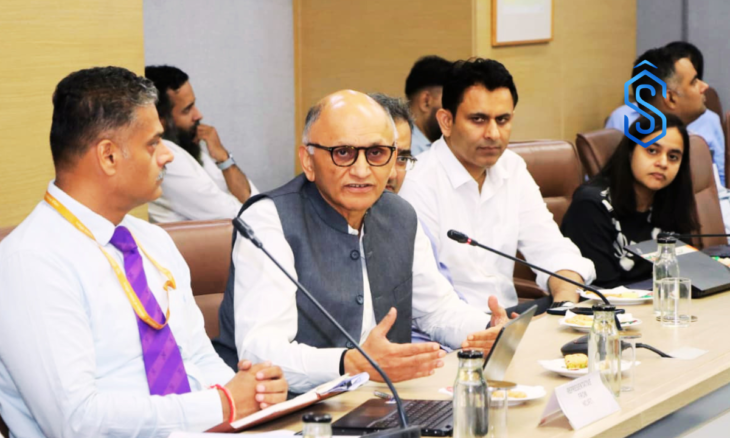
The 4th National Steering Committee (NSC) of the Pradhan Mantri Skilling and Employability Transformation through Upgraded ITIs (PM-SETU) was held under the chairpersonship of Debashree Mukherjee, Secretary, Ministry of Skill Development and Entrepreneurship (MSDE).
The meeting was attended by Dilip Kumar, Director General, Directorate General of Training (DGT), Manasi Sahay Thakur, Joint Secretary, along with senior representatives from state governments, multilateral development partners, industry leaders and other stakeholders.
A key decision taken during the meeting was the transition of PM-SETU from its pilot phase to a nationwide rollout covering all 200 identified ITI clusters.
The approval enables States and Union Territories to begin implementation based on industry readiness and implementation capacity.
The Committee also approved measures aimed at simplifying implementation, strengthening industry participation, encouraging greater involvement of Public Sector Undertakings (PSUs), and expanding the institutional ecosystem supporting PM-SETU.
Also Read: Antier Solutions Signs Five-Year MoU with NIELIT to Boost Blockchain and AI Skilling in India
One of the major outcomes of the meeting was the approval of Strategic Investment Plans (SIPs) with a combined outlay of ₹1,237.58 crore.
The plans, recommended by the respective State Steering Committees, are intended to support industry-led upgradation of multiple ITI clusters across the country.
- Odisha ITI cluster
In Odisha, the approved ITI cluster comprises Government ITI Barbil as the hub, with Government ITI Anandapur, Government ITI Koira, Government ITI Karanjia and Government ITI Barkote serving as spoke institutes.
Jindal Naveen Avasar Limited has been selected as the Anchor Industry Partner for the cluster, with a proposed investment of ₹240.21 crore under PM-SETU.
- Gujarat ITI cluster
For Gujarat, the approved cluster includes Government ITI Surat as the hub, supported by Government ITI Hajira, Government ITI Bardoli, Government ITI Sachin and Government ITI Surat (Mahila) as spoke institutes.
ArcelorMittal Nippon Steel India has been selected as the Anchor Industry Partner, with a proposed investment of ₹240.18 crore.
- Telangana ITI clusters
The Committee approved three ITI clusters in Telangana under PM-SETU.
The first cluster comprises Government ITI Old City as the hub, with Government ITI Warangal, Government ITI Nalgonda Boys, Government ITI Vikarabad Girls and Government ITI Panjaguda as spoke institutes. Apollo Med-Skills Limited has been selected as the Anchor Industry Partner with a proposed investment of ₹241.01 crore.
The second approved cluster includes Government ITI Patancheru as the hub, along with Government ITI Shadnagar, Government ITI Marpally, Government ITI Nalgonda (New) and Government ITI Bhongir as spoke institutes. Sri Siddharth Infratech & Services (I) Pvt. Ltd. (SSISPL) has been selected as the Anchor Industry Partner, with a proposed investment of ₹275.24 crore.
The third cluster comprises Government ITI Sangareddy as the hub, supported by Government ITI Hathnoora, Government ITI Medak, Government ITI Dubbaka and Government ITI Yellareddy as spoke institutes. Neuland Foundation has been selected as the Anchor Industry Partner, with a proposed investment of ₹240.94 crore.
About PM-SETU
PM-SETU is one of the Government’s flagship schemes aimed at modernising India’s ITI ecosystem through strong industry partnerships, upgraded infrastructure, future-ready curricula and improved employability outcomes.