

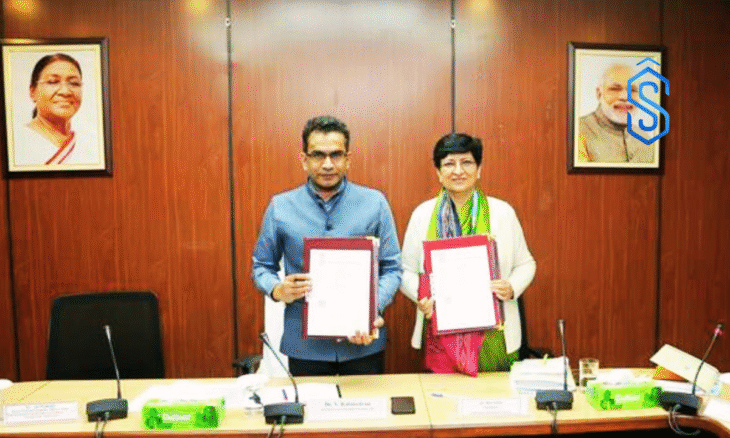
New Delhi: The Indian Pharmacopoeia Commission (IPC), an autonomous institution under the Ministry of Health and Family Welfare, Government of India, has signed three Memoranda of Understanding (MoUs) with the Goa State Pharmacy Council (GSPC), Quality Council of India (QCI), and HLL Infra Tech Services Limited (HITES) to enhance medicine safety, quality assurance, and capacity-building initiatives across the country.
These collaborations aim to strengthen pharmacovigilance systems, promote rational use of medicines, support professional training, and improve healthcare quality standards nationwide.
Indian Pharmacopoeia Commission – GSPC Collaboration on Pharmacovigilance and Training
The MoU between IPC and the Goa State Pharmacy Council provides a structured framework for collaboration in pharmacovigilance, rational use of medicines, and professional development of pharmacists in Goa.
The partnership envisages the promotion of the National Formulary of India among registered pharmacists, strengthening adverse drug reaction (ADR) reporting mechanisms under the Pharmacovigilance Programme of India (PvPI), and conducting training programmes, workshops, and continuing education activities.
The agreement also focuses on awareness initiatives related to drug safety, pharmacopoeial standards, and sustainable pharmacopoeia.
Additionally, it aims to support the establishment and strengthening of ADR Monitoring Centres and enhance systematic reporting and documentation practices across healthcare facilities in the state.
Also Read: ProPharma Opens New Hyderabad Office to Accelerate Global Expansion
Indian Pharmacopoeia Commission – QCI MoU for Quality Promotion and Capacity Building
Under the MoU signed between Indian Pharmacopoeia Commission and the Quality Council of India, both institutions will collaborate on quality promotion, public health awareness, and capacity-building initiatives.
The cooperation includes joint planning and implementation of training and awareness programmes related to pharmacovigilance and allied subjects, utilisation of institutional expertise and technical resources, and development of collaborative initiatives aligned with national quality and safety objectives.
The MoU provides a flexible, non-binding framework to facilitate project-based cooperation through mutually agreed work orders while supporting broader healthcare quality assurance and standardisation goals.
Strengthening Institutional Partnerships in Healthcare Safety
Indian Pharmacopoeia Commission continues to foster institutional partnerships with regulatory bodies, professional councils, quality organisations, and public sector enterprises to strengthen pharmacovigilance systems, enhance professional competencies, and promote uniform standards for medicine quality and patient safety across India.
The Joint Secretary, Ministry of Health and Family Welfare (MoHFW), Harsh Mangla, emphasized the critical role of the regulatory sector in the effective implementation of primary and secondary healthcare across the country.
Mangla congratulated Dr V Kalaiselvan, Secretary-cum-Scientific Director (IPC), and representatives of the Goa State Pharmacy Council and NABET, QCI, while addressing the gathering during the MoU signing ceremony.
He described the MoU as a significant starting point for institutional partnership while underscoring that sustained efforts would be required to achieve long-term public health goals.
Also Read: Pharma Exports Near USD 30 Billion as India Strengthens Biotech and MedTech Ecosystem
Mangla further highlighted that MoUs should not remain symbolic in nature but must translate into the achievement of objectives in their true sense.
He noted that Indian Pharmacopoeia Commission has signed four MoUs in the past, reflecting its continued commitment to strengthening regulatory and professional collaboration.
He also stressed that drugs and pharmaceuticals deserve the highest level of attention and that enhancing awareness among pharmacists is crucial for ensuring patient safety and quality healthcare delivery.
He highlighted the Government of India’s continued efforts to strengthen the pharmaceutical and healthcare sector through policy support, regulatory reforms, and capacity-building initiatives.
He added that the MoUs would play a key role in training, capacity building, and continuing professional education of pharmacists, contributing to improved public health outcomes.