Mumbai: Quantum computing experiments often face a fundamental challenge: errors caused by noise in quantum systems.
Addressing this challenge, LTM has introduced its proprietary AI-powered Quantum Error Mitigation capability, AI-QEM, in the IBM Quantum Functions Catalog, becoming the first Global Systems Integrator (GSI) worldwide to publish a function in the catalog.
The announcement marks a milestone in LTM‘s efforts to advance practical quantum computing applications.
With AI-QEM now available in the IBM Quantum Functions Catalog, eligible IBM Quantum users can access LTM’s error mitigation technology directly within their Qiskit workflows.
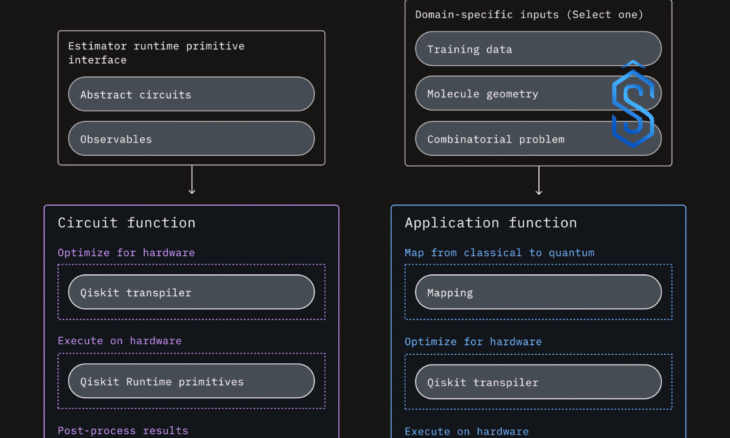
The IBM Quantum Functions Catalog is an ecosystem of partner-built quantum software services designed to simplify quantum workflows.
It enables researchers and enterprises to run quantum experiments more efficiently for algorithm development and application prototyping.
LTM’s AI-QEM is available as a circuit function, allowing users with eligible IBM Quantum access plans to apply the company’s quantum error mitigation capability directly within their existing workflows.
How LTM’s AI-QEM Addresses Quantum Computing Errors
Quantum computers are inherently susceptible to noise and errors, which can affect computational outcomes. These errors present challenges for researchers and enterprises working to develop reliable quantum algorithms and applications.
Conventional quantum error mitigation techniques often require additional circuit executions, quantum processing time or auxiliary qubits. These requirements can increase the cost and complexity of conducting quantum experiments.
LTM’s AI-QEM takes a different approach by using advanced AI models to learn and correct device-specific error patterns through classical post-processing.
According to the company, this approach helps improve the accuracy of quantum computing results without requiring additional Quantum Processing Unit (QPU) time, repeated circuit executions or extra qubits.
By using AI-powered error correction through classical post-processing, AI-QEM aims to reduce the resources required to run useful quantum experiments while improving result accuracy.
AI-QEM Validated on IBM Quantum Computers
LTM’s AI-QEM capability has been validated on IBM Quantum computers across different circuit sizes and levels of complexity. The validation includes experiments involving more than 100 qubits.
The availability of AI-QEM in the IBM Quantum Functions Catalog will allow eligible users to incorporate the capability into their Qiskit workflows, supporting their efforts to develop quantum algorithms and prototype applications.
Scott Crowder, Vice President, IBM Quantum Adoption and Business Development, said, “LTM’s AI-QEM now available in the IBM Quantum Functions Catalog reflects the growing role of our ecosystem partners in advancing and expanding the tools available for the wider quantum community.
The AI-QEM function will allow our users to mitigate errors faster and with fewer resources, in their efforts to develop algorithms and applications,”
LTM Expands Its Quantum Computing Initiatives
Beyond making AI-QEM available through the IBM Quantum Functions Catalog, LTM continues to work on practical quantum computing applications across industries.
Its initiatives include developing quantum optimization solutions for a leading global insurer and implementing hybrid quantum machine learning for critical infrastructure operations.
The company is also working on quantum-safe security programmes to help financial services and insurance organisations prepare for the transition to post-quantum cryptography.
Through these initiatives, LTM is advancing its quantum computing capabilities across areas such as optimisation, machine learning and cybersecurity.
The addition of AI-QEM to the IBM Quantum Functions Catalog further expands the quantum software services available to the wider quantum community, enabling eligible IBM Quantum users to access the technology as part of their quantum experimentation and application development workflows.