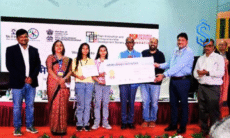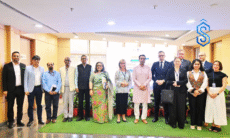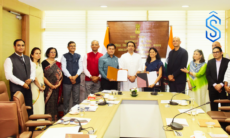

Pune: The Jan Shikshan Sansthan – JSS Zonal Conference and Stakeholder Consultation-cum-Progress Review Workshop concluded in Pune, reaffirming the Government of India’s focus on strengthening inclusive, community-driven skilling and sustainable livelihood creation for last-mile populations.
The two-day conference was organised by the Ministry of Skill Development and Entrepreneurship (MSDE) at Symbiosis Skill & Professional University, Pune.
The JSS Zonal Conference brought together representatives from 152 Jan Shikshan Sansthans (JSSs) across 11 States and Union Territories.
The event witnessed participation from JSS practitioners, senior officials from MSDE, the Directorate of Jan Shikshan Sansthan, representatives of the National Institute for Entrepreneurship and Small Business Development (NIESBUD), and academic partners.
Discussions focused on reviewing progress, identifying systemic improvements, and strengthening institutional capacity within the JSS ecosystem.
Also Read: PM SETU Industry Workshop to Advance Industry-Managed ITI Model in Maharashtra
JSS Zonal Conference Highlights Focus on Employability and Entrepreneurship
The conference was chaired by Debashree Mukherjee, Secretary, MSDE, along with Nirajan Kumar Sudhanshu, Additional Secretary, MSDE, and other senior officials.
Deliberations placed strong emphasis on enhancing employability, promoting entrepreneurship, and improving livelihood outcomes through outcome-oriented skilling interventions.
Addressing the JSS Zonal Conference, Debashree Mukherjee highlighted the evolving role of Jan Shikshan Sansthans in inclusive skilling.
She underlined the need to move beyond training delivery to tangible outcomes by strengthening alumni networks, aligning skills with market demand, modernising traditional skills, and supporting entrepreneurship through access to finance and market linkages to ensure sustainable livelihoods, particularly for women and marginalised communities.
Dedicated sessions on employability skills and entrepreneurship development were conducted by experts from NIESBUD in collaboration with faculty from Symbiosis Skill & Professional University.
The sessions were led by Dr. Poonam Sinha, Director General, NIESBUD, and Dr Swati Majumdar, Pro Chancellor, Symbiosis Skills and Professional University, who emphasised learner-centric skilling, enhanced work readiness, and enterprise-oriented thinking at the grassroots level.
Recognising the importance of financial inclusion in sustaining livelihoods, a focused session on financial and credit linkages was organised with experts from Central Bank of India and NIESBUD.
The discussions highlighted the need for stronger banking partnerships, financial literacy, and structured credit support to enable JSS beneficiaries to convert skills into sustainable income opportunities.
The JSS Zonal Conference also featured sessions on the integration of artificial intelligence and digital tools in skilling delivery, governance reforms, SIDH portal compliance, strengthening Livelihood Cells, and improving branding and market access for products developed by JSS beneficiaries.
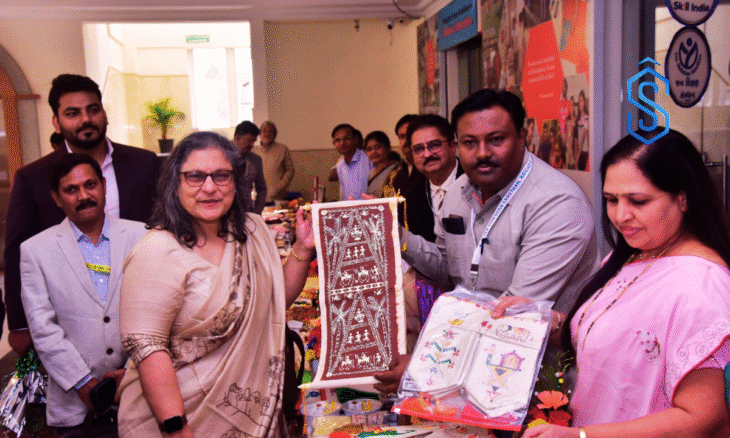
As part of the conference, a JSS exhibition showcased select products developed by beneficiaries from different regions, highlighting the diversity of grassroots skills and local crafts nurtured under the scheme.
The exhibition served as a platform for sharing best practices and enhancing market visibility. Senior officials also visited the Skill Labs at Symbiosis Skill & Professional University to gain insights into modern training infrastructure and innovative vocational education models.
Also Read: YUVA AI for ALL: Simplilearn Joins IndiaAI Mission to Train 10 Million Citizens
Stakeholder consultations and group deliberations during the JSS Zonal conference and workshop focused on reviewing the physical and financial progress of JSSs in the current financial year, improving training quality, strengthening employability and entrepreneurship outcomes, enhancing credit and market linkages, and addressing governance and operational challenges.
The Jan Shikshan Sansthan Scheme, a Central Sector Scheme implemented by MSDE through non-governmental organisations, provides vocational skills in non-formal mode to non-literate and neo-literate individuals, school dropouts, and disadvantaged sections of society.
With a special focus on women, Scheduled Castes, Scheduled Tribes, minorities, and other marginalised groups, the scheme plays a key role in delivering doorstep skilling in rural, tribal, aspirational, and difficult areas.
As of December 2025, the scheme has trained more than 34 lakh beneficiaries, with women accounting for over 83 per cent of total participation.
The JSS Zonal Conference concluded with a renewed commitment to strengthening Jan Shikshan Sansthans as the government’s last-mile skilling institutions, ensuring that skill development translates into employment, entrepreneurship, sustainable incomes, and inclusive growth.