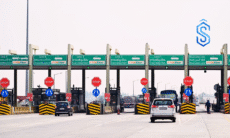
New Delhi: The National Highways Authority of India (NHAI) has issued new guidelines to standardise the design and infrastructure required for Multi-Lane Free Flow Tolling (MLFF) on four-lane and above National Highways.
The move aims to facilitate the wider adoption of a barrier-free, technology-led toll collection system across the country, allowing vehicles to pass through toll plazas without stopping at physical barriers.
The guidelines will ensure that upcoming and ongoing National Highway projects are equipped to support MLFF-based toll collection.
The initiative is aimed at eliminating traffic queues and waiting time, reducing fuel consumption at toll plazas, and making National Highway journeys safer and more seamless.
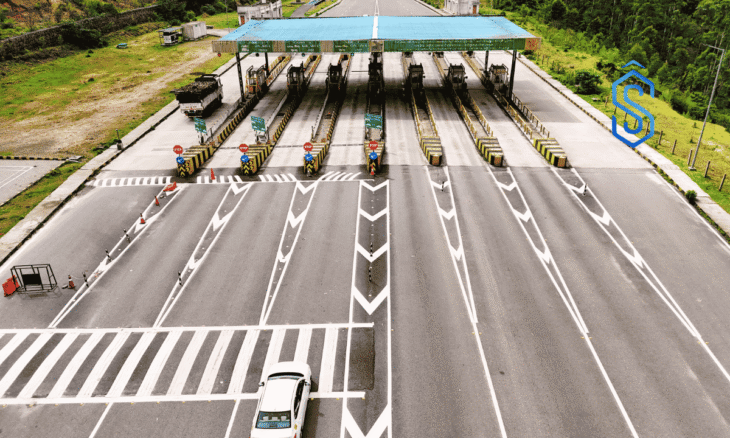
The new Multi-Lane Free Flow Tolling guidelines prescribe uniform requirements for toll plaza layouts, lane configuration, gantries, road infrastructure, lighting, signage and supporting facilities.
They also establish an implementation framework for upcoming and ongoing National Highway projects.
Standardised Design for Different National Highway Configurations
The policy circular issued by NHAI lays down standardised guidelines for the layout and infrastructure of barrier-less toll plazas across different configurations of National Highways.
These guidelines broadly prescribe the plaza layout, number of tolling lanes, provision and placement of gantries, and associated road safety features, signage and lighting arrangements.
The objective is to ensure uniformity in design and facilitate the seamless implementation of barrier-less tolling across the country.
Under the Multi-Lane Free Flow Tolling system, vehicles will be tolled without the need to stop at physical barriers. Consequently, the number of lanes required at a toll plaza has been rationalised compared to conventional toll plazas.
This will facilitate more efficient utilisation of available space and improve traffic movement through the tolling zone.
Implementation of Multi-Lane Free Flow Tolling on National Highway Projects
The new NHAI guidelines will apply to all future and under-construction National Highway projects.
Projects currently at the Detailed Project Report (DPR) stage will incorporate the new design requirements into their documents. Meanwhile, projects that have already been awarded or are under construction will adopt the changes through applicable contractual provisions.
NHAI field offices have been directed to incorporate the prescribed requirements into upcoming projects and facilitate their adoption in ongoing projects.
Through this implementation framework, NHAI aims to ensure that the infrastructure required for Multi-Lane Free Flow Tolling is integrated into National Highway projects at different stages of development.
Emphasis on Road Safety and User Convenience
The policy circular also emphasises adequate lighting, advance information and guidance for highway users through appropriate signage and Electronic Variable Message Signs (VMS) at toll plazas.
These measures are intended to enhance visibility, keep road users informed about the tolling zone and ensure the safe and smooth movement of vehicles.
The Multi-Lane Free Flow Tolling infrastructure guidelines also provide for the construction of an administrative building-cum-operations and maintenance centre to support the efficient management of toll plaza operations.
NHAI’s Earlier Guidelines for High-Speed National Highways
Earlier, NHAI released comprehensive guidelines for the planning and designing of High-Speed Access Controlled National Highways, other than Expressways.
These guidelines aimed to bring uniformity to the standards for preparing Detailed Project Reports (DPRs) for upcoming high-speed National Highway corridors. The initiative was intended to bring greater consistency in technical standards and strengthen road safety.
The introduction of a standardised infrastructure and design framework for Multi-Lane Free Flow Tolling marks another step towards establishing a uniform system for barrier-less toll collection across the country.
By standardising toll plaza infrastructure and design, NHAI aims to provide a seamless travel experience for National Highway users while enhancing the overall efficiency of toll operations across India.