

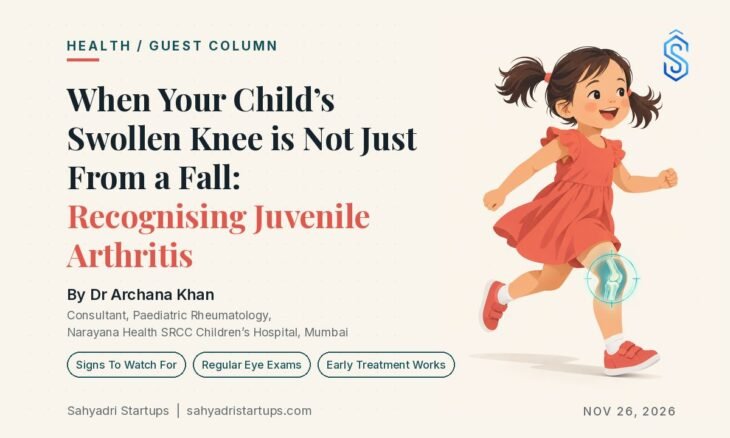
A child, merely three years old, slipped and fell at home, and hurt her left knee. Her parents thought it was just a fall injury and believed the swelling would go away soon. It didn’t. The pain only increased and got worse at night. A month later, her right ankle started hurting too.
Over the next one year, the child’s parents consulted many doctors, underwent several tests, including an MRI and tests to check for tuberculosis. The results kept showing inflammation, but no injury. The muscles around her knee had started to shrink and weaken. The child hadn’t been using the affected leg properly for months.
Fourteen months after the onset of initial symptoms,.was eventually diagnosed with juvenile idiopathic arthritis (JIA) by paediatric rheumatologists at the hospital. This is not an unusual type of arthritis and is one of the most common types seen in children and teenagers, affecting four or fewer joints.
When childhood arthritis goes unnoticed
Juvenile idiopathic arthritis starts at any age before a child turns 16, and lasts at least six weeks. There is no clear cause why this affects a child and can appear even in toddlers. In most cases the condition can be treated within a few years, but in few cases JIA can continue well into adulthood.
In this little girl’s case, the delay in diagnosis meant that inflammation had started affecting the muscles around her knee. Such long-lasting inflammation can also affect bone growth and result in problems like limbs growing at different rates.
Signs to watch for
Not every swollen joint is arthritis. A swelling that doesn’t go away, joint stiffness in the morning, limping without injury, or a child refusing to use an arm or leg are some of the noticeable signs of joint pain. Parents must pay attention to children displaying any of these signs as children usually cannot explain symptoms or pain clearly. Do not dismiss such signs of pain especially, if these last for six weeks or more. See a doctor at the earliest.
Tuberculosis of the joint can also cause steady swelling and stiffness. It often affects one joint like the knee, ankle or hip. In addition, a child might have fever, loss of appetite, weight loss, or may have been around someone with TB. Joint infections after an illness, rheumatic fever, injuries or bleeding disorders like haemophilia can look similar. So finding the real cause is key before starting treatment.
If a joint suddenly becomes hot, swollen or extremely painful, and the child has high fever or is refusing to move, seek immediate medical help.
Protecting a child’s eyes is important
In some cases, juvenile idopathic arthritis can cause eye problems such as chronic anterior uveitis, an inflammation of the middle layer of the eye. Left untreated, it can cause vision changes or permanent loss of vision too.
What’s scary about uveitis is that it often presents no symptoms – no pain, no redness – and still damage eyesight. Eyes of children with JIA must be regularly checked even if they look perfectly fine.
In the case of the young girl, the hospital conducted regular eye check-ups once every three months, along with treating her JIA, which ensured that her eyes stayed healthy.
Consistency matters in treatment
The child’s treatment started with anti-inflammatory medicines and a steroid injection into her knee. Later she was given a weekly dose of methotrexate to calm the immune system. Staying on treatment was not easy. When she had vomiting, the doctors shifted to injections given just under the skin. Missed doses meant the swelling returned.
At one point, doctors noticed that the child’s legs had both grown different lengths. Inflammation around the knee can impair bone growth. That’s why controlling the disease early is critical to good recovery. With the family’s renewed commitment to treatment, the child achieved remission and stop all medicines. Today she has no arthritis, she can run, play and do all the things that other kids are able to do.
Her journey shows that timely treatment and consistency in schedule and can really make a difference to outcomes.
Early recognition can protect a child’s future
Parents usually notice changes in their child first. A child who limps in the morning but gets better during the day, avoids putting weight on a leg, stops using an arm, or complains of chronic pain for weeks, could be signs of more than muscle soreness or pain following a fall during playtime.
Swelling on the joints that doesn’t go away even days after a fall, should be checked by a doctor. Many conditions can cause similar symptoms to the above. So when in doubt, seek proper medical evaluation. Parents should not attempt to start treatment on their own or stop ongoing treatment after diagnosis. If medicines cause any side effects like vomiting or loss of appetite, talk to the doctor who might recommend alternative medicines or treatment. In addition, doctors may recommend physiotherapy and gentle exercises to keep the muscles strong and joints moving.
For children with JIA regular eye exams are also a part of treatment, even if their eyes seem healthy and don’t display any sign of discomfort.
The little girl’s case reminds us that juvenile arthritis is treatable. If a child’s joint stays swollen, stiff or painful for more than a few weeks, see a paediatrician at the earliest. If arthritis is suspected, a paediatric rheumatologist can help make the diagnosis and plan treatment.
With early and proper diagnosis, the right medicine, joint injections when needed, physiotherapy and regular eye screening, many children with JIA can grow into adulthood to live full and active lives. A child should not have to live with pain or limited movement when timely care can help them enjoy childhood running, playing, learning and growing up healthy.
