
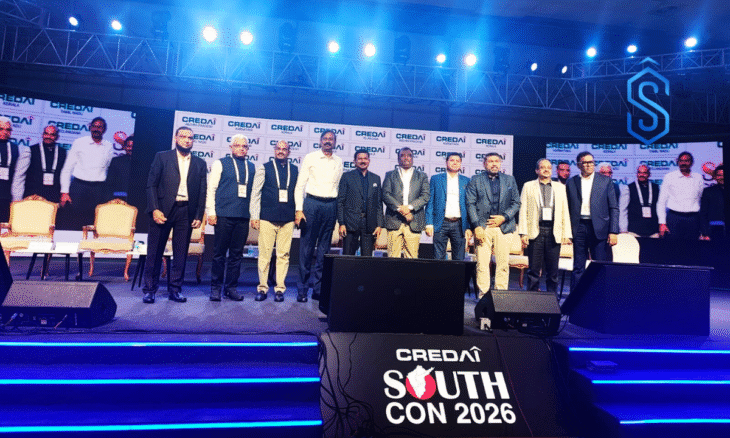
Bengaluru: South India’s real estate market closed 2025 with an estimated residential sales value exceeding ₹20,000 crore, reflecting a decisive post-pandemic recovery and a structural shift toward Tier-2 and Tier-3 cities, according to insights shared at CREDAI SouthCon 2026, the South India Knowledge Conclave held in Bengaluru.
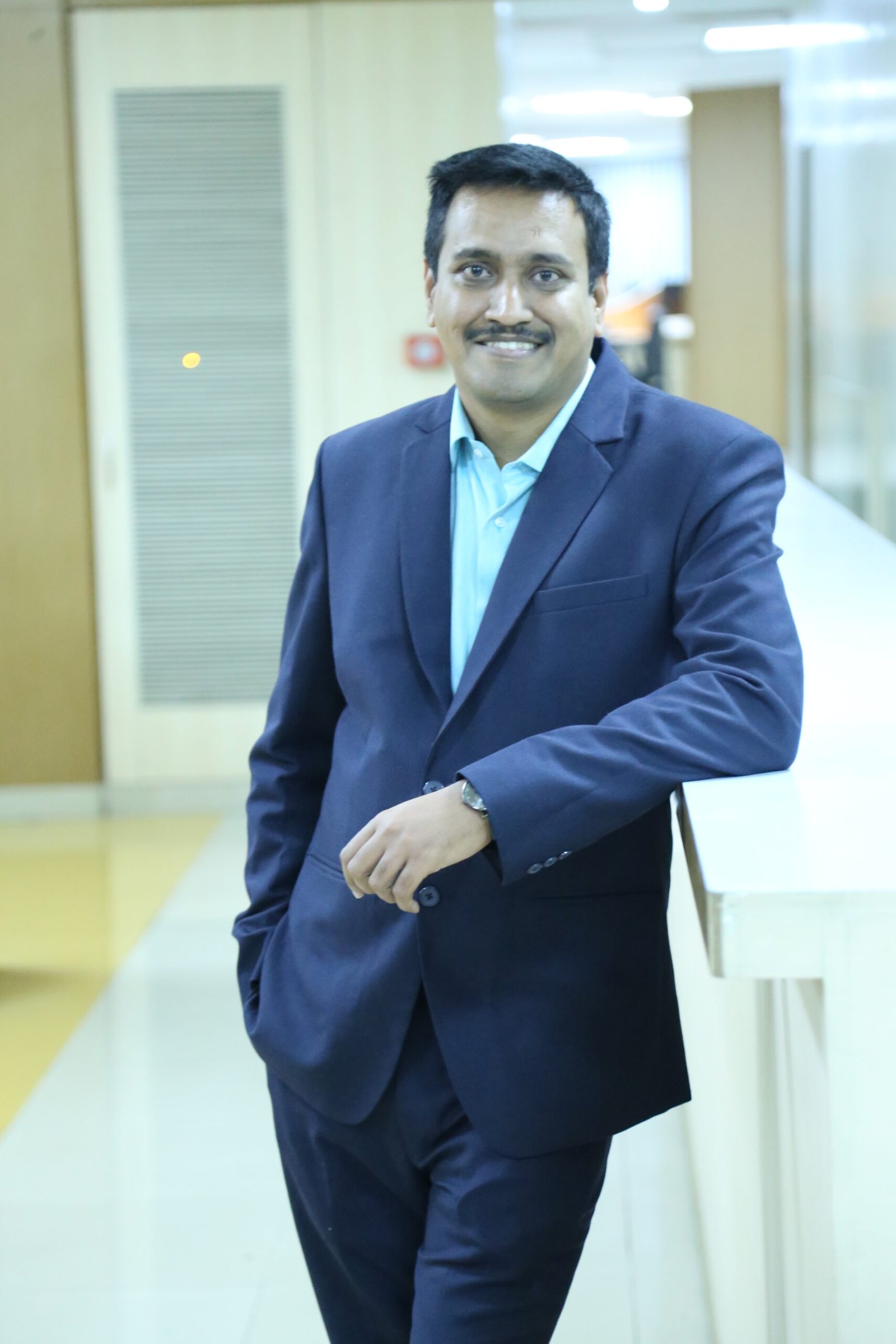
Delivering the keynote address at CREDAI SouthCon 2026, M R Jaishankar, Chairman & Managing Director, Brigade Group, stated that while South India continues to trail the all-India market in absolute scale due to the presence of larger Tier-2 cities in the North and West – such as Ahmedabad, Lucknow, Indore and Kanpur – the region’s growth momentum is now being driven by emerging Tier-2 and Tier-3 hubs.
Cities including Coimbatore, Kochi, Thiruvananthapuram and the fast-growing Visakhapatnam (Vizag) are increasingly becoming the primary engines of residential and commercial demand in South India.
CREDAI SouthCon 2026 Highlights Commercial Real Estate Outperformance in 2025
Discussions at CREDAI SouthCon 2026 revealed that South India’s commercial real estate sector surpassed earlier 2025 projections, with absorption estimated at 2–4 million sq. ft. of office space, 4–8 million sq. ft. of retail and mall space, 8–12 million sq. ft. of warehousing, 5,000–8,000 hotel rooms, and 10–30 MW of data-centre capacity.
Also Read: Pune Housing Report 2025: Home Sales Cross 81,000 Units Despite Slower New Launches
Looking ahead to 2030, Jaishankar projected stronger expansion across asset classes, with office absorption expected at 8–12 million sq. ft., retail at 15–20 million sq. ft., warehousing at 40–60 million sq. ft., hospitality at 12,000–18,000 hotel rooms, and data-centre capacity at 200–300 MW.
By 2035, these figures are expected to rise further to 15–20 million sq. ft. of office space, 30–40 million sq. ft. of retail, 90–120 million sq. ft. of warehousing, 25,000–35,000 hotel rooms and 600–900 MW of data-centre capacity, while acknowledging that long-term projections remain subject to economic realities.
CREDAI SouthCon 2026 Underscores Tier-2 and Tier-3 City Momentum
Research presented during CREDAI SouthCon 2026 indicated that by 2030, Tier-2 and Tier-3 cities across South India could collectively deliver around 40,000 residential units, rising to nearly 60,000 units by 2035.
This translates into a compounded growth trajectory of 10–12% over the period, with developers anticipating up to 100% growth in Tier-2 residential sales volumes over the next five years, subject to macroeconomic stability.
CREDAI SouthCon 2026 Links Infrastructure Expansion to Demand Shift
Jaishankar attributed the surge in residential sales value to India’s extensive infrastructure rollout, including the Bharat Mala programme, Vande Bharat trains, national corridor expansions and the Udaan airport network.
The number of operational airports has increased from fewer than 10 to over 65 and is projected to reach nearly 170 in the coming years.
According to discussions at CREDAI SouthCon 2026, improved connectivity, logistics and airport density are pushing demand beyond traditional metros such as Bengaluru, Chennai and Hyderabad, enabling residential, retail, warehousing and hospitality assets to scale in previously under-served cities.
Also Read: Indian Railways Plans to Double Originating Train Capacity in 48 Major Cities by 2030
CREDAI SouthCon 2026 Highlights Growth Beyond Residential Assets
While residential real estate accounted for the majority of 2025 sales value, CREDAI SouthCon 2026 highlighted that warehousing, hospitality and data-centre assets are now expanding at a faster pace than office and retail segments in South India.
Warehousing is benefiting from lower land costs in Tier-2 belts, hospitality has recorded strong occupancy and average room rates since 2022 driven by domestic leisure travel, and data-centre capacity is increasingly shifting toward coastal cities.
Vizag was cited as an emerging contender following multinational interest, including a $15-billion investment announcement by Google.
CREDAI SouthCon 2026 Warns Against Over-Leveraging Amid Cycles
Reflecting on multiple economic cycles – from the 1991 liquidity crisis to the COVID-19 pandemic – Jaishankar cautioned developers against over-leveraged land banking and untested expansion strategies.
He noted that while India remains relatively insulated compared to global markets, geopolitical disruptions, AI-driven restructuring in IT-led employment hubs and tightening economic cycles could influence real estate absorption between 2026 and 2028.
CREDAI SouthCon 2026 Emphasises Brand Trust and Mixed-Use Development
Panel discussions at CREDAI SouthCon 2026 highlighted that brand strength, transparency, RERA-aligned governance and mixed-use development models are outperforming stand-alone projects, particularly during slower market cycles.
Developers with strong compliance frameworks and established brands continue to see transactions even in challenging conditions.
The event commenced with a symbolic lamp-lighting ceremony performed by three construction workers, recognising the contribution of labour to the sector.
Also Read: Hinjawadi: Krisala Hiranandani Township Pune Hosts CREDAI Pune Delegation
CREDAI SouthCon 2026: Policy Concerns and Affordable Housing Challenges
During a press briefing at CREDAI SouthCon 2026, CREDAI State Presidents – including Bhaskar T Nagendrappa (CREDAI Karnataka), K Indrasena Reddy (CREDAI Telangana), Bayana Srinivas Rao (CREDAI Andhra Pradesh), Roy Peter (CREDAI Kerala) and W S Habib (CREDAI Tamil Nadu) – stated that housing demand continues to rise post-COVID, but affordability is deteriorating as the ₹45-lakh cap no longer reflects current construction and land costs.
Nagendrappa said that South India’s real estate sector is entering a decisive decade, with technology-driven demand, accelerating Tier-2 cities and increasing expectations for transparency reshaping growth dynamics.
CREDAI leaders urged the government to revise affordable housing definitions, expand unit size limits, rationalise GST and stamp duty, and support PPP-based land models to revive the segment.
They also acknowledged that while delivery delays have reduced due to regulatory reforms, procedural bottlenecks related to permissions, e-khata processes and power connections continue to increase financing costs.
CREDAI noted that Karnataka has not seen a viable private affordable housing project under the current framework, pointing to the need for policy recalibration.
CREDAI SouthCon 2026 Positions Itself as a Southern Knowledge Forum
CREDAI SouthCon 2026 was held as a two-day conclave themed “Trust Through Transparency – Readying for the Growth of the Next Decade.”
Over 450 delegates representing real estate developers from across southern states participated, positioning the event as a regional knowledge forum rather than a routine industry gathering.