

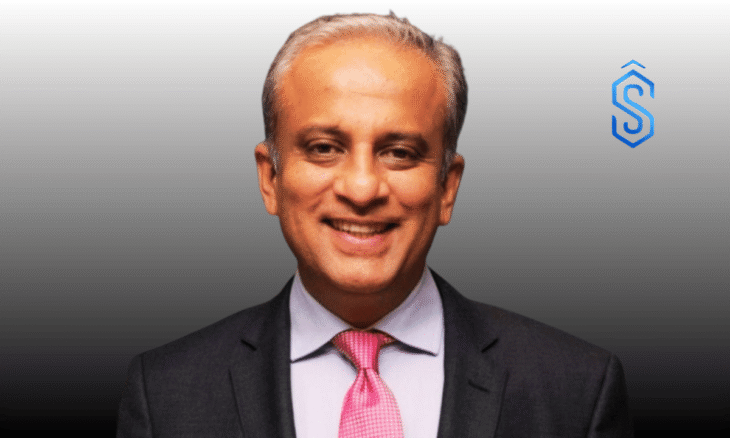
Pune: Chaitanya Rajebahadur, Executive Vice President at Zensar Technologies, has stepped down from the company after leading its global Digital Engineering, Consulting, Martech, AI and Creative Studios practice.
His resignation took effect on November 15, 2026, with the Pune-headquartered technology services company citing personal reasons for his departure. Rajebahadur oversaw a global practice comprising 2,500 specialists across these service areas.
In his resignation email addressed to Managing Director and CEO Manish Tandon, Rajebahadur wrote, “I wish to thank you and the Company for all support during my tenure.”
Zensar is increasingly positioning artificial intelligence as part of its technology services and client engagements.
In its latest quarterly earnings commentary, the company highlighted the growing traction of AI-influenced deals, which accounted for 36% of its order book in the second quarter of FY27.
Rajebahadur’s responsibilities spanned several interconnected service areas as technology companies increasingly focus on engineering-led digital transformation, consulting, marketing technology and AI-enabled solutions.
Leadership Exit Spanning Five Major Service Areas
According to Chaitanya Rajebahadur’s published leadership profile, the practice comprised 2,500 specialists working across design, strategy, marketing, creativity and engineering.
His mandate extended beyond technology delivery to areas such as digital strategy, marketing transformation and creative services.
The role brought together engineering capabilities with customer experience, marketing and business transformation.
Rajebahadur brought more than three decades of leadership experience across financial services, manufacturing, retail and telecommunications. He had also spent 10 years heading Zensar’s European business.
Zensar’s AI Ambitions Moving Beyond Pilot Projects
During its October 29, 2026, earnings call for the quarter ended September 30, CEO and Managing Director Manish Tandon had said that the company had moved beyond proof-of-value engagements towards production-scale AI adoption with several clients.
AI-influenced deals accounted for 36% of Zensar’s order book in Q2 FY27, highlighting the growing presence of AI in the company’s business pipeline.
However, this figure represents the proportion of the order book influenced by AI, rather than revenue generated exclusively from AI services.
Tandon had also acknowledged the difficulty of defining and measuring AI revenue across the company’s business.
“We don’t report AI revenues because I don’t know what is the definition of an AI revenue,” he said during the earnings call.
Zensar’s Latest Numbers and its Business Momentum
The company’s Q2 FY27 performance provides additional context to its ongoing business priorities.
Zensar reported quarterly revenue of US$166.2 million, registering sequential growth of 4.1% in constant-currency terms.
Its EBITDA margin improved by 120 basis points over the preceding quarter to 15.8%.
The quarterly order book stood at US$151.5 million, with AI-influenced deals contributing 36% of the total.