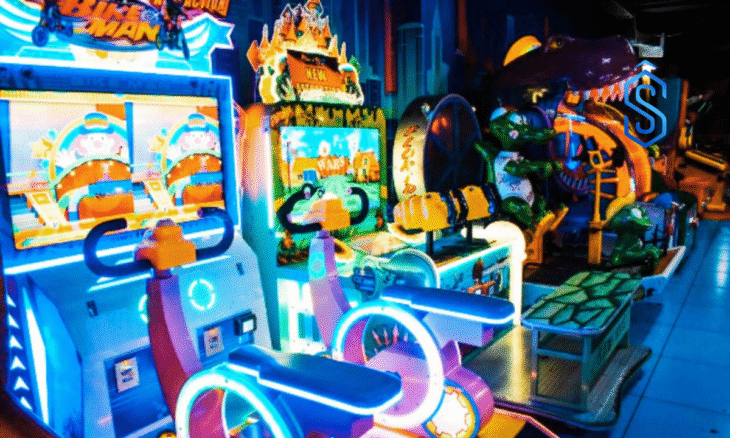
India’s indoor amusement industry has reached an estimated market size of ₹15,000 crore, reflecting strong consumer demand and rapid growth in experiential entertainment, according to a new report by ANAROCK Group and Indian Association of Amusement Parks and Industries.
Titled “Ready, Set, Play: India’s Indoor Amusement Industry at a Turning Point,” the report highlights that indoor amusement centres (IACs) have evolved from niche, child-focused attractions into a key pillar of India’s expanding experience economy.
The study notes that consumer spending in the indoor amusement segment has increased 30–40% compared to pre-pandemic levels, driven by growing demand for immersive recreational activities and family-centric entertainment.
Despite this growth, India currently accounts for only about 2% of the global indoor amusement market, indicating significant untapped potential as urbanization, disposable incomes, and organized retail infrastructure continue to expand.
Global and Indian Market Growth
The report notes that the global indoor amusement centre industry was valued at $51.29 billion in 2024 and is projected to reach $84.03 billion by 2030, growing at a compound annual growth rate (CAGR) of about 9%.
In comparison, India’s indoor amusement sector generated approximately ₹8,400 crore in 2024 and is projected to grow to ₹15,600 crore by 2030, registering a CAGR of 11.3%, outpacing global growth.
While North America holds around 39% of the global market share, the Asia-Pacific region, particularly India and China, is expected to drive the next phase of expansion due to rising urban populations and increasing consumer spending on experiences.
Also Read: JioHotstar Streaming Record: India-England T20 World Cup Semi-Final Hits 65.2 Million Peak Viewers
Consumer Spending and Visit Patterns Rising
According to the ANAROCK market pulse survey cited in the report, consumer engagement with indoor amusement centres is steadily increasing.
Key findings include:
- 52.4% of respondents visit indoor amusement centres once a month or more
- 22.9% visit once every 2–3 months
- 15.3% visit once or twice annually
- 9.4% reported visiting rarely
The survey also highlights rising per-customer spending, with Tier I cities recording 10–15% higher spending compared to Tier II markets.
Additionally, over 50% of visitors spend more than ₹1,000 per visit beyond entry tickets, primarily on gaming, food and beverages, and add-on experiences.
The report indicates that value perception rather than price sensitivity drives consumer decisions in the indoor amusement sector. However, higher ticket prices and overcrowding remain among the key deterrents for some visitors.
Industry Pricing Structure Reflects Mid-Market Focus
Pricing patterns within the indoor amusement industry show a strong mid-market concentration. Approximately 73.6% of operators price their offerings between ₹500 and ₹1,499, indicating the sector’s positioning as accessible premium entertainment rather than mass-discount or luxury-exclusive experiences.
This positioning aligns with urban consumer preferences for family outings, social gatherings, and celebratory visits, making indoor amusement centres a popular destination for planned recreational activities.
Experiential Consumption Driving Growth
The report attributes the growth of the indoor amusement sector partly to changing consumer behavior following the COVID-19 pandemic. Extended lockdowns increased demand for recreational and social experiences, boosting organized entertainment formats.
Indoor amusement centres have benefited particularly because they offer climate-controlled, safe, and multi-attraction environments suitable for families and children.
According to the report, visitors increasingly prefer socially interactive attractions, including:
- Arcade gaming zones
- Kids play areas
- Bowling alleys
- VR and esports gaming
- Adventure-based attractions such as trampoline parks and obstacle courses
Multi-attraction formats that combine several entertainment options under one roof are gaining popularity, particularly within mall-based indoor amusement centres.
Also Read: JioHotstar and OpenAI Launch ChatGPT-Powered Conversational Streaming Experience in India
Anuj Kejriwal, CEO – Retail, Leasing & Industrial Logistics at ANAROCK Group, said: “India’s indoor amusement industry is entering a decisive phase of transformation, evolving from predominantly children-centric recreation into a key component of the country’s experience-driven economy.
Consumer spending intensity across IAC formats has strengthened materially. As the industry scales, safety and regulatory clarity must remain foundational priorities. IACs manage complex equipment and high footfall, primarily for families and children, making standardized norms essential. A harmonized framework would enable responsible expansion.”
Similarly, Ankur Maheshwari, Chairman of IAAPI and Founder of Masti Zone, highlighted the broader significance of the report.
“For 27 years, IAAPI has been at the heart of India’s amusement growth. This first-of-its-kind report on IACs integrates operator, developer, consumer, and government views.
IACs have grown from mall add-ons to amusement economy anchors. We explore consumer wants, format growth, operations, costs, safety, regulations, and taxes. With policy support and manufacturing incentives, our maturing industry can leap forward.”
Indoor Amusement Formats Expanding Rapidly
The indoor amusement industry today encompasses a wide range of entertainment formats, each with different space requirements and capital investment levels.Category Formats Size Range Capex Intensity Kids Zones Soft play, edutainment 1,500–10,000 sq ft ₹850–₹3,000/sq ft Arcades Video game redemption arcades 3,000–25,000 sq ft ₹2,500–₹5,000/sq ft Sports Bowling, trampoline parks 3,000–60,000 sq ft ₹200–₹3,000/sq ft Adventure Go-karting, ninja obstacle parks 1,000–30,000 sq ft ₹900–₹4,000/sq ft Tech VR and esports gaming zones 500–3,500 sq ft ₹1,200–₹3,500/sq ft Experiential Theme-based attractions 15,000–50,000 sq ft ₹2,500–₹6,000/sq ft
Among these, arcade gaming zones remain the most popular across age groups, while kids’ play areas are particularly favored by families.
Operator Economics and Investment Trends
Operators in the indoor amusement industry are increasingly focusing on capital efficiency and sustainable expansion strategies.
Key revenue streams include:
- Entry tickets
- Gaming redemption systems
- Food and beverage sales
- Merchandise and add-on experiences
- In some indoor amusement centres, vouchers and prepaid packages contribute up to 25% of total sales.
The report also notes that most indoor amusement projects recover their capital investment within three to five years. Specifically:
- 47.4% achieve recovery within 3–5 years
- 31.6% recover within three years
However, operators must continuously reinvest in new attractions and technology to remain competitive and prevent equipment obsolescence.
Regulatory and Taxation Challenges
Despite the strong growth outlook, the indoor amusement sector faces several regulatory hurdles.
Industry stakeholders highlighted that the 18% GST on tickets and rides places pressure on pricing, particularly in cost-sensitive markets.
Other challenges include:
- Varying state licensing requirements
- Lack of a national regulatory framework
- Delays in fire and municipal clearances
- Safety concerns associated with unorganized operators
These issues, according to the report, can slow down the development of new indoor amusement projects and create operational uncertainties.
Recommendations for Future Growth
To ensure sustainable expansion, the report recommends several policy and industry measures:
- Establish standardized safety and compliance frameworks
- Introduce rationalized GST rates for the indoor amusement sector
- Develop a national policy recognizing IACs as urban entertainment anchors
- Provide incentives for domestic manufacturing of amusement equipment
- Encourage formalization of indoor amusement centres in Tier II and Tier III cities
If these measures are implemented, the report concludes that the indoor amusement industry could become a significant generator of employment, urban infrastructure development, and experiential tourism in India.