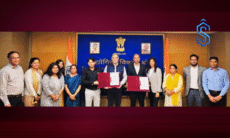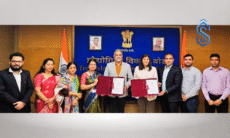

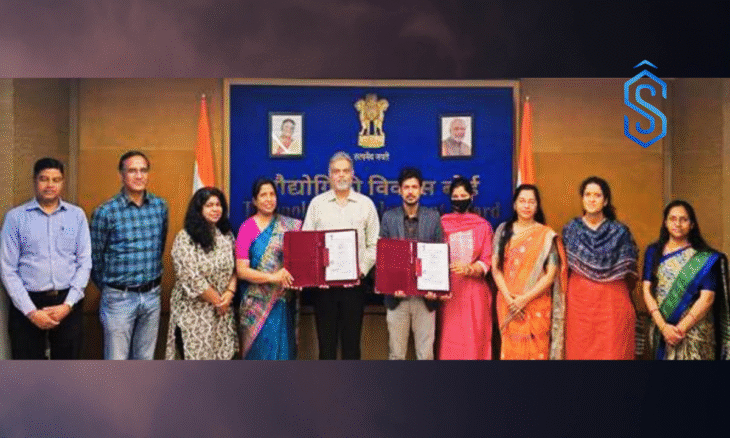
New Delhi: The Technology Development Board (TDB), under the Department of Science and Technology (DST), Government of India, has extended financial support to BabyCue Private Limited, a Cuttack-based startup in Cuttack, Odisha, for the development and commercialization of a rapid diagnostic solution aimed at addressing childhood diarrhea.
The project titled “A Disposable Paper Analytical Platform for Rapid Differentiation of Childhood Diarrhea” focuses on bringing an indigenous diagnostic kit to market.
Developed by BabyCue, the platform aims to enable timely and accurate differentiation between bacterial and non-bacterial diarrhea in children, a major public health concern in India.
Indigenous Diagnostic Innovation by BabyCue
The proposed product, DiaCue Diagnostic Kit, developed by BabyCue, represents a significant indigenous innovation combining biotechnology and material science.
The rapid diagnostic platform is designed to address the widespread challenge of childhood diarrhea by enabling quick and accurate diagnosis at the point of care.
The BabyCue innovation is designed as a rapid, non-invasive, and cost-effective diagnostic solution that can be deployed even in resource-constrained environments.
This includes rural healthcare centers and field settings where access to sophisticated laboratory infrastructure is often limited.
Technology Behind the BabyCue DiaCue Platform
The BabyCue DiaCue diagnostic platform uses Lateral Flow Assay (LFA) technology, which enables rapid detection of disease-specific fecal biomarkers associated with childhood diarrhea.
The system utilizes gold nanoparticle–based colorimetric detection, allowing results to be interpreted visually without the need for specialized instruments.
By integrating proprietary biomarkers and custom-designed reagents, the BabyCue platform delivers high sensitivity and specificity. This ensures reliable differentiation between bacterial and non-bacterial infections, helping healthcare professionals make faster clinical decisions.
Simple Testing Process for Rapid Diagnosis
The BabyCue DiaCue diagnostic kit has been designed for ease of use in point-of-care settings. The testing process involves collecting a fresh stool sample using a sample loop or swab and mixing it with an extraction buffer.
After the mixture settles, the clear supernatant is applied onto the LFA strip developed by BabyCue. The sample then migrates along the strip and interacts with immobilized reagents, producing a visible color change.
The presence or absence of colored lines on the strip indicates whether the infection is bacterial or non-bacterial. This rapid interpretation allows healthcare providers to make clinical decisions within minutes, significantly improving patient care outcomes.
Key Benefits of the BabyCue Diagnostic Solution
The BabyCue DiaCue diagnostic platform offers several important advantages for healthcare providers and public health systems:
- Rapid differentiation between bacterial and non-bacterial diarrhea
- Reduction in unnecessary antibiotic usage
- Support in combating antimicrobial resistance
- Ease of use in clinical as well as field environments
- Minimal dependence on sophisticated laboratory infrastructure
These capabilities make the BabyCue diagnostic solution particularly valuable for improving healthcare delivery in underserved regions.
Also Read: Ayukriyam Innovations Secures TDB Support for AI-Driven Autoscope Diagnostic Platform
Research Collaboration and Clinical Validation
The technology developed by BabyCue has been created in collaboration with the National Institute of Pharmaceutical Education and Research Hyderabad. Clinical validation of the diagnostic platform was conducted at ESIC Hospital Hyderabad.
The proprietary biomarker detection methodology used by BabyCue has also been protected under an international patent filing. This ensures intellectual property protection and supports the future scalability and commercialization of the technology.
Government Support for Indigenous Healthcare Innovation
Rajesh Kumar Pathak, Secretary of the Technology Development Board, emphasized the importance of domestic innovation in healthcare diagnostics.
“Indigenous innovations in rapid diagnostics are essential for strengthening primary healthcare delivery and improving clinical decision-making. By supporting the commercialization of the DiaCue diagnostic platform, TDB aims to promote affordable, accessible, and technology-driven healthcare solutions that address critical public health challenges such as childhood diarrhea.”
Promoters of BabyCue Private Limited expressed gratitude for the financial support provided by the Technology Development Board.
They noted that the assistance will enable the company to accelerate product development, scale manufacturing capabilities, and expand the deployment of the diagnostic solution to benefit healthcare providers and patients across India.