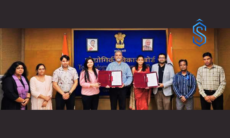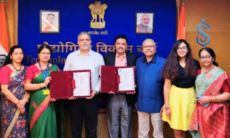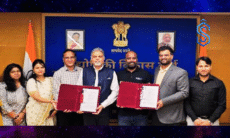

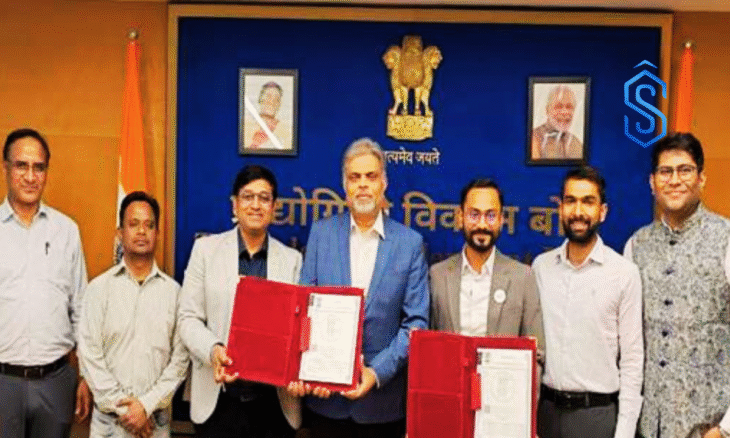
MiniMines Cleantech Solutions has received financial support from the Technology Development Board (TDB), operating under the Department of Science and Technology (DST), for a project focused on the sustainable recycling of waste lithium-ion batteries.
The support extended to MiniMines Cleantech Solutions aligns with the Government of India’s broader vision to promote sustainable technologies and strengthen domestic capabilities in critical minerals.
The initiative will enable the company to commercialise an indigenous, zero-discharge recycling process designed to recover valuable battery-grade minerals from end-of-life lithium-ion batteries.
Indigenous Recycling Technology for Critical Minerals
The project undertaken by MiniMines Cleantech Solutions is titled “Sustainable Recycling of the Waste Lithium-ion Batteries.” It focuses on the commercialisation of a sustainable battery recycling and critical mineral refining process that extracts battery-grade salts of lithium, cobalt, nickel, and manganese from discarded lithium-ion batteries.
By deploying advanced recycling technologies, MiniMines Cleantech Solutions aims to strengthen India’s capacity to recover valuable critical minerals domestically.
The initiative is expected to reduce dependence on imported raw materials while supporting the country’s transition towards clean energy and sustainable resource management.
Also Read: Waaree Group Arm Raises ₹1,003 Crore for Large-Scale Lithium-ion Cell and Battery Production
End-to-End Lithium-ion Battery Recycling
MiniMines Cleantech Solutions operates as the first R4 category recycler offering end-to-end solutions for managing end-of-life lithium-ion batteries, including Extended Producer Responsibility (EPR) services.
The company has developed a proprietary technology known as Hybrid Hydrometallurgy, a process designed to work with multiple lithium-ion battery chemistries and form factors.
This flexibility allows MiniMines Cleantech Solutions to process different types of battery waste while maintaining high operational efficiency.
According to the company, its black mass recovery and post-processing technology has been engineered to minimise energy consumption and emissions while achieving high separation efficiency.
The process enables recovery rates of up to 99 percent, making it one of the more efficient battery recycling solutions currently being developed domestically.
Indigenous Innovation and Urban Mining
The entire recycling process deployed by MiniMines Cleantech Solutions has been developed and patented within India. It covers multiple stages including pre-assessment, battery collection, segregation, mechanical processing, and advanced post-processing activities such as extraction, selective separation, and beneficiation.
By developing these capabilities locally, MiniMines Cleantech Solutions reduces reliance on imported recycling technologies, specialised equipment, and critical raw materials.
The approach also promotes the concept of urban mining, where valuable minerals are recovered from discarded electronic and energy storage devices rather than traditional mining sources.
Scaling Up Commercial Operations
With the support from the Technology Development Board, MiniMines Cleantech Solutions plans to scale its current operations into a fully integrated commercial facility capable of processing multiple battery chemistries.
The facility will produce high-purity critical materials recovered from lithium-ion batteries, including lithium carbonate and cobalt sulphate. These battery-grade compounds are expected to meet industry standards and cater to both domestic manufacturers and international markets.
The scaling of operations by MiniMines Cleantech Solutions is expected to contribute to strengthening India’s supply chain for battery materials and support the growth of sectors such as electric mobility and renewable energy storage.
Also Read: Bengaluru: CeNS Researchers Create Flexible Aluminum Battery Technology as Lithium-Ion Alternative
TDB Highlights Importance of Indigenous Critical Mineral Recovery
Speaking on the development, Rajesh Kumar Pathak, Secretary of the Technology Development Board, emphasised the importance of building domestic capabilities in critical mineral recovery.
“Development of indigenous technologies for recovery and refining of critical minerals from end-of-life batteries is crucial for strengthening India’s energy security and clean technology ecosystem. Through this project, TDB is supporting the commercialization of a sustainable recycling solution that can reduce import dependence, promote circular economy practices, and contribute to the objectives of the National Critical Minerals Mission.”
MiniMines Cleantech Solutions Expresses Gratitude for Support
A representative of MiniMines Cleantech Solutions expressed appreciation for the support received from the Technology Development Board, stating that the assistance will enable the company to scale its innovative recycling technology.
The company noted that the support would accelerate the recovery of critical battery materials through environmentally sustainable processes, helping to build a robust recycling ecosystem for lithium-ion batteries in India.
Strengthening India’s Clean Energy Ecosystem
The initiative involving MiniMines Cleantech Solutions represents an important step towards building a self-reliant and technology-driven ecosystem for critical mineral recovery and clean energy materials in India.
By enabling efficient extraction of valuable metals from end-of-life batteries, MiniMines Cleantech Solutions is contributing to national priorities including Aatmanirbhar Bharat, circular economy adoption, and the development of sustainable energy infrastructure.