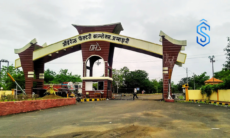

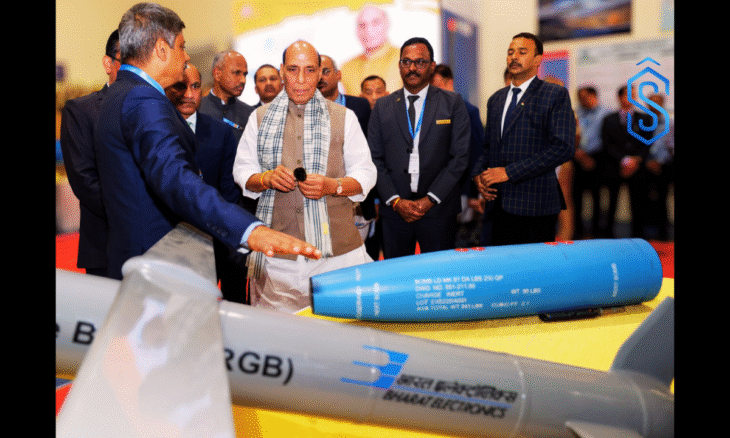
Bengaluru: Raksha Mantri Rajnath Singh on February 16, 2026, visited Bharat Electronics Limited in Bengaluru, where he inaugurated the BEL Missile Integration Facility, flagged off the Akash 3rd and 4th Regiment Combat Systems, and unveiled the Mountain Fire Control Radar.
He also remotely inaugurated the Centre of Excellence for Artificial Intelligence in Pune and formally launched the company’s AI Policy.
During the visit, Rajnath Singh was briefed on advanced indigenous defence technologies and ongoing R&D initiatives at BEL. The BEL Missile Integration Facility initiative highlights India’s growing emphasis on innovation, indigenisation, and next-generation defence manufacturing capabilities.
Raksha Mantri commended BEL’s progress in cutting-edge defence technologies, including electronic warfare systems, avionics, naval platforms, electro-optics, and tank electronics. He stated:
“BEL has strengthened the network-centric operations. Its integrated systems, real-time data sharing, and decision support capabilities have taken our combat effectiveness to a new level.”
Also Read: ITEL Foundation Demonstrates AI Mobility, Space Tech and Brain Research Innovations
The briefing also covered major national defence programmes aligned with BEL’s research and development activities, including Quick Reaction Surface to Air Missile Systems (QRSAM), Light Combat Aircraft Mark II (LCA Mk II), Advanced Medium Combat Aircraft (AMCA), Project Kusha (MR SAM/LR SAM), Counter Drone Systems, and Naval Weapon Control Systems.
Officials noted that indigenous R&D initiatives associated with the BEL Missile Integration Facility are enhancing operational preparedness across land, air, naval, and strategic domains while reducing dependence on foreign technologies.
Rajnath Singh acknowledged that indigenous air defence and counter-drone systems have demonstrated global-standard capabilities. Referring to operational deployment, he said indigenously developed systems were effectively used to neutralise threats during Operation Sindoor.
“The advancement in threat prediction, early warning, and response mechanisms using AI instills operational confidence in our soldiers. They’re assured that a strong scientific and engineering ecosystem always stands with them,” he added.
BEL Missile Integration Facility: Transforming Battlefield Dynamics
Highlighting the importance of technological self-reliance, the Raksha Mantri emphasised that AI and quantum computing are transforming battlefield dynamics through real-time decision-making, autonomous systems, cyber defence, and precision operations.
He encouraged BEL, DPSUs, and industry partners to remain ahead in the global technology race and contribute to the vision of a Viksit Bharat through initiatives like the BEL Missile Integration Facility.
He urged BEL’s R&D community to collaborate with start-ups, academia, and industry partners for agile product development using emerging technologies such as AI and autonomous systems.
He also stressed the importance of cross-disciplinary collaboration, innovation, and rapid prototyping to develop world-class defence products supported by the BEL Missile Integration Facility ecosystem.
Also Read: Quantum Vulnerable Crypto Algorithm: C-DOT and Synergy Quantum Partner to Build Detection Tool
During the visit, indigenisation initiatives undertaken by BEL’s Central Research Laboratories, CoE-Electronics Warfare & Photonics, CoE-Communication, CoE-Radar & Weapon Systems, and Product Development and Innovation Centre were showcased. Start-ups and industry partners also demonstrated their technologies aligned with the BEL Missile Integration Facility initiative.
Rajnath Singh interacted with start-ups and young scientists, encouraging them to develop more advanced indigenous technologies for India’s defence sector.
Senior officials present on the occasion included Secretary (Defence Production) Sanjeev Kumar, Additional Secretary & DG (Acquisition) A. Anbarasu, and Chairman & Managing Director of BEL Manoj Jain.