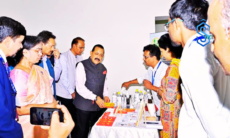

Chennai: Union Minister Dr Jitendra Singh visited the Immersive Technology and Entrepreneurship Labs – ITEL Foundation at IIT Madras Research Park, highlighting how the consortium-driven innovation ecosystem is accelerating technology commercialisation across sectors including urban mobility, healthcare, neuroscience, and space technology.
During his visit to the IIT Madras Research Park, the Minister reviewed multiple advanced research and startup initiatives and praised the consortium-driven innovation model pioneered there.
He noted that the model enables immediate and appropriate commercialisation of technology and is increasingly being adopted by academic institutions and universities across India.
Also Read: IITM Global Launched by IIT Madras to Expand Research and Innovation Partnerships in Malaysia
ITEL Foundation Enables Consortium-Driven Innovation and Technology Commercialisation
Established in July 2024 as a Section 8 not-for-profit entity recognised by the Department of Science and Technology, ITEL Foundation aims to position India as a global technology leader by nurturing deep-tech startups and building industry-academia consortia.
The ITEL Foundation model brings together academic institutions, industry leaders, and investors to co-develop technologies and transfer them directly to the commercial sector.
Interacting with researchers and startup founders, Dr Jitendra Singh said the consortium approach – where industry participation begins at the development stage – ensures innovations remain aligned with real-world requirements and enables faster translation of research outcomes into deployable solutions.
ITEL Foundation: AI-Driven Urban Mobility Demonstration
Among the key demonstrations was the HASHTIC mobility initiative, designed to address traffic congestion in Indian cities through AI-enabled small-format electric mobility systems operating on elevated tracks.
The project aims to enable a 15-kilometre commute in about 20 minutes while providing point-to-point connectivity in dense urban areas.
ITEL Foundation: Private Space Innovation Gains Momentum
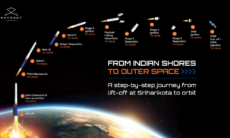
The Minister also reviewed work by Agnikul Cosmo, a private space technology startup incubated within the IIT Madras ecosystem. The company develops launch vehicles designed for flexible, on-demand satellite launches.
On May 30, 2024, Agnikul successfully launched its first mission with support from IN-SPACe and ISRO, demonstrating its core technology.
The startup is now preparing to attempt a commercial mission of its reusable rocket later this year, reflecting growing private-sector participation in India’s space sector.
Also Read: Mindgrove Technologies to Launch MG V2600 Vision SoC by Late 2026
Startup Incubation and Innovation Ecosystem
The Minister visited the IIT Madras Incubation Cell, which has incubated more than 500 startups across climate-tech, healthcare, deep-tech, and AI-driven solutions.
The incubation ecosystem provides mentorship, laboratory access, funding support, and industry connections to help startups move from prototype to market-ready products.
Indigenous Medical Devices and Healthcare Innovation
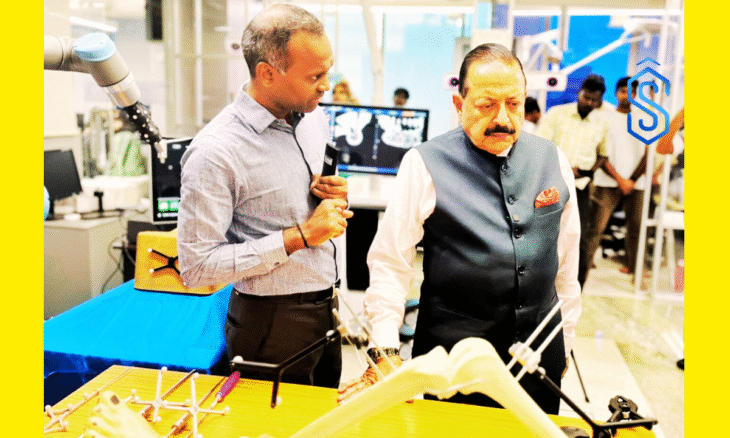
At the Healthcare Technology Innovation Centre (HTIC), the Minister reviewed the development of affordable indigenous medical devices created through collaborations involving about 40 medical institutions, industry partners, and government agencies.
Since its inception in 2011 with seed support from the Department of Biotechnology, HTIC has produced 12 commercially successful Made-in-India products that have reached more than two crore patients in India and abroad.
The centre focuses on addressing unmet clinical needs and reducing dependence on imported medical technologies.
Brain Mapping Research at IIT Madras
The visit also included the Sudha Gopalakrishnan Brain Centre, where researchers are generating large-scale, cell-resolution digital 3D images of whole human brains. Officials informed the Minister that this is the first time such extensive human brain image data at this resolution has been generated in India.
The Centre’s second-trimester human fetal brain atlas project, “DHARANI,” has advanced brain-mapping research and attracted collaborations from leading international institutions.
Dr. Jitendra Singh noted that coordinated efforts among academia, industry, and government are accelerating technology development in areas directly impacting citizens, including urban mobility, healthcare, space technology, and neuroscience.