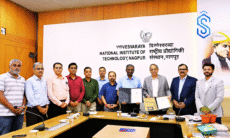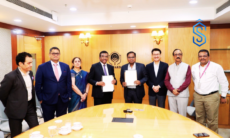

New Delhi: Assam Petro-Chemicals Limited (APL) has signed a Memorandum of Understanding (MoU) with Deendayal Port Authority (DPA) to establish a 150 Tonnes Per Day (TPD) e-Methanol plant at Kandla Port in Gujarat, marking a key development in India’s clean energy transition and maritime decarbonisation efforts.
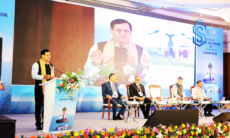
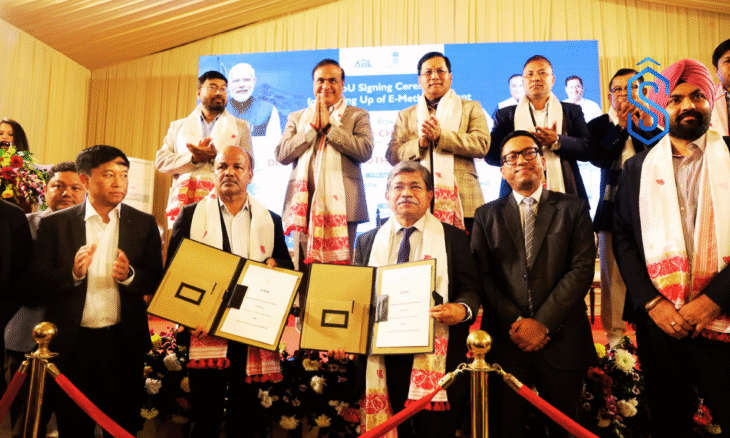
The agreement was signed in the presence of Assam Chief Minister Himanta Biswa Sarma and Union Minister of Ports, Shipping and Waterways Sarbananda Sonowal at the Chief Minister’s Secretariat in Dibrugarh, Assam.
The proposed e-Methanol plant will involve a capital investment of over ₹1,200 crore and is expected to generate more than 3,500 direct and indirect employment opportunities.
The e-Methanol plant is positioned as a strategic initiative supporting India’s long-term goals of sustainable shipping, clean energy adoption and industrial growth.
Also Read: Economic Survey 2026: MSMEs Contribute 35.4% of Manufacturing, 48.58% of Exports
e-Methanol Plant to Strengthen India’s Maritime Decarbonisation Roadmap
Union Minister Sarbananda Sonowal described the APL-led e-Methanol plant at Kandla as a significant milestone in India’s maritime decarbonisation roadmap.
He said the project reflects India’s intent to balance economic growth with environmental responsibility while advancing the vision of achieving net-zero emissions by 2070.
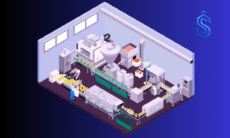
Under the MoU, Deendayal Port Authority will provide pipeline connectivity, storage facilities and fuel-handling infrastructure within the port area, while Assam Petro-Chemicals Limited will establish and operate the green methanol production facility.
This integrated approach is aimed at creating a seamless value chain for the production and supply of green marine fuels at the port.
E-methanol, also known as electro-methanol, is produced using green hydrogen and captured carbon dioxide powered by renewable electricity. It is increasingly being considered a viable alternative fuel for shipping, heavy industry and chemical manufacturing, sectors where direct electrification remains challenging.
Also Read: India EU FTA Concluded, Opening European Markets to Over 99 Per Cent of Indian Exports
Strategic Role of e-Methanol Plant in Green Shipping Corridors
Once commissioned, the e-Methanol plant is expected to enable Kandla Port to emerge as a key green fuel supply hub along major international shipping routes, including vessels operating on the Singapore–Rotterdam trade corridor.
According to the Union Minister, port-based fuel production offers advantages such as reduced logistics costs, improved integration with shipping demand and the development of green bunkering infrastructure.
He noted that e-methanol complies with international emissions regulations and supports cleaner long-distance maritime transport.
By promoting e-methanol, India aims to strengthen its position as both a producer and supplier of green marine fuels, while enhancing Kandla Port’s status as a future-ready green port aligned with global sustainability benchmarks.
e-Methanol Plant: Kandla Port’s Role in National Green Energy Initiatives
As part of its broader decarbonisation strategy, Kandla Port is being developed as a Green Bunkering Hub to supply low- and zero-carbon fuels to vessels on international trade routes.
Located on India’s western coast, the port is among those identified for development as Green Hydrogen Hubs under the National Green Hydrogen Mission.
The mission targets the production and export of around 5 million tonnes of green hydrogen over the next five to six years and supports India’s commitment to achieving net-zero carbon emissions by 2070.
The e-methanol plant initiative aligns with ongoing efforts by the Ministry of Ports, Shipping and Waterways (MoPSW) to promote renewable energy adoption, alternative marine fuels and port-led industrial development through initiatives such as the Harit Sagar – Green Port Guidelines.
Assam Petro-Chemicals’ Transition Towards Green and e-Methanol
Assam Petro-Chemicals Limited, which operates one of India’s largest methanol facilities at Namrup, has expanded its production capacity in recent years.
The partnership with Deendayal Port Authority is expected to help APL move up the value chain from conventional methanol to green methanol and e-methanol production.
The collaboration also highlights Assam’s growing contribution to India’s clean energy ecosystem and supports national initiatives such as Aatmanirbhar Bharat, Make in India and Make for the World, while reducing dependence on imported fossil fuels.
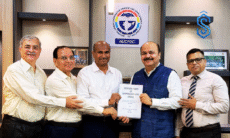
The MoU was signed by Bikul Deka, Chairman, Assam Petro-Chemicals Limited, and Sushil Kumar Singh, Chairman, Deendayal Port Authority, in the presence of senior officials and ministers from the Government of Assam and the Ministry of Ports, Shipping and Waterways.