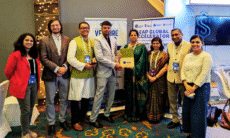

Pune: The latest Pune edition of MyStartupValley brought together a high-energy mix of founders, investors, and innovators for a deep dive into AI adoption, venture capital trends, and building scalable startups.
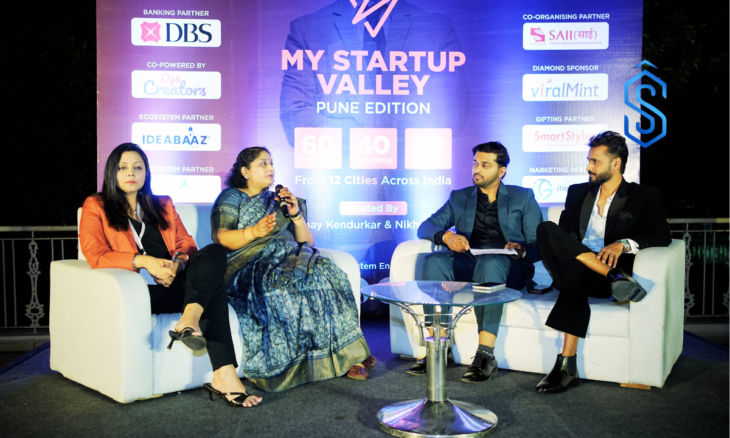
Moderated by Akshay Kendurkar and Nikhiil Siyaal (Jain), the session featured sharp, experience-backed insights from Harsha Mundhada, Partner at Inflexor Ventures, and Dr Shruti Patil, Director at Symbiosis AI Institute (SAII).
The MyStartupValley platform once again enabled meaningful conversations, with founders across stages engaging directly with experts on topics ranging from funding strategies to AI-led transformation.
Harsha Mundhada on What Investors Back – and Why
Harsha Mundhada outlined Inflexor Ventures’ investment approach, stating that the fund typically backs early-stage startups beyond the seed stage, with cheque sizes starting from around $1 million.
She highlighted that while the fund remains sector-agnostic, it strongly prefers science, engineering, and technology-led startups, particularly those building product-driven businesses with differentiated innovation.
Importantly, Harsha emphasized that founder conviction is often the first filter. According to her, the clarity of vision and passion demonstrated within the first few minutes of interaction can determine whether an investor chooses to engage further.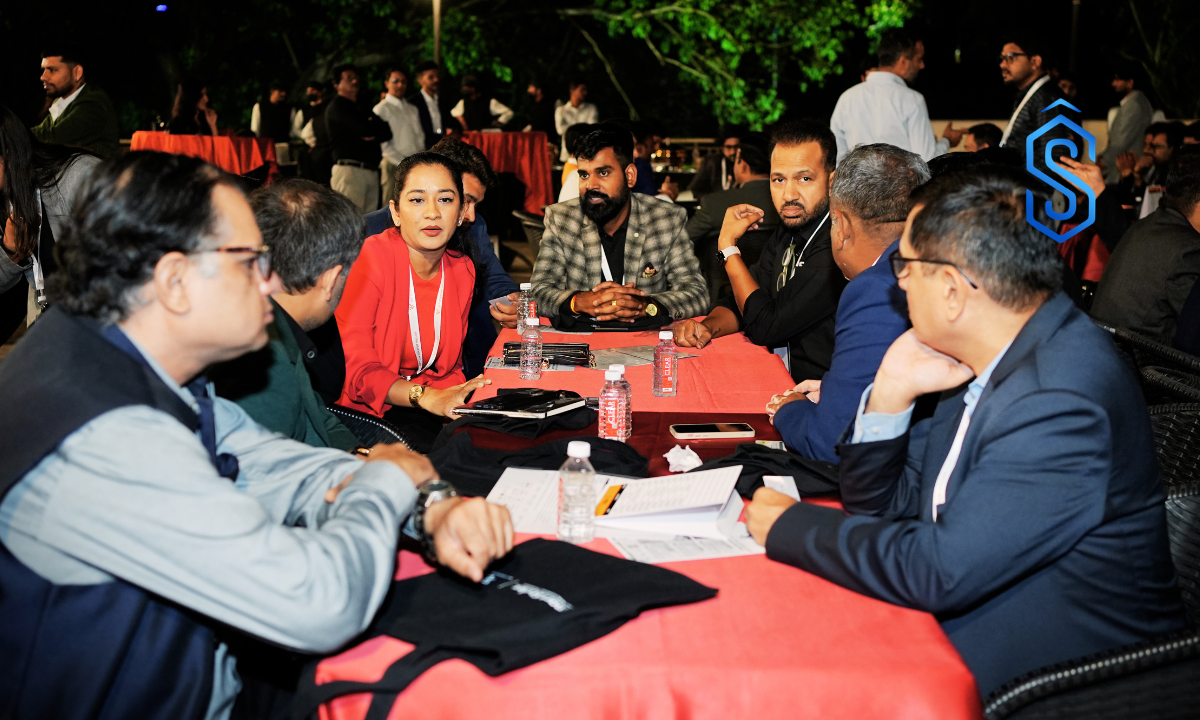
Also Read: Tracxn India Tech Annual Funding Report 2026: India Ranks 4th Globally with $11.7B Funding
Dr. Shruti Patil on AI Adoption: Start Smart, Scale Strategically
A major highlight at MyStartupValley was Dr. Shruti Patil’s practical breakdown of how startups should approach AI.
She explained that founders must first identify where AI can create real impact, rather than adopting it blindly. She outlined two clear pathways:
- Leveraging existing AI tools for automation and efficiency
- Building AI as a core part of the product
Her recommendation at MyStartupValley was clear—start with available AI tools and scale gradually.
She pointed to immediate, high-impact use cases:
- Customer acquisition and management
- HR automation
- Content generation
- Process automation using AI agents
Crucially, she noted that human validation remains essential, even when using advanced AI systems.
AI Implementation: From Tools to Transformation
Expanding further at MyStartupValley, Dr. Shruti Patil laid out a structured roadmap for AI integration:
- Individual usage of AI tools
- Automation of internal processes
- Integration across workflows
- Development of custom AI solutions
She also urged founders to understand the financial implications of AI adoption, including API costs, infrastructure requirements, subscription models, and scaling expenses.
Startups, she said, must consciously decide whether to:
- Use generative AI tools directly
- Build applications using AI agents
- Develop proprietary AI models
Each path comes with different trade-offs in cost, control, and scalability.
India vs Global Innovation: A Work in Progress
Responding to questions at MyStartupValley about India’s ability to build companies comparable to global AI leaders, Harsha Mundhada noted that India’s startup ecosystem is still evolving.
She pointed out that India has historically been services-led, whereas markets like the US have focused more on product innovation. While the shift toward a product-first mindset is underway, ecosystem depth, funding scale, and research infrastructure still need time to mature.
Atomberg: A Case Study in Product Disruption
One of the most compelling insights at MyStartupValley came from Harsha Mundhada’s recounting of Inflexor Ventures’ early investment in Atomberg.
She shared that when the firm first evaluated the company in 2016, it had revenues under ₹2 crore and was largely focused on industrial customers in Gujarat’s textile and manufacturing sectors.
What stood out was Atomberg’s engineering-led innovation in a stagnant category – ceiling fans. By improving motor efficiency, the company delivered a clear value proposition: energy savings that justified the product cost over time.
For Harsha, this was a textbook example of backing deep product innovation solving a real-world problem.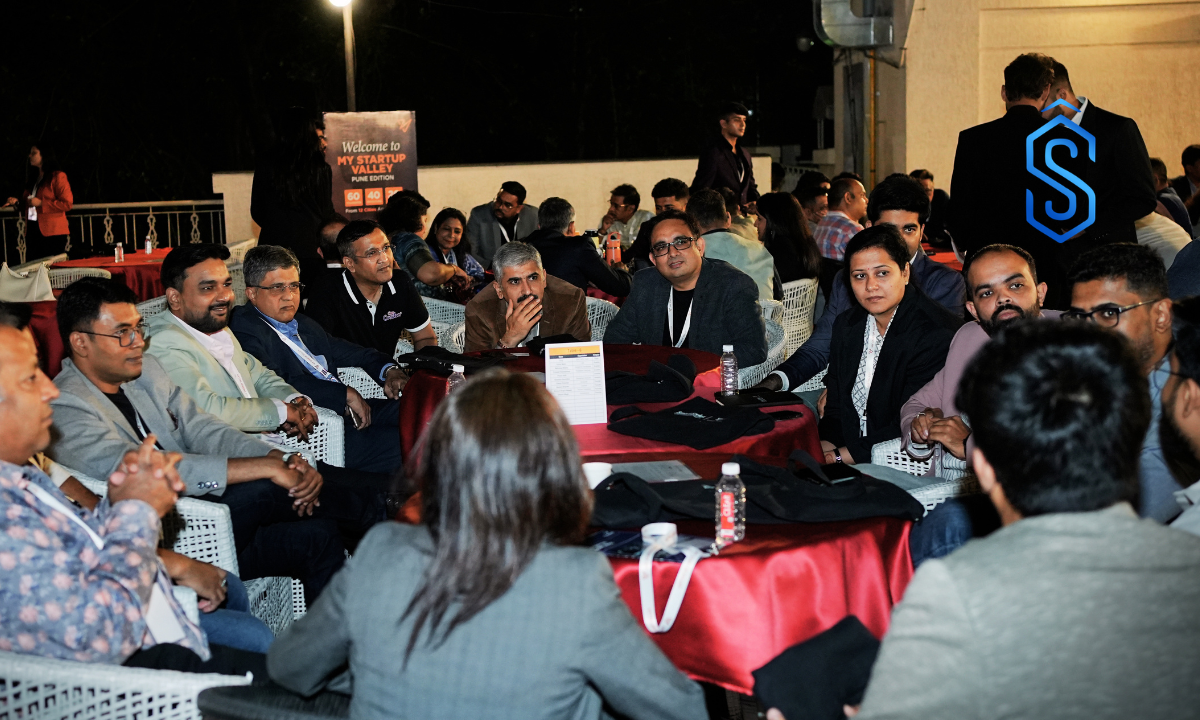
Patient Capital: Building for the Long Term
At MyStartupValley, Harsha Mundhada also highlighted the importance of patient capital, especially for startups driven by research and product development.
She explained that such companies often face 2–3 year development and sales cycles, requiring sustained investment and long-term vision.
Encouragingly, she noted that India’s venture ecosystem is maturing, with increasing acceptance that meaningful outcomes typically require 7–10 year investment horizons.
Also Read: Fandom Platform Fanon Raises $1 Million Pre-Seed Round Led by Kalaari Capital and Gruhas
Dr. Shruti Patil on Academia–Industry Synergy
Dr. Shruti Patil emphasized a major structural shift discussed at MyStartupValley – the growing convergence between academia and industry.
She noted that students today are deeply engaged in practical problem-solving, research, and real-world projects, often generating ideas that are directly applicable to startups.
Hiring models are also evolving. Companies are now engaging students much earlier in their academic journey, offering mentorship, project exposure, and early hiring opportunities.
She described the emerging workforce as AI-native, highly adaptive, and innovation-driven, signaling a significant shift in how startups can build talent pipelines.
AI Era: Rethinking Service vs Scalable Startups
A key debate at MyStartupValley centered on how AI is reshaping startup models.
Harsha Mundhada pointed out that as AI automates large portions of work, startups must focus on problems that cannot be fully automated.
Adding to this, Dr. Shruti Patil emphasized that the winning formula lies in combining AI capabilities with human intelligence and domain expertise. She stressed that differentiation will increasingly depend on this hybrid approach.
MyStartupValley Pune Edition: Final Takeaways for Founders
Closing the session at MyStartupValley, Dr. Shruti Patil advised founders to deeply understand AI before adopting it, including its strengths, limitations, and cost implications.
She reiterated that founders do not need to become deep technologists, but must develop enough understanding to make informed decisions.
Harsha Mundhada reinforced a timeless principle – build for real problems, not just for funding.
The MyStartupValley session concluded with a strong message: in a rapidly evolving ecosystem, founders who combine clear thinking, strategic AI adoption, and long-term vision will be best positioned to succeed.
MyStartupValley Pune edition was supported by a strong network of partners and ecosystem enablers who played a key role in bringing the gathering together.
The event was co-powered by banking partner DBS, and Oye Creators, with ecosystem partners including Hindu Economic Forum Pune District Chapter, IdeaBaaz, and Pune Angel Network.
Additional support came from SmartStylez as the gifting partner and SC Entertainment as the videography partner, while Symbiosis Artificial Intelligence Institute joined as the co-organising partner.
The event’s outreach and visibility were driven by iTrendGlobal Solutions as the marketing partner, alongside ViralMint as the diamond sponsor.
The broader ecosystem support for MyStartupValley was further strengthened by enablers such as t-hub, Wadhwani Foundation, Entie, J4E, SCEI, Garje Marathi, and Bombay Networking Circle, reinforcing the collaborative spirit of the startup community.