New Delhi: The Union government has prohibited exports of lithium-ion battery black mass classified under ITC (HS) code 85491400, changing its export policy from “Free” to “Prohibited” with immediate effect.
The restriction will remain in force until further orders, according to a notification issued by the Directorate General of Foreign Trade (DGFT) on November 10, 2026.
The export restriction has been introduced through Notification No. 49/2026-27 by the DGFT, functioning under the Ministry of Commerce and Industry.
The amendment changes the export classification of the specified lithium-ion battery waste and scrap category under Chapter 85 of ITC (HS), Schedule II of the Export Policy.
The decision could have implications for India’s battery recycling industry, particularly businesses involved in recovering valuable metals from discarded lithium-ion batteries.
While domestic refiners with operational metal-recovery facilities could potentially benefit from greater availability of locally sourced black mass, companies that primarily shred batteries and export the intermediate material may face pressure to find domestic buyers or upgrade their processing capabilities.
What Does the Lithium-Ion Battery Black Mass Export Ban Cover?
The prohibition specifically covers waste and scrap of primary cells, primary batteries and electric accumulators, along with spent primary cells, spent primary batteries and spent electric accumulators classified under ITC (HS) code 85491400.
The specified commodity category is described as “unsorted and not containing lead, cadmium or mercury”. The DGFT notification identifies this category as lithium-ion battery black mass.
Under the revised export policy, the specified lithium-ion battery black mass category can no longer be exported under the previous “Free” classification. Its status has been changed to “Prohibited”.
However, the amendment is limited to the specified tariff code and commodity description. It does not introduce a blanket prohibition on exports of all battery-related materials or products.
Why Lithium-Ion Battery Black Mass Matters to the Recycling Industry
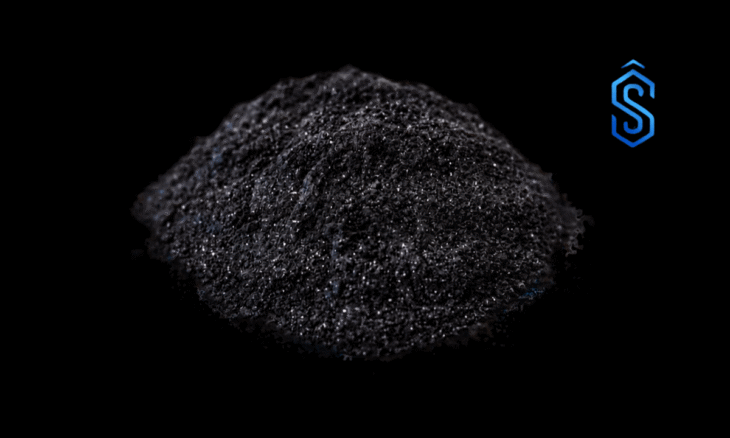
Black mass is an intermediate material obtained through the shredding and processing of used lithium-ion batteries.
It contains a mixture of materials from which valuable metals such as lithium, nickel and cobalt can be recovered through further processing, depending on the chemistry of the batteries.
The material itself is not equivalent to recovered battery-grade minerals. Additional processing and refining are required to extract and convert these materials into usable products.
By prohibiting exports of the specified lithium-ion battery black mass category, the government has effectively removed an overseas sales route for businesses dealing in this intermediate material.
The resulting impact could differ across the battery recycling value chain, depending on whether a company only processes batteries into black mass or has the technology and infrastructure to recover individual metals.
Domestic Battery Refiners Could Benefit From Greater Feedstock Availability
Companies operating metal-recovery facilities could potentially gain from the change in export policy as more lithium-ion battery black mass remains available within India.
Domestic refiners could receive additional feedstock from battery shredders and recycling businesses that previously relied on overseas buyers.
If the closure of the export market results in lower domestic black mass prices, refiners could also benefit from reduced input costs.
Attero, Lohum, Rubamin and Recyclekaro are among the businesses relevant to examine in the domestic battery recycling and materials recovery ecosystem.
However, the potential benefits will depend on the actual processing capabilities of individual companies, including their operational plant capacity, metal-recovery technologies and ability to handle different battery chemistries.
Black Mass Producers and Exporters Could Face Pricing Pressure
The impact could be more challenging for businesses whose operations largely end with battery shredding and black mass production.
With exports of the specified lithium-ion battery black mass prohibited, these companies may have to redirect their material to Indian refiners, renegotiate existing commercial arrangements or invest in additional processing infrastructure.
The change could create pressure on selling prices if domestic buyers have greater bargaining power or if available refining capacity is insufficient to absorb the material.
Could the Export Ban Strengthen India’s Domestic Battery Value Chain?
Keeping more lithium-ion battery black mass within the country could support investments in domestic mineral recovery and downstream processing.
If domestic refining capacity expands alongside the availability of feedstock, India could potentially recover a larger share of valuable battery materials locally. This could contribute to reducing dependence on imported inputs over time.
However, retaining black mass within India does not automatically translate into domestic production of battery-grade materials or finished battery cells.
The material must undergo further processing, purification and conversion before it can be used in battery manufacturing. The extent to which the export prohibition strengthens India’s domestic battery supply chain will therefore depend on the country’s ability to expand these downstream capabilities.
Battery and EV Manufacturers May See Indirect Benefits Over Time
The export restriction could eventually benefit battery and electric vehicle manufacturers if greater domestic processing capacity creates a more reliable supply of recovered battery materials.
Locally recovered lithium, nickel and other materials could potentially contribute to the domestic battery manufacturing ecosystem and reduce reliance on imported inputs.
The commercial benefits will depend on the quality of recovered materials, the chemistry of the batteries being recycled, the scale of recovery operations and the ability of refiners to convert intermediate materials into usable battery inputs.
Battery Chemistry Could Determine Which Companies Benefit
The composition of lithium-ion battery black mass is another important factor in determining the potential impact of the export prohibition.
Different battery chemistries contain different combinations of recoverable materials. Lithium iron phosphate (LFP) batteries, for instance, do not contain nickel or cobalt, unlike nickel manganese cobalt (NMC) batteries.
Consequently, black mass generated from LFP batteries has a different material composition and recovery economics compared with black mass from NMC batteries.
A processing technology that is commercially viable for one battery chemistry may not deliver the same economics for another.
Existing Export Contracts Need Separate Verification
The DGFT notification clarifies that transitional arrangements under Paragraph 1.05 of the Foreign Trade Policy (FTP), 2023, will apply despite the immediate implementation of the export prohibition.
However, the reference to transitional provisions does not establish that every existing export contract or pending shipment will automatically be permitted to proceed.
Businesses with existing export commitments will need to verify how the applicable transitional provisions affect their individual contracts, shipments and other arrangements.
The treatment of specific transactions will depend on the relevant provisions and their applicability to individual cases.