
Pune: CSIR-National Chemical Laboratory (CSIR-NCL) has announced a major advancement in battery materials science with the development of a Self-Healing Hydrogel Electrolyte designed for next-generation rechargeable zinc-metal batteries.
The innovation addresses safety and performance limitations arising from dendrite growth and mechanical damage. The research has been published in Advanced Energy Materials.
Self-Healing Hydrogel Electrolyte Shows Breakthrough in Battery Safety and Flexibility
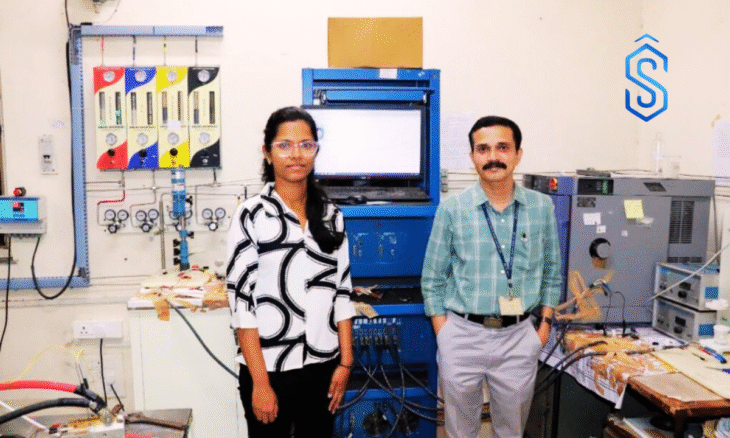
The Self-Healing Hydrogel Electrolyte, developed by a team led by Dr Sreekumar Kurungot and PhD researcher Priyanka Pandinhare Puthiyaveetil, is a newly engineered hydrogel polymer material named PHBC-4.
Also Read: Prof T N Guru Row Highlights Advanced Insights in Noncovalent Bonding at CSIR-NCL Event
Its design incorporates hydrogen bonding, dynamic polar covalent B–O interactions, and Zn–O coordination bonding, forming a reinforced polymer network capable of suppressing zinc dendrite formation.
Dendrites are the primary cause of short-circuiting and premature failure in conventional zinc-metal batteries.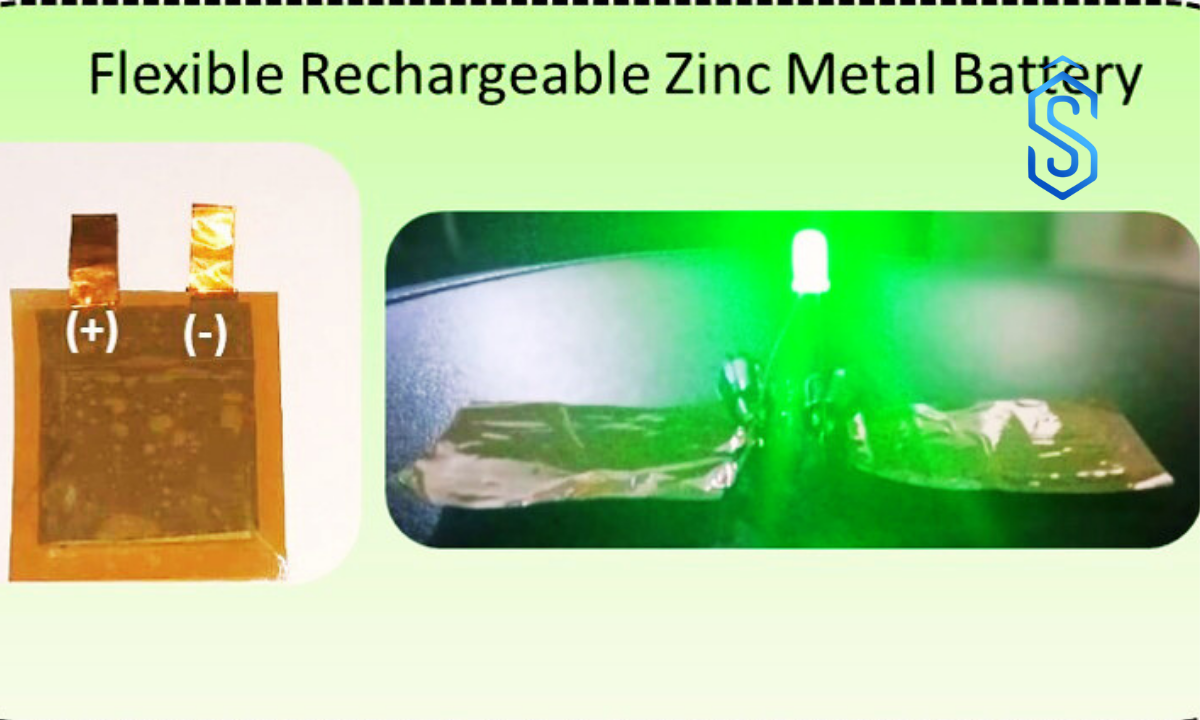
A striking feature of the PHBC-4 material is its ability to autonomously repair itself, recovering up to 93% of its mechanical strength within just five minutes. To demonstrate this capability, researchers constructed a flexible pouch cell using PHBC-4 to power an LED.
Even after intentionally cutting the pouch cell, the internal network reassembled, and the LED continued to remain illuminated – a strong indication of its suitability for wearable and flexible electronics.
Self-Healing Hydrogel Electrolyte Enables High Stability and Uniform Zinc Deposition
Rechargeable zinc-metal batteries are increasingly recognised for their safety, abundance of raw materials, and environmental compatibility. However, their broader deployment has been limited by dendrite growth, hydrogen evolution reactions, and vulnerability to mechanical stress.
Also Read: Hydrogen 360: AICTE-ATAL Sponsored FDP Concludes Successfully at AIT Pune
The Self-Healing Hydrogel Electrolyte PHBC-4 overcomes these barriers by ensuring uniform zinc deposition and retaining structural integrity under deformation.
The study highlights that PHBC-4 achieves an ionic conductivity of 4.6 × 10⁻² S cm⁻¹ and a high cation transference number of 0.89. When paired with a Zn-doped MnO₂ cathode, the system delivered exceptional cycling stability of over 490 cycles.
In Zn||Zn symmetric cells, the electrolyte enabled stable plating–stripping behaviour exceeding 1032 hours, reinforcing its potential for long-lasting energy storage systems.
Self-Healing Hydrogel Electrolyte Marks a Step Toward Sustainable Battery Technologies
This advancement positions the self-healing PHBC-4 electrolyte as a promising material for next-generation sustainable batteries designed for flexible, wearable, and deformable electronic applications.
Reference: Self-Healing Hydrogel Electrolyte Enabled by Dynamic Polar Covalent and Noncovalent Interactions for High-Performance Rechargeable Zinc-Metal Batteries, Adv. Energy Mater. 2025, DOI: 10.1002/aenm.202502883.