
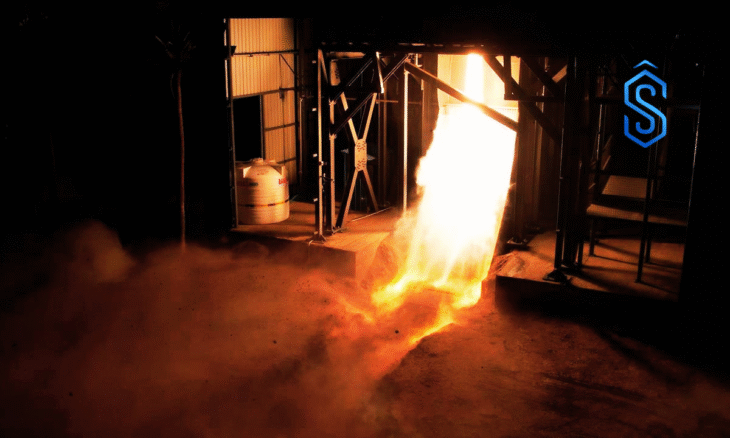
Chennai: Agnite, the latest propulsion breakthrough from Agnikul Cosmos, marks a significant milestone in the evolution of space transportation, as the company successfully completed a critical booster engine test showcasing the world’s first and largest single-piece 3D-printed booster engine.
With Agnite, Agnikul Cosmos has demonstrated large-scale 3D printing of rocket engines at an unprecedented level.
Unlike traditional rocket engines that take several months to manufacture, Agnite can be fully 3D printed in just seven days, significantly reducing production complexity and turnaround time.
This rapid manufacturing capability of Agnite directly enhances launch responsiveness, allowing Agnikul to support missions on significantly shorter notice compared to industry standards.
Satellite operators can benefit from secure and firm launch schedules, access to custom orbital trajectories, and improved mission planning certainty – advantages not typically available with shared launch models.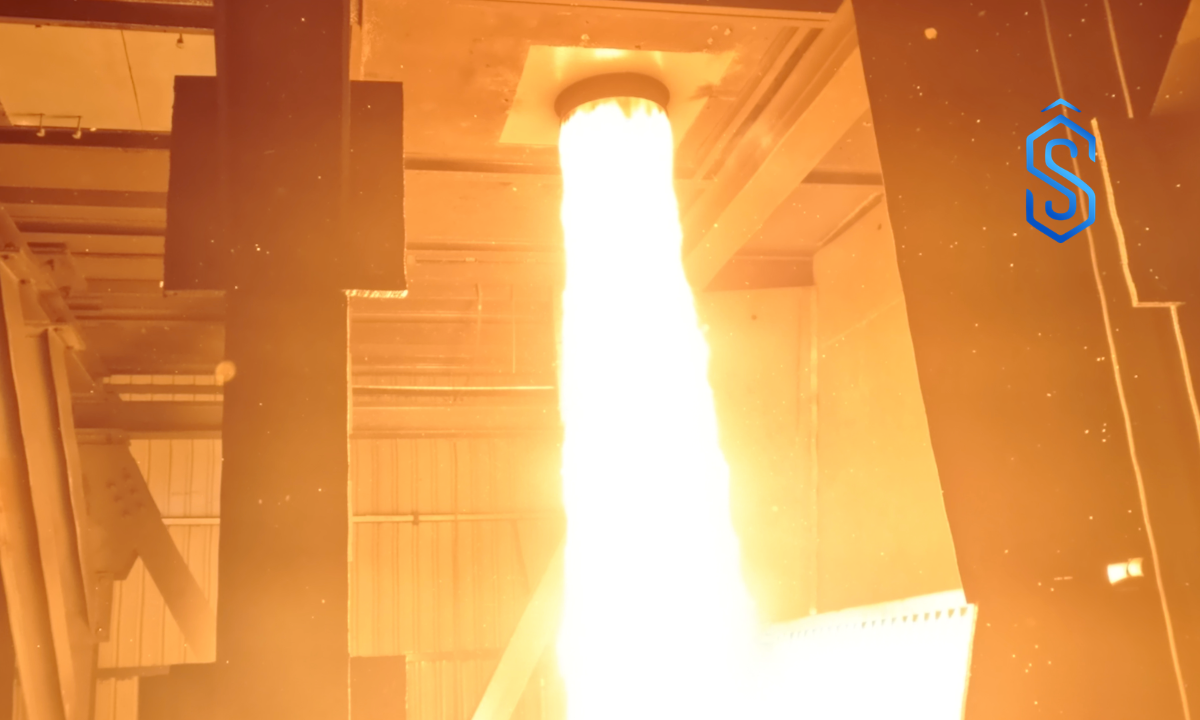
Agnite: Largest Inconel Rocket Engine Ever Built as a Single Piece
The successful test of Agnite reinforces Agnikul Cosmos’ ability to rethink launch timelines. While conventional launch systems often involve waiting periods ranging from months to years, Agnite enables the possibility of reducing launch wait times to just a few days.
This shift allows satellite operators to plan missions with a level of flexibility and precision previously unattainable.
The tested Agnite engine is a full meter long, making it the largest Inconel rocket engine ever built as a single piece. It is also the first of its scale to be tested using electric motor-driven pumps – marking a key advancement in propulsion technology.
Also Read: NeevCloud Plans 600 Orbital AI Data Centers with Agnikul Partnership
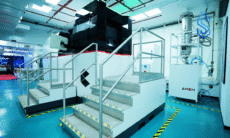
Validated at Agnikul’s in-house test facility in Chennai, Agnite reflects a focus on scalable, high-performance engineering aimed at faster launch readiness and consistent execution.
Through the development of Agnite, Agnikul now operates a fully integrated launch ecosystem, including in-house mission control, dedicated ground stations, and flight-proven propulsion systems.
This integrated approach allows customers to work with a single provider from contract to orbit, reducing coordination complexity and schedule risks.
For satellite operators in critical sectors such as defence and disaster response, Agnite offers the ability to plan around committed launch windows, achieve precise satellite placement, and make payload adjustments up to 30 days before flight.
This flexibility provides greater operational control compared to traditional shared launch options.
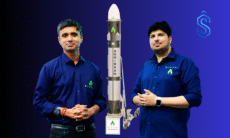
“We chose single-piece Inconel construction and electric pump architecture specifically to solve our customers’ schedule problem & enhance automation of engine making.
Traditional engines take months to build because you’re machining, welding, and assembling dozens of parts. Ours prints in a few days, which means we can respond to launch demand faster than the industry standard,” said Srinath Ravichandran, Co-founder and CEO of Agnikul Cosmos.
“Electric pumps are simpler than gas generators, fewer parts to refurbish between flights, which is critical for our reusability roadmap. These aren’t just technical choices but are the reasons why we can commit to low turnaround and actually deliver on it,” he added.
Also Read: Agnikul Cosmos Raises USD 17 Million to Boost Reusable Rocket Development
Agnite also strengthens Agnikul’s positioning for constellation deployments, government missions, and emerging space-based compute applications.
The company has built India’s first large-format aerospace manufacturing facility to support rapid vehicle production and has secured commercial partnerships for space-based AI infrastructure.
“This engine test validates that our propulsion systems are ready to operate at the scale required for multiple launches per quarter. Our manufacturing capabilities are enabling us to produce engines in line with customer demand, rather than limiting it. With propulsion now largely de-risked, our focus is firmly on execution and demonstrating consistent launch cadence and mission reliability that can translate this pipeline into long-term partnerships and repeat business,” said Moin SPM, Co-founder and COO of Agnikul Cosmos.
The Agnite milestone builds on Agnikul’s previous achievements, including last month’s successful test firing of three semicryogenic engines in synchronisation – the first such test conducted in India.
Together, these advancements underline Agnikul’s capability to scale engine production based on mission requirements.
Agnikul Cosmos is currently valued at over $500 million following a funding round that saw participation from HDFC Bank, Advenza Global Limited, and Artha Select Fund.
In addition, Tamil Nadu Industrial Development Corporation (TIDCO) recently invested ₹25 crore in the company under the TIDCO Startup Investment Policy 2025, marking the first government equity investment of its kind in an Indian space startup.
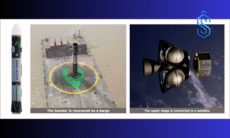
With patents across the United States, Europe, and India covering propulsion systems, convertible upper-stage architecture, and orbital platform technologies, Agnite stands as a key innovation strengthening Agnikul’s commercial and technological edge in the global space industry.