
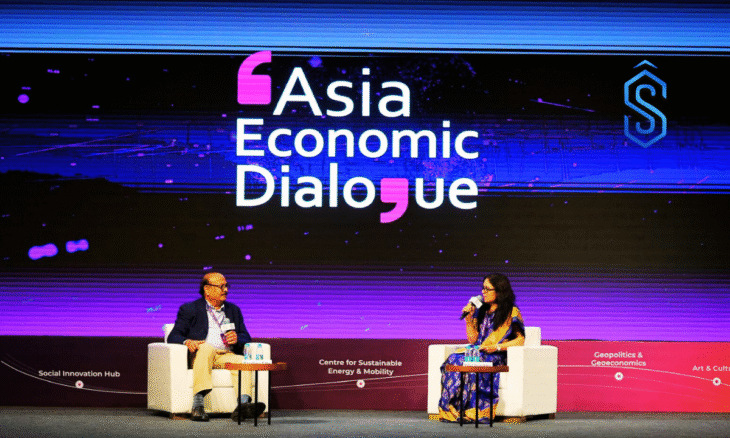
Pune: At the Asia Economic Dialogue 2026, organised by Pune International Centre (PIC), Dr Krishna Ella, Managing Director of Bharat Biotech, made a strong case for regulatory reform in India’s biotechnology sector, stating that greater flexibility could position the country as a global manufacturing leader.
Speaking during a fireside chat with Vidya Yeravdekar, Pro-Chancellor of Symbiosis International University, Krishna Ella highlighted the need to align India’s regulatory ecosystem with global standards to unlock its full scientific and industrial potential.
The session was part of the theme “Geoeconomics Beyond Globalisation: Tariffs, Technologies and Strategic Alignments.”
We Could Beat Anyone in the World: Krishna Ella
Focusing on regulatory systems in biology and biotechnology, Krishna Ella said: “India is one of the most highly regulated countries in the world in biology and embryology. If we had the regulatory flexibility that the US FDA or Chinese regulators have, we could beat anyone in the world in manufacturing.”
According to Krishna Ella, India possesses strong scientific talent and manufacturing capabilities, but regulatory bottlenecks slow down innovation and scale. He noted that while discussions around reform have continued for decades, processes have grown increasingly complex over time.
“Sometimes even the lowest-level official becomes the most important person in moving a file.”
For Krishna Ella, regulatory reform is not about lowering standards but about enabling efficiency and speed in a globally competitive environment.
Also Read: Biovet Secures TDB-DST Funding for Commercialization of Veterinary Hormones
India vs China: Speed and Strategic Focus
Drawing comparisons with China, Krishna Ella observed how regulatory flexibility has accelerated biological innovation there.
“They realized India was strong in chemistry and chose not to compete there. Instead, they strategically focused on biology, where India was weaker and more tightly regulated. They moved very fast in biology.”
He cited an example of clinical timelines:
“For example, a Phase 1 gene therapy trial in India can take three years. In China, it can take three months. In China, medical colleges can approve gene therapy programs, making the system more flexible.”
He further noted: “In the last two years, China licensed $37 billion worth of biological innovations to US and European companies. They have done extremely well in biology by making regulatory processes more enabling.”
Through these comparisons, Krishna Ella emphasized that regulatory agility directly impacts global competitiveness.
Manufacturing Strength and Untapped Potential
According to Krishna Ella, India already has the capability to compete globally in manufacturing, particularly in vaccines and biotechnology. However, regulatory delays can limit speed to market and innovation cycles.
By referencing regulatory bodies such as the United States Food and Drug Administration, he underscored the importance of predictable, time-bound approval systems.
For Krishna Ella, the path forward involves balancing safety with efficiency while creating a framework that empowers scientists and manufacturers rather than slowing them down.
Also Read: SUJVIKA AI: Biotech Product Data Portal to Support Startups and Industry with Import Insights
Broader Innovation Ecosystem
Beyond regulation, Krishna Ella reiterated his broader philosophy: “My philosophy was simple – Indian science must succeed. Whether I succeed or not does not matter.”
He stressed that innovation ecosystems must be built to inspire younger generations to stay and build in India.
“If we do not create an innovation ecosystem in this country, our children and grandchildren will not stay back in India. It is everyone’s responsibility to create that ecosystem.”
At the Asia Economic Dialogue 2026, Krishna Ella positioned regulatory reform as a strategic lever that could transform India’s biotechnology manufacturing landscape and strengthen its global standing.