
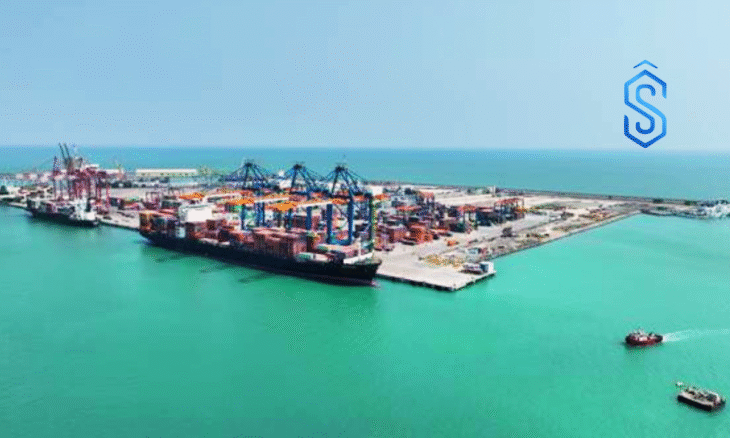
New Delhi: V. O. Chidambaranar Port has become the first major port in India to implement a Digital Twin Platform, marking a significant technological milestone in the country’s maritime sector.
The launch of the Digital Twin Platform represents a major step toward building a smart, efficient, and technology-driven maritime ecosystem.
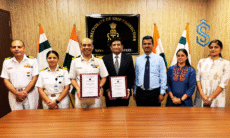
The Digital Twin Platform was inaugurated on February 23, 2026, by Sarbananda Sonowal, Union Minister of the Ministry of Ports, Shipping and Waterways.
The initiative marks a significant milestone in the port’s journey toward intelligent and technology-enabled maritime management.
The Digital Twin Platform will create a real-time virtual replica of the port’s infrastructure, operational assets, and maritime ecosystem.
Through this system, the port will gain enhanced operational visibility, predictive analytics capabilities, and data-driven decision-making tools across various departments.
The Digital Twin Platform integrates technologies such as IoT sensors, GPS tracking, LiDAR mapping, drone imaging, and CCTV networks to continuously mirror real-time operational conditions across the port.
With the deployment of the Digital Twin Platform, the port will be able to conduct real-time operational monitoring, including live visualisation of berth occupancy, vessel movements, crane utilisation, and yard capacity.
The Digital Twin Platform also supports predictive maintenance of cargo handling equipment using AI-based asset monitoring systems, helping reduce equipment downtime and improve operational reliability.
In addition, the Digital Twin Platform facilitates berth and traffic optimisation through intelligent vessel scheduling and cargo operation planning, thereby reducing congestion and vessel waiting time.
The system also enables energy and emissions tracking to support sustainability goals. The Digital Twin Platform includes scenario simulation features that allow operators to conduct “what-if” modelling to prepare for peak demand situations and operational disruptions.
According to the port authority, the Digital Twin Platform is designed to transform the port into a smart maritime gateway.
The system is expected to reduce vessel turnaround time by up to 25 percent, improve equipment availability, strengthen operational safety through predictive alerts, and optimise energy utilisation to lower carbon emissions.
Also Read: JIPMER Celebrates Research Day, Reports 160 Active Research Projects and ₹112 Crore Funding
The Digital Twin Platform is being implemented in a phased and structured manner to ensure seamless integration with existing operations.
The adoption of the Digital Twin Platform aligns with India’s broader maritime modernisation strategy under Maritime India Vision 2030 and Amrit Kaal Vision 2047.
These initiatives support the vision of Narendra Modi to accelerate digitalisation and technological advancement across the maritime sector in order to improve operational efficiency, transparency, and global competitiveness of Indian ports.
Under Maritime India Vision 2030, globally benchmarked targets have been established to enhance ease of doing business and improve operational efficiency through advanced technologies.
Digital Twin Platform: International Standards for Smart Port Infrastructure
The implementation of the platform positions the port to contribute to these national objectives while progressing toward international standards for smart port infrastructure.
Susanta Kumar Purohit, Chairperson of V.O. Chidambaranar Port Authority, said: “The implementation of the Digital Twin platform marks an important step in the Port’s modernisation journey.
By leveraging technologies such as Artificial Intelligence, IoT, and real-time data analytics, the initiative will enhance operational efficiency, improve vessel turnaround time, and strengthen safety and sustainability while aligning the Port with global smart port standards.”
The introduction of the platform is expected to strengthen resilience against operational disruptions while enabling more efficient, sustainable, and data-driven port management in India.