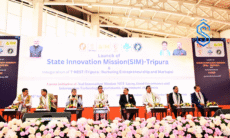


Thiruvananthapuram: The state-of-the-art “Central Facility for Recombinant Cells and Sensors” at BRIC-Rajiv Gandhi Centre for Biotechnology was launched on the occasion of National Science Day 2026.
Developed with an investment of approximately ₹60 crore by the Department of Biotechnology (DBT), the Recombinant Cells and Sensors facility is expected to significantly enhance drug discovery, medical genomics, and agri-genomics research in India.
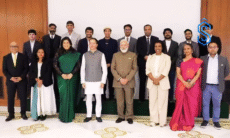
The inauguration took place at the Akkulam campus of BRIC-RGCB in Thiruvananthapuram, Keralam, at the hands of Union Minister of State (Independent Charge) for Science & Technology, Earth Sciences; MoS PMO, Personnel, Public Grievances, Pensions, Atomic Energy and Space, Dr Jitendra Singh.
The Minister also announced the foundation of a dedicated GMP facility and released the book Quantum Physics: One Hundred Magical Years, authored by Prof. V.P.N. Nampoori.
Also Read: Aamikza Biotechnology Launches Research and Innovation Centre in Pune
Recombinant Cells and Sensors Facility to Accelerate Drug Discovery
Dr Jitendra Singh said the initiative represents years of sustained government-supported research and will accelerate target-specific drug discovery and screening.
The facility houses a large panel of engineered recombinant cells and advanced screening systems designed to serve academia, healthcare innovators, and industry stakeholders across the country.
India Preparing for a Bio-Driven Economy
Speaking at the event, Dr Jitendra Singh said India is preparing for a bio-driven economy where biotechnology will shape the future of manufacturing, healthcare, and sustainable growth. He noted that under the leadership of PM Narendra Modi, biotechnology has received unprecedented policy support over the last decade, enabling India to emerge as a global biotechnology hub.
Referring to the recently launched BioE3 Policy, he stated that India is among the few countries to introduce a dedicated biotechnology policy focused on economy, environment, and employment.
The policy anticipates the global shift toward biomanufacturing and bio-based industries and complements initiatives to strengthen research-to-industry linkages.
Rapid Expansion of India’s Bioeconomy
Addressing scientists, students, and industry representatives, the Minister said India’s bioeconomy has expanded nearly sixteen times over the past decade—from around USD 10 billion to nearly USD 166 billion—with a target of reaching USD 300 billion in the coming years.
He added that the number of biotechnology start-ups has increased from about 50–70 in 2014 to over 11,000 today. This growth reflects a rapidly expanding innovation ecosystem supported by policy reforms, funding mechanisms, and recent deep-tech initiatives.
The recombinant cells and sensors facility is expected to further support this ecosystem by providing advanced infrastructure for translational research and commercialization.
The event was attended by Dr. Rajesh S. Gokhale, Secretary, Department of Biotechnology; Dr. Santosh, Director, BRIC-RGCB; along with senior scientists, faculty members, start-up incubatees, and students.
Also Read: AED 2026: Krishna Ella Says India Can Beat China, US If Regulatory Shackles Are Removed
Focus on Non-Communicable Diseases and Cancer Research
Dr Jitendra Singh also spoke about the rising burden of non-communicable diseases, including diabetes, fatty liver disease, and cancer. He noted that India is witnessing a steady rise in cancer incidence, with projections indicating a significant increase by 2030.
In this context, he appreciated BRIC-RGCB’s research in cancer biology, including work on colon, oral, breast, and cervical cancers. Referring to HPV vaccination, he said India’s scientific institutions have contributed to global evidence supporting simplified vaccination schedules, and emphasized that preventive healthcare must go hand in hand with advanced research.
Dedicated GMP Facility Announced
Announcing the establishment of a dedicated GMP facility at BRIC-RGCB, the Minister said the upcoming facility will support pre-commercial production of biologics and cell-based therapies, including CAR-T therapy, in collaboration with clinical centres in Keralam.
The GMP facility will function as a bridge between laboratory research and industrial-scale production and will be available to biotech industries on a “pay-and-use” basis. The project will be implemented in two phases with a total investment of ₹80 crores by DBT.
Dr Jitendra Singh called for deeper collaboration among research institutions, private industry, and emerging sectors such as nuclear medicine and deep-ocean research.