

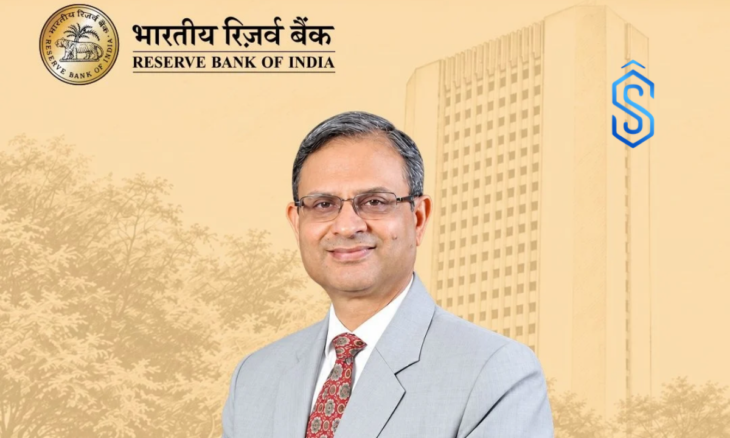
New Delhi: The RBI MPC October 2026 meeting has resulted in a 25 basis points (bps) increase in the policy repo rate to 5.50 per cent, with the Monetary Policy Committee (MPC) unanimously voting for the hike amid rising inflationary pressures and global economic uncertainty.
The MPC met on October 5, 6 and 7 to assess evolving macroeconomic and financial developments and the outlook.
Along with raising the policy repo rate under the liquidity adjustment facility (LAF) to 5.50 per cent, the committee decided to change its stance to calibrated tightening.
Following the decision, the Standing Deposit Facility (SDF) rate stands at 5.25 per cent, while the Marginal Standing Facility (MSF) rate and the Bank Rate stand at 5.75 per cent.
The RBI MPC October 2026 decision comes against a backdrop of renewed escalation in the West Asia conflict in September, volatility in global crude oil prices and heightened financial market volatility.
The RBI noted that although global growth remains resilient, it is projected to decelerate in 2026 from the previous year.
Rising energy and food prices are expected to push up global inflation, prompting monetary policy tightening by major central banks.
Lingering trade uncertainty, higher bond yields in advanced economies and an appreciating US dollar are also keeping global financial market sentiment nervous and fragile.
The RBI said further tightening of global financial conditions, uncertainty surrounding fair valuations of AI stocks and the lack of a resolution to the West Asia conflict pose significant downside risks to the global economic outlook.
RBI MPC October 2026: Why Repo Rate Was Hiked?
The MPC observed that the global environment remains challenging because of geopolitical developments. Despite these headwinds, the Indian economy has remained strong, with economic momentum continuing to be broad-based.
However, the committee noted that inflation and its outlook are no longer as benign as they were last year.
Headline CPI inflation is expected to average almost 5.8 per cent over the next three quarters, while core inflation is projected at 4.4 per cent for the current financial year.
The MPC said recalibrating the policy rate was therefore imperative.
The committee also assessed supply-side inflation pressures. Monetary policy primarily works by curtailing second-round effects, including inflation expectations and firm-level pricing behaviour, which can take time to emerge and can be difficult to identify from available data.
The MPC uses inflation expectations, firm-level pricing behaviour, core inflation and diffusion indices to assess whether inflation is becoming more generalised.
While there is some evidence of elevated inflation expectations and generalisation of inflation, the MPC said there are limited signs of supply-side pressures becoming embedded in pricing behaviour.
Similarly, while there is limited evidence of demand-side pressures, the committee highlighted risks arising from strong growth in monetary and credit aggregates.
Considering these factors, the RBI MPC October 2026 meeting unanimously approved the 25 bps repo-rate increase to 5.50 per cent and changed the stance to calibrated tightening.
The MPC underscored that, under current conditions, rate cuts are off the table in the near term. Future policy action can only be a rate hike or a pause, depending on evolving economic conditions and the outlook.
The duration and extent of the rate-hike cycle will depend on actual growth and inflation developments, particularly underlying inflation, the broadening of price pressures, second-round effects of supply shocks and the impact of demand impulses.
RBI MPC October 2026: 2026-27 GDP Growth Forecast Raised to 7.1%
The Indian economy remained resilient despite global headwinds, with real GDP growth reaching 7.8 per cent in Q1 of 2026-27.
Growth was supported by resilient private consumption and strong investment activity, while net exports also made a positive contribution.
High-frequency indicators suggest that economic activity maintained momentum in Q2, although the pace moderated compared with the previous quarter.
Manufacturing activity remained resilient despite cost pressures, while both manufacturing and services PMI stayed in the expansionary zone.
Services sector activity remained steady and broad-based, supported by domestic and external demand. Private consumption also remained broadly resilient, while fixed investment continued to show strength.
Merchandise exports recorded higher double-digit growth during July-August 2026, while services exports also accelerated during the period.
The RBI expects global economic uncertainty and supply-chain disruptions to have some impact on domestic economic activity.
Weak southwest monsoon conditions and strong El Niño conditions could affect the upcoming rabi season and rural demand.
At the same time, resilient non-farm activity is expected to support rural consumption. Sustained services-sector momentum and broadly stable employment conditions are expected to support urban demand.
The government’s continued focus on infrastructure spending, a rebound in private capital expenditure and strong credit flows are expected to support investment activity.
Taking these factors into consideration, the RBI has projected real GDP growth for 2026-27 at 7.1 per cent, with Q2 growth at 7.2 per cent, Q3 at 6.9 per cent and Q4 at 6.8 per cent.
The 2026-27 growth forecast represents an upward revision of 40 bps and, according to the RBI, underscores the strength of economic activity despite significant global headwinds. The RBI has projected Q1 2027-28 real GDP growth at 7.1 per cent, with risks evenly balanced.
The RBI’s October 2026 Monetary Policy Report also projects real GDP growth at 7.1 per cent for 2026-27, with quarterly growth of 7.2 per cent in Q2, 6.9 per cent in Q3 and 6.8 per cent in Q4.
Also Read: Invest Maharashtra Launches With 66 Proposed MoUs Across Semiconductors, AI and Manufacturing
RBI MPC October 2026: Inflation Forecast Raised to 5.2%
Inflation has emerged as a key factor behind the RBI MPC October 2026 decision.
CPI inflation increased to 4.8 per cent in August 2026 from 4.5 per cent in July. The increase was primarily driven by higher food and fuel inflation.
Food price increases became more broad-based, with notable increases in items including sugar and onion. Fuel inflation also increased in August, largely due to unfavourable base effects.
Core inflation rose to 4.2 per cent in August after remaining at 3.9 per cent for three consecutive months. Core inflation excluding precious metals increased to 2.9 per cent.
The RBI also observed signs of broadening price pressures. The weighted share of items recording inflation above 4 per cent increased to about 37 per cent in August 2026.
The near-term inflation outlook remains under pressure from supply-side factors, including deficient southwest monsoon conditions, El Niño and high volatility in international oil prices.
Price pressures are becoming increasingly visible across a range of commodities within the food component, while higher core inflation and broader price increases across the CPI basket point towards early signs of inflation becoming more generalised.
The RBI has therefore projected CPI inflation for 2026-27 at 5.2 per cent, with Q2 inflation at 4.9 per cent, Q3 at 6.0 per cent and Q4 at 5.7 per cent.
CPI inflation for Q1 2027-28 is projected at 5.6 per cent, while core inflation is projected at 4.4 per cent for 2026-27.
The RBI’s Monetary Policy Report also notes that headline CPI inflation rose from 3.5 per cent in April 2026 to 4.8 per cent in August, with food and fuel contributing significantly to the increase.
RBI MPC October 2026: System Liquidity Remains in Surplus
System liquidity increased substantially during August and September following measures undertaken to attract capital inflows.
The average daily surplus under the LAF stood at ₹5.9 lakh crore since the previous MPC meeting in August 2026. Measures to absorb liquidity, together with quarterly advance tax outflows, moderated the surplus in September.
The RBI said the weighted average call rate largely traded in the lower half of the policy corridor during the recent period.
Short-term money market rates, particularly commercial paper and certificate of deposit rates, moderated significantly during August-September.
Government securities yields hardened from mid-August to September amid renewed geopolitical tensions in West Asia, rising global bond yields and higher crude oil prices.
Despite differing movements in deposit and lending rates, credit growth continued to remain robust and broad-based.
Going forward, the Reserve Bank said it will use an appropriate mix of liquidity-management tools and seek to align the weighted average call rate (WACR) with the policy repo rate.
RBI MPC October 2026: Financial System Remains Robust
The RBI said system-level financial parameters relating to capital adequacy, liquidity, asset quality and profitability of Scheduled Commercial Banks continue to remain robust.
System-level parameters of Non-Banking Financial Companies (NBFCs) also remain sound.
The RBI MPC October 2026 Report similarly notes that bank credit growth accelerated further and remained broad-based, even as domestic financial markets experienced intermittent volatility amid global uncertainty.
RBI MPC October 2026: Current Account Deficit Remains Modest
India’s current account deficit remained modest and well below sustainable levels in Q1:2026-27 despite external shocks.
A robust services trade surplus and net remittance receipts supported the external sector. However, the current account deficit widened in July 2026 because of a higher merchandise trade deficit.
India’s merchandise trade deficit increased to US$58.7 billion during July-August 2026 from US$55.1 billion during the corresponding period of 2025. The increase was mainly driven by imports of electronic goods and crude oil.
The RBI said moderation in global trade growth, elevated energy prices and persistent trade-policy uncertainties pose upside risks to India’s current account deficit during 2026-27.
At the same time, buoyant services trade surplus, robust inward remittances and implementation of the India-UK trade deal, along with other recent bilateral treaties with major trading partners, are expected to provide resilience to the external sector.
FDI Inflows Improve
Net foreign direct investment (FDI) registered sustained improvement, with inflows reaching US$13.8 billion during April-August 2026 compared with US$9.6 billion a year earlier.
The improvement was driven by higher gross inflows and a slowdown in the growth of outward FDI. The RBI said robust gross FDI reflects strong interest from global investors in India.
Foreign portfolio investment (FPI), however, recorded net outflows of US$10.3 billion during April-October 5, 2026.
The RBI said capital-flow measures undertaken in the June 2026 policy have supported inflows and the balance of payments is expected to record a healthy surplus in 2026-27.
India’s foreign exchange reserves remain adequate according to standard reserve-adequacy metrics, with import cover of around 11 months and external debt cover of 94.4 per cent.
RBI Announces Two Additional Measures
The RBI MPC October 2026 meeting also announced two additional measures.
First, the RBI will allow interoperability among NBFC Account Aggregators, enabling financial information to be aggregated through all account aggregators from one account aggregator.
The RBI will also facilitate SEBI-regulated depositories in including deposit-account information in their consolidated account statements (CAS). These measures are to be implemented by December 31, 2026.
Second, the RBI will constitute a Technical Consultative Committee for Financial Markets in response to rapidly evolving financial-market dynamics.
The committee will provide a forum for structured engagement with market participants and other stakeholders on policy and operational matters related to financial markets.