
New Delhi: The Department for Promotion of Industry and Internal Trade (DPIIT) has published Part 1 of its working paper examining the AI-Copyright Interface, focusing on the legal and policy challenges emerging from the rapid adoption of generative artificial intelligence technologies.
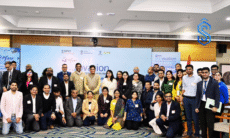
The working paper consolidates the findings and recommendations of an eight-member committee constituted by DPIIT on April 28, 2025, to assess whether existing copyright laws sufficiently address issues raised by generative AI and to propose amendments where necessary.
The document marks a significant step in outlining India’s policy thinking at the AI-Copyright Interface.
Policy Approaches Reviewed in the AI-Copyright Interface Framework
As part of its analysis of the AI-Copyright Interface, the working paper evaluates several existing regulatory models, including blanket copyright exemptions, text and data-mining exceptions with or without opt-out provisions, voluntary licensing arrangements, and extended collective licensing mechanisms.
Also Read: Alteryx Partners with Savex Technologies to Accelerate Analytics and AI Adoption in India
The paper highlights suitability concerns associated with each approach, leading the committee to conclude that none independently offer a balanced solution.
To address these limitations, the working paper proposes a new policy framework aimed at maintaining equilibrium between the rights of content creators and the needs of AI innovators operating within the AI ecosystem.
Hybrid Licensing Model Proposed for AI-Copyright Interface
Rejecting the zero-price licensing model, the committee notes that such an approach could weaken incentives for human creativity and result in the long-term underproduction of original human-created content. As an alternative within the AI-Copyright Interface, the committee recommends a hybrid licensing model.
Under the proposed framework, AI developers would receive a blanket licence to use all lawfully accessed content for training purposes without entering into individual negotiations.
Also Read: Hyundai Mobis Opens Specialized Software R&D Hub in Bengaluru
Royalties would become payable only once AI tools are commercialised, with rates determined by a government-appointed committee and subject to judicial review.
A centralised system would be responsible for royalty collection and distribution to reduce transaction costs, provide legal certainty, and support equitable access for both large and small AI developers.
The working paper acknowledges the valuable contribution of Dr Raghavender G R, whose support was instrumental in its preparation. D Sripriya, Kushal Wadhawan, and Priyanka Arora also assisted the committee members in compiling the document.
DPIIT has opened the working paper for public and stakeholder consultation for 30 days, inviting feedback on the proposed AI-Copyright Interface model.