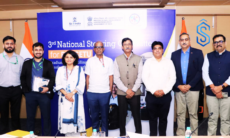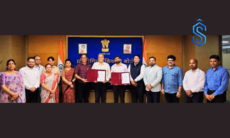


New Delhi: Platform for Aggregating Clean Transport – PACT and ZET Marketplace were launched at the 5th E-Fast India Summit 2026, marking a significant milestone in India’s clean mobility journey.
NITI Aayog Member Rajiv Gauba delivered the inaugural address at the summit, where the PACT and the Zero Emission Truck (ZET) Marketplace were introduced to support the transition towards electric freight and clean mobility.
In his address, Gauba noted that e-FAST has evolved over four years from a forum for dialogue into a vehicle of coordinated action, reflecting the broader shift in India’s clean mobility discourse from intent to implementation.
He emphasised that transitioning to electric mobility is an economic, environmental and strategic imperative that is essential for achieving the global commitment of Net Zero by 2070 and realising the vision of Viksit Bharat by 2047.
Gauba highlighted the importance of accelerating electric vehicle adoption for strengthening the nation’s energy security and improving citizens’ quality of living.
He also outlined the progress achieved through various government initiatives supporting the growth of electric mobility.
These initiatives include the Production Linked Incentive (PLI) schemes for Automobiles and Advanced Chemistry Cells, expansion of public charging infrastructure supported by investments from Oil Marketing Companies, and demand-side schemes such as FAME, PM e-DRIVE, PARIVARTAN and PM e-Bus Sewa.
According to Gauba, these measures have contributed to the rise in electric vehicle sales.
Addressing the heavy-duty commercial vehicle sector, Gauba noted that heavy trucks account for only 3-4% of the vehicle fleet but contribute to more than a third of transport-sector carbon emissions.
He identified structural fragmentation among logistics operators, high financing costs and the absence of coordinated corridor planning as key constraints holding back the market.
PACT and ZET Marketplace: Addressing the Gaps
The PACT and ZET Marketplace have been designed to address these gaps through demand aggregation, financing innovation and corridor-based projectization.
The platforms aim to bring together the requirements and interests of stakeholders involved in the transition to zero-emission freight.
Also Read: IAF Dronathon 2026 to Showcase Indigenous Drone and Counter-Drone Technologies in Jaisalmer
Gauba observed that only around 800 heavy-duty electric trucks were sold in 2025, highlighting the need for strategic electrification of key freight corridors.
This is particularly significant as 70% of India’s freight moves by road.
He called for blended finance mechanisms, leasing models and stronger data systems to help bring the cost of capital for electric trucks closer to that of diesel equivalents.
Such measures, he said, would be important in supporting the wider adoption of electric trucks in the heavy-duty commercial sector.
PACT and ZET Marketplace: Involving Multiple Stakeholders
The PACT and ZET Marketplace initiative is also expected to involve multiple stakeholders across the electric freight ecosystem.
Gauba called upon logistics providers, manufacturers, charge point operators and financiers to engage with the platform in shaping the corridors, financing instruments and commercial models that will define electric freight in India.
The launch of PACT and ZET Marketplace comes as India continues to strengthen its clean mobility ecosystem through government-backed initiatives, charging infrastructure expansion and measures aimed at increasing electric vehicle adoption.
Gauba said that in complex, capital-intensive sectors, government is at its most effective not when it seeks to allocate outcomes directly, but when it builds systems that allow markets to discover them.
He described PACT as one such enabling mechanism, positioning the platform as a system intended to support coordinated market participation in India’s transition towards electric freight.