

Mumbai: Vestd India has revealed that investment in Indian startups declined by 8.3% during the most recent full year, making India the only market among the world’s “Big Five” startup ecosystems to record a year-on-year contraction, according to the company’s latest Global Investment Report.
The Vestd India report, based on data analysed from business intelligence platform Crunchbase, indicates that investor sentiment is continuing to shift in 2026.
India recorded just 560 funding rounds during the first quarter of 2026, compared to 668 in the corresponding quarter of 2025 and 1,049 funding rounds in Q1 2024.
According to Vestd India, the findings point to a significant change in investor behaviour, with capital increasingly moving away from early-stage startups and towards late-stage companies, consolidation opportunities and liquidity-focused investments.
Although India continues to rank among the world’s top five investment destinations, the number of startup funding rounds fell to 2,497 during 2025, placing it behind the UK, which recorded 3,331 deals over the same period.
The report attributes the decline primarily to a sharp slowdown in early-stage funding activity.
Seed investments dropped by 31.8%, angel funding declined by 25.3%, while pre-seed investments fell by 21.9%.
These figures indicate that founders seeking early-stage capital are facing increasingly stringent investment criteria.
In contrast, Vestd India found strong growth in later-stage investment categories.
Secondary market transactions increased by 77.2%, post-IPO debt financing rose by 45.7%, while Series C funding expanded by 27.6%, reflecting investors’ growing preference for mature businesses and exit-driven opportunities.
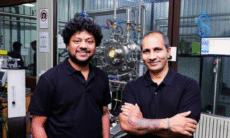
Commenting on the findings, Ifty Nasir OBE, Founder and CEO of sharetech platform Vestd, said: “India’s investment market is evolving rapidly.
What we’re seeing is a clear shift away from high-volume early-stage speculation towards a more disciplined, fundamentals-driven environment.
“The bar for early-stage funding has risen significantly. Investors are no longer backing ideas alone – they want evidence of traction, strong unit economics and a clear path to profitability.
“The latest figures suggest that investor caution remains firmly in place. Capital is still available, but investors are being far more selective and are increasingly backing businesses that can demonstrate resilience, profitability and long-term value creation.”
Also Read: India Startup Funding Falls 93% to $73.4 Million in Weekly Funding Tracker
The Vestd India report also noted that funding activity slowed further during the latter half of the year. Deal volumes declined by 11.8% in the second half compared to the first half, reflecting increasing investor caution across the market.
Globally, India continues to compete for investment alongside rapidly growing startup ecosystems. Canada registered a 46.4% increase in investment activity, while China recorded growth of 31.9% during the same period.
Despite the decline in overall funding activity, Vestd India highlighted India’s continued strength in producing emerging unicorns.
The country ranks third globally with 43 emerging unicorns—companies valued between $500 million and $1 billion. India trails only the United States, which has 239 emerging unicorns, and China with 44, while remaining ahead of the United Kingdom, which has 27.
However, the Vestd India report notes that India is the only top-three market where the emerging unicorn pipeline has contracted, declining by 6.5% year-on-year.
According to the findings, constraints in early-stage funding are beginning to affect the future pipeline of high-growth companies.
The report also identifies a broader shift in global investment priorities, with investors increasingly concentrating capital in deep-technology sectors.
Artificial intelligence recorded a 41.7% increase in emerging unicorn formation, followed by data and analytics at 30.5% and science and engineering at 28.4%.
Speaking on the changing investment landscape, Ifty added: “The global market is not just shifting geographically, it is shifting sectorally. The next wave of growth is being driven by deep-tech innovation, not consumer convenience models.
“For India to maintain its position as a leading global startups hub, it will need to align more closely with where capital is flowing – particularly in AI, data and advanced engineering.”