
New Delhi: The National Skill Development Corporation (NSDC) has expanded its flagship Centre for Future Skills initiative to strengthen India’s higher education and skilling ecosystem by embedding global certifications within mainstream degree programmes.
The Centre for Future Skills is designed as a campus-based, technology-integrated model that integrates advanced technical training, hands-on project learning, and globally benchmarked industry standards directly into academic pathways.
Conceived as a long-term national intervention, the Centre for Future Skills aims to impact one million students over the next decade by aligning higher education curricula with emerging technology demands and global industry requirements.
The Centre for Future Skills model has already been operationalised across multiple institutions nationwide, with training activities actively underway at each location.
The initiative is creating measurable outcomes by equipping students with industry-aligned competencies embedded within their academic journey through the Centre for Future Skills framework.
Also Read: IIT Madras BS in Management and Data Science Launched to Bridge Business and Analytics Skills
Speaking on the expansion of the Centre for Future Skills, Arunkumar Pillai, CEO, NSDC, said, “The Centre for Future Skills marks a structural shift in how India prepares its youth for the future economy. It is already demonstrating impact at scale with its 12 operational institutions and over 43,000 trained candidates.
Over the next three years, we aim to add 22 more centres nationwide. With the integration of global certifications and hands-on learning within degrees, we are ensuring graduates enter the workforce industry-ready and globally benchmarked.”
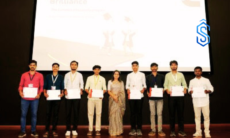
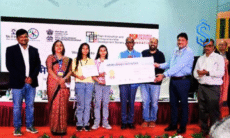
The inauguration of a new Centre for Future Skills at the Federal Institute of Science and Technology (FISAT), Kochi, marks another milestone in the nationwide rollout of the Centre for Future Skills, reinforcing the broader objective of institutional transformation within India’s higher education landscape.
Campus-Based Model Integrating Academic Credits and Global Certifications
The Centre for Future Skills operates as an on-campus hub that integrates academic credit pathways, industry-recognised certifications, expert mentorship, and advanced laboratory infrastructure.
Under the Centre for Future Skills model, students earn two to three academic credits per semester alongside globally recognised certifications without extending the duration of their degree. This dual-outcome structure enables students to graduate with both a university qualification and validated employability credentials.
Through partnerships with leading global technology companies, the Centre for Future Skills provides access to over 200 certification programmes across high-growth domains.
These certifications are offered at significantly subsidised costs compared to prevailing market rates, expanding access to world-class, industry-relevant technical education through the Centre for Future Skills network. Students who successfully complete assessments receive globally recognised credentials that enhance mobility across domestic and international job markets.
Structured Skill Pathways and Industry-Aligned Learning
A defining feature of the CFS is its structured, multi-semester skill pathways that progressively build technical competence aligned with evolving industry demand.
For instance, under the Software Engineering track within the Centre for Future Skills framework, learners progress from programming fundamentals to full-stack development, cloud deployment, and software engineering best practices.
By graduation, students may earn four to six global certifications while developing strong project portfolios and gaining hands-on experience in cloud, DevOps, and application development environments.
Importantly, the Centre for Future Skills model is structured to accommodate both technical and non-technical learners, enabling interdisciplinary participation in emerging technology domains.
Also Read: JSW Motors Builds EV Talent Pipeline Through Partnership with Tata Indian Institute of Skills
Infrastructure-Led Approach Driving Scale
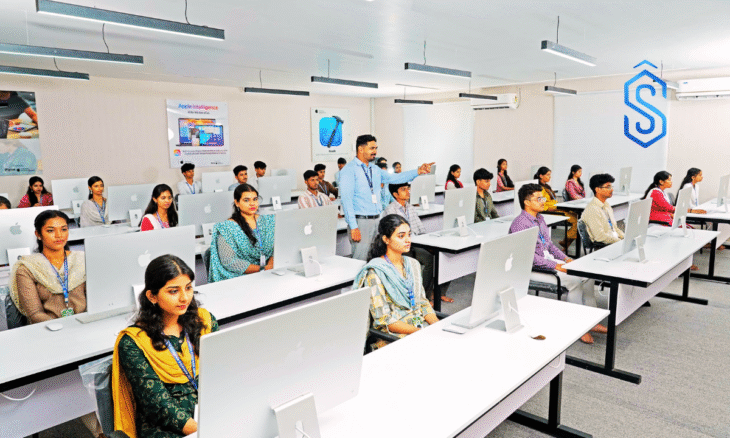
The infrastructure-led approach of the Centre for Future Skills further strengthens its impact. NSDC establishes advanced hardware and software laboratories within partner institutions to ensure immersive learning experiences.
Each certification course under the CFS runs for 45 to 50 hours per semester and is delivered in physical mode through lab sessions, project work, and rigorous assessments.
At FISAT, the Centre for Future Skills is projected to enrol approximately 3,500 students per semester, or 7,000 students annually, demonstrating the scalable and high-volume design of the initiative.
Centre for Future Skills: Global Certification Stack to Internationalise Indian Talent
At a systemic level, the CFS introduces what NSDC describes as a “Global Certification Stack,” aimed at internationalising Indian talent.
By embedding globally benchmarked certifications within degree programmes, the CFS enhances signalling power in the labour market, reduces industry training burdens through validated skill credentials, and strengthens India’s positioning within global talent supply chains.
Under this model, the degree evolves from being solely a knowledge credential to becoming a productivity indicator aligned with future industry requirements.