
New Delhi: Researchers in India have developed porous graphene supercapacitors capable of operating at significantly higher voltages, a breakthrough that could enable electric vehicles (EVs) to achieve faster acceleration and extended driving range while also supporting applications such as solar panels and grid-scale energy storage.
Developed by scientists at the International Advanced Research Centre for Powder Metallurgy and New Materials (ARCI), an autonomous institute under the Department of Science and Technology (DST), the high-voltage device uses a dual-functional porous graphene carbon nanocomposite (PGCN) electrode.
The innovation allows the supercapacitor to operate at 3.4 volts, surpassing the conventional 2.5–3.0 volt limit of commercially available supercapacitors.
Also Read: Pune: SIAT 2026 Highlights Innovation, EV Growth and Clean Mobility
Porous Graphene Supercapacitors Break Voltage and Energy Density Barriers
Conventional supercapacitors face electrolyte decomposition and safety risks, including flammability, when pushed beyond 3.0 volts.
The newly developed porous graphene supercapacitors overcome this limitation by stabilizing the electrolyte at higher voltages, resulting in substantially improved energy storage performance.
By addressing electrolyte instability, the technology effectively doubles energy density, enabling electric vehicles to deliver improved range and quicker acceleration.
The higher operating voltage also simplifies module design by reducing the number of cells required for stacking, leading to more compact and efficient energy-storage systems.
Engineered Surface Enables Superior Electrochemical Performance
The enhanced performance of porous graphene supercapacitors is attributed to the engineered surface properties of the PGCN material.
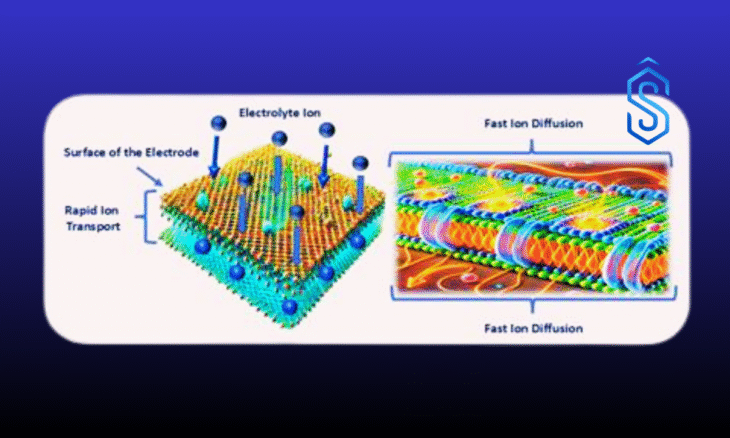
The surface is both water-repellent and highly compatible with organic electrolytes, suppressing water-induced degradation while enabling rapid electrolyte penetration into the porous framework.
This dual functionality improves ion transport and electrochemical efficiency, allowing the device to achieve 33% higher energy storage, high power output, and strong long-term stability.
These characteristics make the supercapacitor suitable for use in electric vehicles, portable electronics, and large-scale energy-storage applications.
Eco-Friendly and Scalable Manufacturing Process
The PGCN electrodes are manufactured using an environmentally friendly hydrothermal carbonization process with 1,2-propanediol as the precursor.
Conducted at 300°C for 25 hours in a sealed vessel, the method avoids harsh chemicals and external gases, minimizes environmental impact, and achieves yields exceeding 20%.
The scalable process ensures consistent performance through precise control of synthesis parameters, enabling smooth transition from laboratory-scale research to industrial production.
Also Read: Entellus Industries Raises ₹50 Crore in Funding Round Led by ZeroW
High Power Density and Exceptional Durability
The resulting porous graphene supercapacitors feature a micro- and mesoporous structure that supports rapid ion transport and high energy storage.
The device delivers power densities of up to 17,000 W/kg and retains 96% of its performance after 15,000 charge–discharge cycles.
Compared with conventional carbon-based electrodes, the PGCN electrode simultaneously improves operating voltage and power output, demonstrating exceptional durability and reliability.
Boost to India’s Clean Energy and Self-Reliance Goals
The development supports India’s clean energy ambitions and the Aatma Nirbhar Bharat initiative by strengthening domestic capabilities in advanced energy-storage technologies.
The higher voltage operation reduces reliance on multiple low-voltage cells, enabling more efficient and compact energy-storage modules.
The research findings have been published in the Chemical Engineering Journal (Elsevier) and were supported by the Department of Science and Technology, Government of India, under the Technical Research Centre (TRC) initiative.