
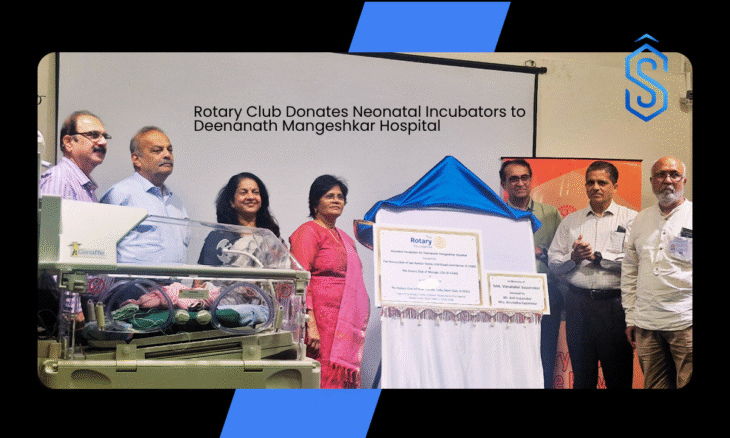
Pune: In a compassionate initiative to enhance neonatal care, the Rotary Club has donated two advanced neonatal incubators to the Neonatal Intensive Care Unit (NICU) at Deenanath Mangeshkar Hospital.
The donation aims to support the treatment of premature babies by providing them a safe, womb-like environment – a true “second home” for newborns requiring intensive care.
Neonatal Incubators: Donation Strengthens NICU Capabilities
The two neonatal incubators were presented jointly by the Rotary Club of San Ramon Valley (USA), Rotary Club of Moraga (USA), and Rotary Club of Pune Parvati.
Also Read: The Lancet Recognizes Type 5 Diabetes Linked to Chronic Undernutrition in Developing Nations
The handover ceremony coincided with Newborn Week and World Prematurity Day, underscoring the significance of early-life healthcare and innovation in neonatal treatment.
Rotarians from the United States joined the ceremony virtually, while several dignitaries and healthcare professionals attended the event in Pune.
Padma Vibhushan Dr Vijay Kelkar, Rotary Club of Pune Parvati President Kaustubh Bhandarkar, former District Governor Rashmi Kulkarni, former President Vrushali Khire, Hemant Khire, Ramesh Bhagwat, Dr Mohan Paranjape, Suresh Ingle, Deenanath Mangeshkar Hospital Medical Director Dr Dhananjay Kelkar, and Head of Pediatrics Dr Rajan Joshi graced the event. The incubators, donated in memory of Vimalabai Supnekar, were introduced by neonatologist Dr Shilpa Kalane.
Technology Meets Compassion in Neonatal Healthcare
Speaking at the event, Vrushali Khire highlighted the Rotary initiative as an effort to extend the lives of premature babies by blending medical expertise with advanced technology. “The goal is to ensure that every preterm baby receives a chance at healthy survival with the help of the latest neonatal incubator systems,” she said.
Dr. Dhananjay Kelkar lauded the initiative, calling it “a perfect blend of compassion, philanthropy, and modern technology.” He emphasized the growing need for specialized neonatal care and praised Rotary’s continued support to the hospital’s mission.
Also Read: How Pune Became India’s Robotic-assisted Surgery Hub for Advanced Cancer Care
Dr. Rajan Joshi added that these new neonatal incubators will serve as a “second home” for preterm babies during their initial months. “The addition of the neonatal incubator units has significantly upgraded the NICU’s service quality and technological readiness,” he noted.
Features and Importance of the Neonatal Incubators
Each neonatal incubator is designed to replicate the mother’s womb, maintaining optimal temperature, humidity, and protection for premature infants. The key features include:
- Womb-like warmth and safety
- Isolation from external noise and direct light
- Contact-free operation to minimize infection risk
- Real-time monitoring of the infant’s nutrition and vital signs
Premature babies often face challenges due to incomplete growth in the womb. The neonatal incubator provides them with a nurturing and controlled environment, supporting their development and survival until they are strong enough for independent life.